
Curatorial notes
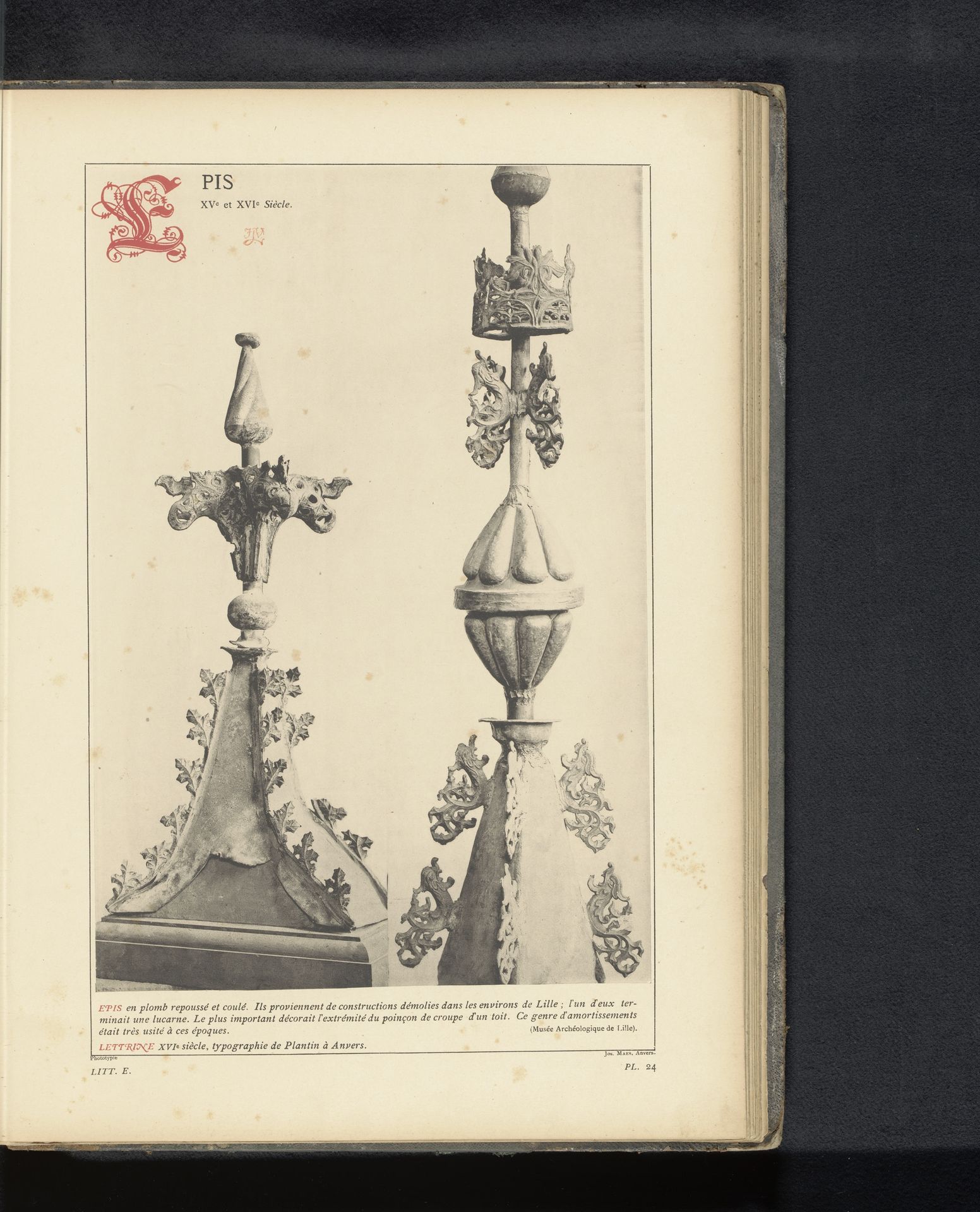
These two roof decorations were made in the 15th or 16th century out of lead, likely somewhere in France. The process of working lead involves both hammering and casting. The malleability of the metal allows for the creation of complex, curvilinear forms, while casting makes possible the replication of decorative elements – note the repeating motifs of leaves and heraldic figures. It's work that would have required a great deal of skill, but not necessarily a high degree of artistic invention. The designers may have simply been referencing pattern books. These ornaments embody a paradox of pre-industrial production. Though unique in their combination, they reflect a standardized, almost mass-produced aesthetic. They sit at the intersection of craft and design, a reminder that even in the pre-modern world, makers were often working within systems of labor and established visual languages.