before 1867
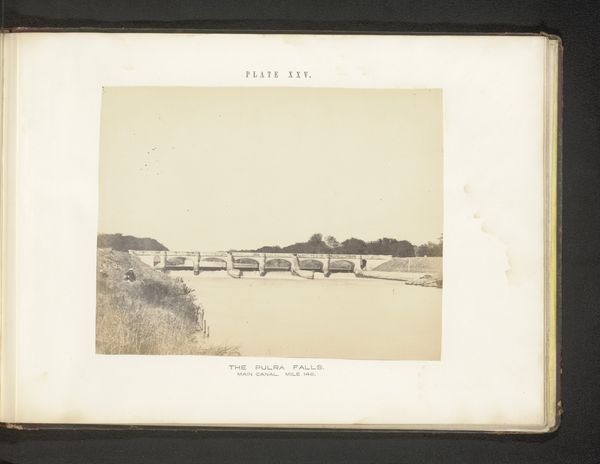
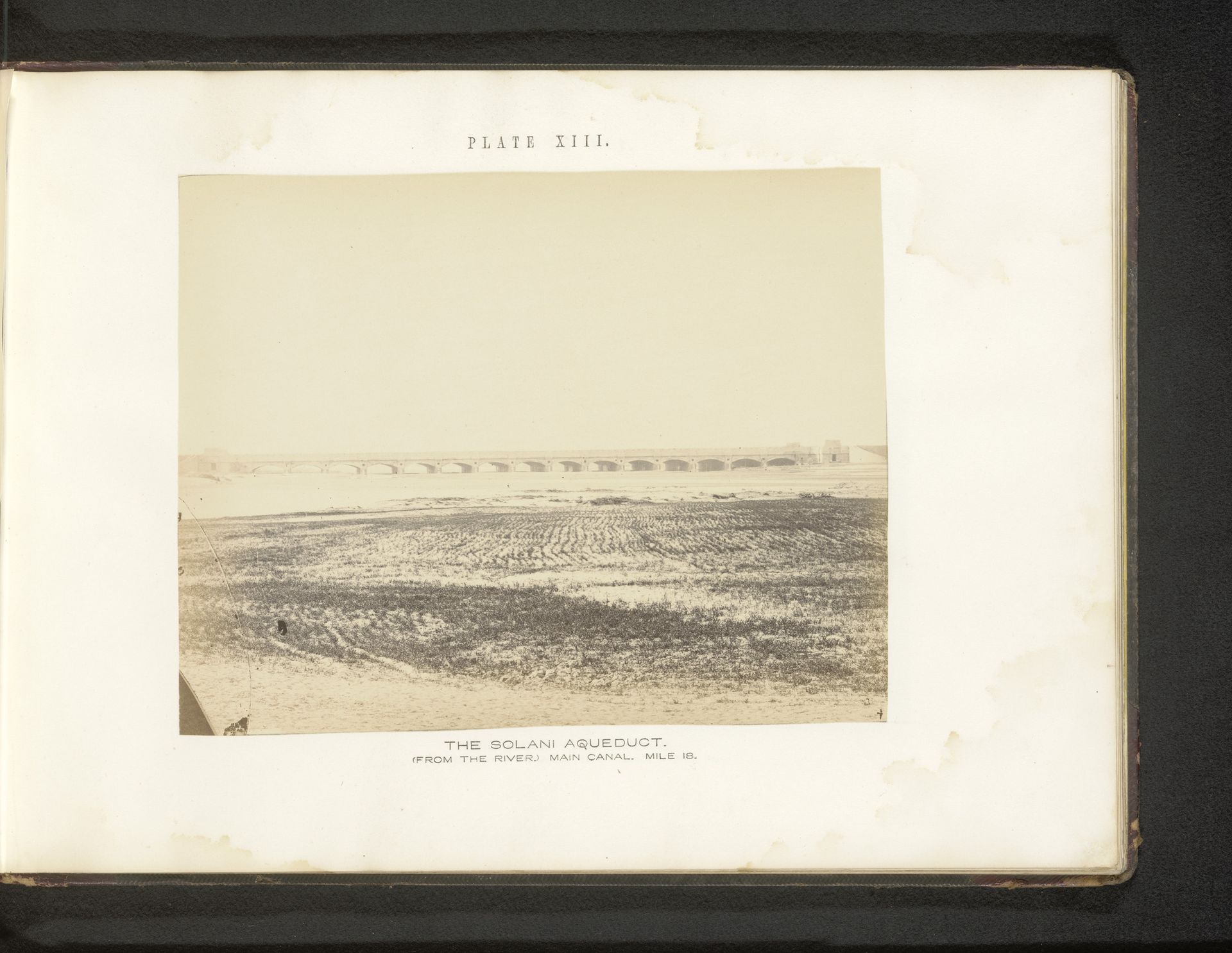
Solani aquaduct bij Roorkee

Listen to curator's interpretation
Curatorial notes
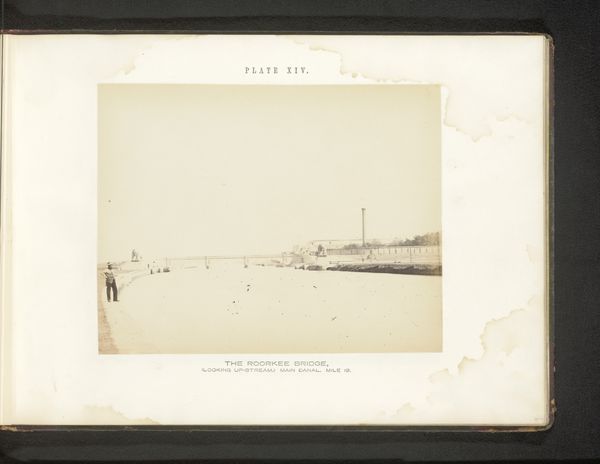
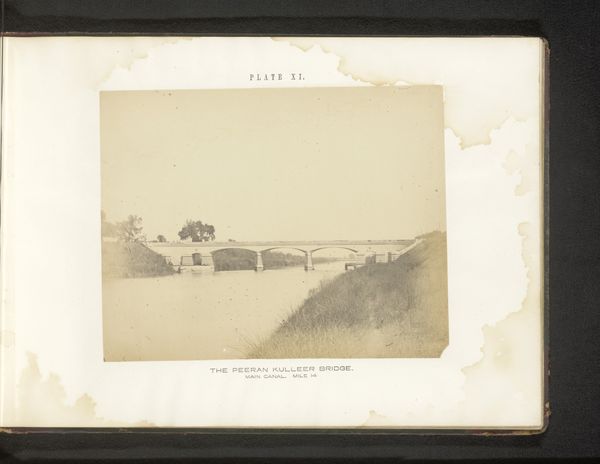
Editor: This is “Solani Aquaduct bij Roorkee,” a photograph by Thomas George Glover, taken before 1867. The albumen print, framed in an album page, evokes such a sense of history, doesn't it? What strikes me most is the long, arcing form of the aqueduct itself. What do you see in this piece? Curator: Beyond the elegant aqueduct and serene river, I see echoes of civilizations past. Consider how water, and its management, has been a symbol of power and prosperity across cultures for millennia. Can you imagine the sheer engineering feat this structure represented at the time? Editor: Absolutely. It's a testament to human ingenuity. Curator: Indeed. And Glover’s choice to capture it in a photograph, using the albumen print, makes it more significant. Notice the way the light interacts with the aqueduct’s arches, almost lifting it from its earthly foundations. Light as a symbolic element can reflect both knowledge and enlightenment; think about the aqueduct representing the channelling of resources but also of new ideas. Does that make sense? Editor: Yes, that's interesting! The connection between water, knowledge, and power. Curator: The "Orientalism" tag invites another layer of interpretation. Glover, as a Western artist, presents a particular vision of India, potentially infused with romanticism or even colonial undertones. Is he celebrating engineering prowess, or is there a subtle assertion of dominance in portraying this landscape? Editor: That definitely gives me something to consider... I was so caught up in the visual appeal of the aqueduct itself, that I missed these symbols. Thank you for the enlightening insight. Curator: It’s always enriching to connect the dots and explore the symbolic narrative embedded in artworks. Each layer adds depth to our understanding, doesn't it?