1710 - 1780
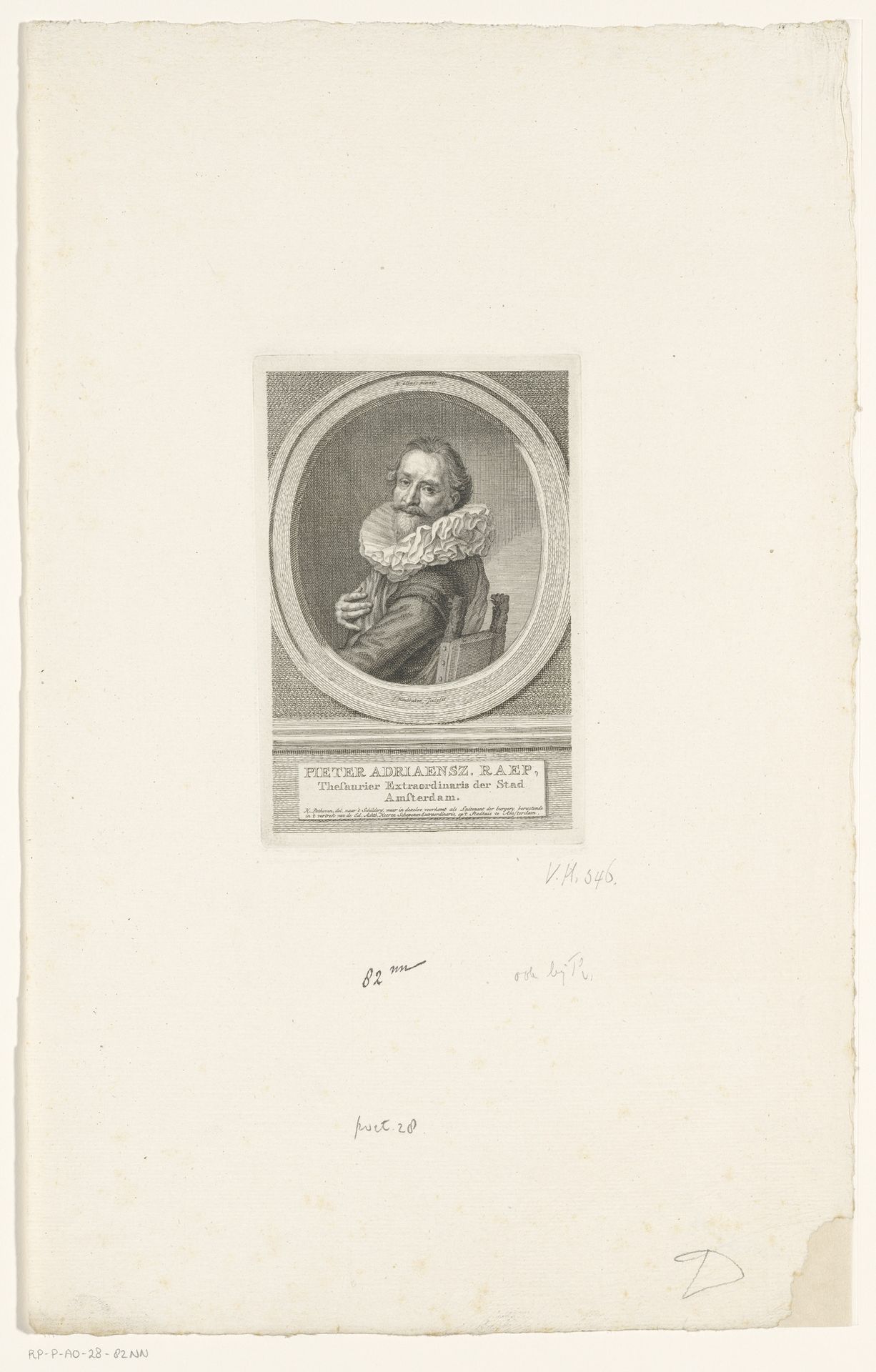
Portret van Pieter Adriaensz. Raep

Jacob Houbraken
1698 - 1780Location
RijksmuseumListen to curator's interpretation
Curatorial notes
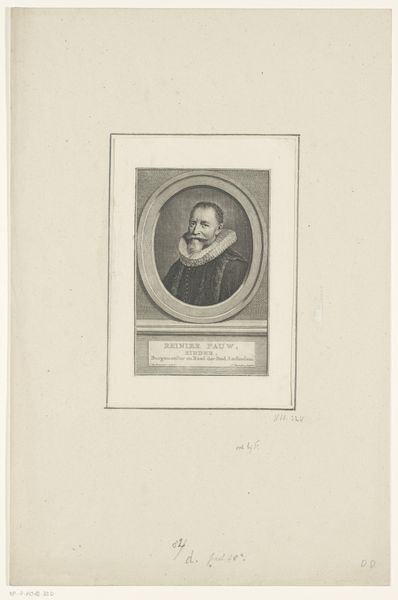
Editor: This engraving, "Portret van Pieter Adriaensz. Raep" by Jacob Houbraken, created sometime between 1710 and 1780, presents the subject in a rather formal and perhaps even reserved manner, enclosed within a very tight oval frame. The ruff is quite impressive, yet the gaze is piercing. How would you interpret its cultural significance in the 18th century? Curator: Considering the socio-political backdrop, these commissioned portraits served less as simple representations and more as vehicles for projecting status and upholding societal hierarchies. Think about it: Houbraken was known for his engraved portraits often published in series, making them somewhat accessible to a growing middle class seeking to emulate the elite. Does that alter your impression? Editor: It does. So, this wasn’t just about commemorating an individual, but also about the accessibility of portraiture to a wider audience and their aspirations? Curator: Precisely. Engravings like this circulated images and ideals, contributing to a broader visual culture. How do you think the formal style, reminiscent of earlier Baroque portraits, played into this public role? Editor: Perhaps it’s about connecting the sitter to an established lineage, giving them a sense of historical importance that resonates with those aspiring to climb the social ladder? Curator: An astute observation. The very act of commissioning and displaying such a portrait asserted Raep's presence in the social and political landscape of Amsterdam. It highlights the intersection of art and social mobility, a key aspect of the 18th-century public sphere. I wonder, how the portrait engages modern audiences. Editor: I hadn't thought about that interplay between public image and personal ambition before. It gives the piece a whole new dimension! Curator: Indeed. Reflecting on art's role in shaping society's visual and power structures is what continues to make art history so compelling.