About this artwork
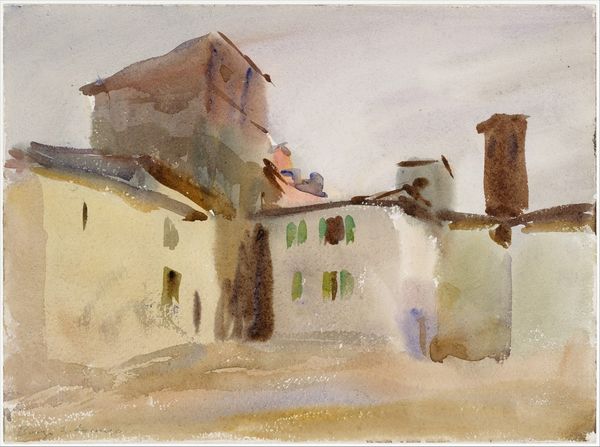
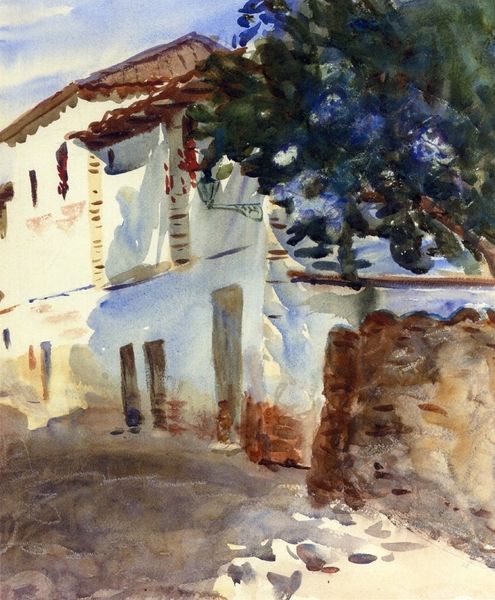
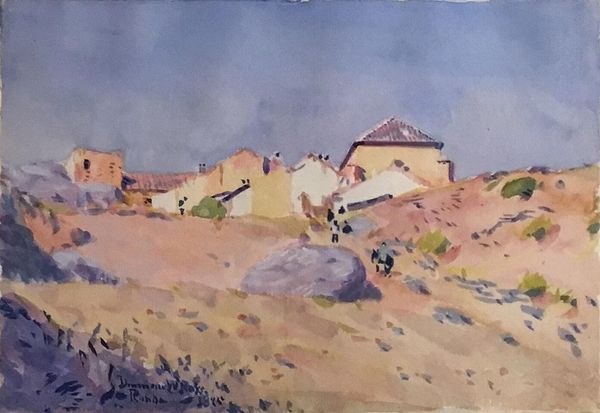
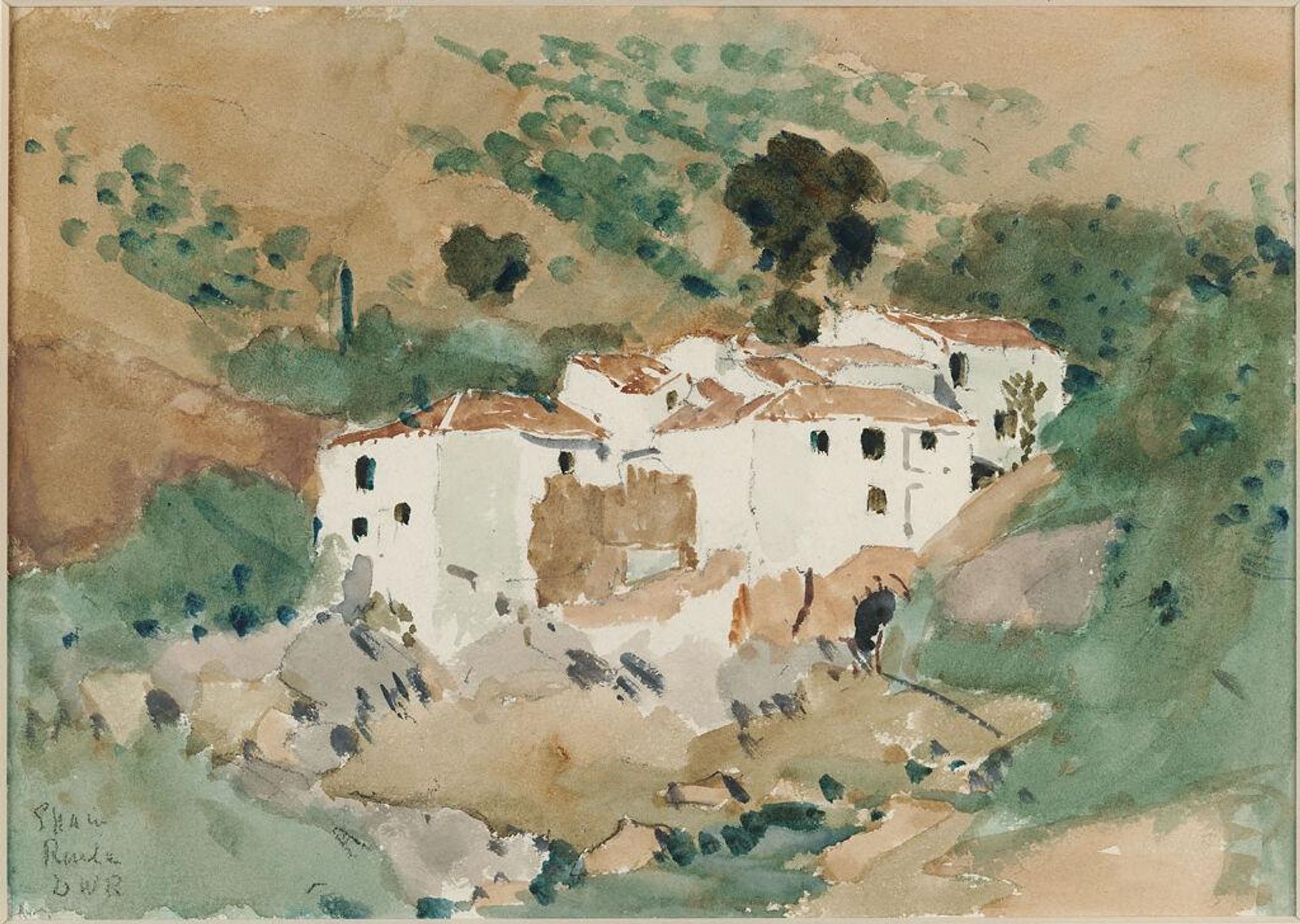
Curator: This watercolor, "Mill, Ronda, Spain," offers us a glimpse into Denman Waldo Ross's travels. Editor: It's charming, isn't it? The white buildings pop against the muted, earthy tones. I wonder what daily life was like here at the time it was painted. Curator: Well, considering Ross's deep interest in design theory, the composition is key. Notice how the arrangement of buildings creates depth and guides the eye? Editor: Absolutely. And the visible brushstrokes and the way the watercolor pools in places suggest a very immediate, hands-on process. It's not about polished perfection, but capturing a moment. It invites speculation about access to water sources, the lives of people who inhabited those buildings. Curator: The architecture speaks to that, reflecting social structures and the local materials available for construction. This piece is not just a pretty picture; it's a document of a particular place and time. Editor: Agreed. I’m left pondering how this landscape, these buildings, continue to evolve, shaped by social, political, and cultural change.
Mill, Ronda, Spain
19th-20th century

Artwork details
- Dimensions
- sight: 17.6 x 25 cm (6 15/16 x 9 13/16 in.) framed: 42.4 x 49.3 x 2.5 cm (16 11/16 x 19 7/16 x 1 in.)
- Location
- Harvard Art Museums
- Copyright
- CC0 1.0
Comments
Be the first to share your thoughts about this work.
About this artwork
Curator: This watercolor, "Mill, Ronda, Spain," offers us a glimpse into Denman Waldo Ross's travels. Editor: It's charming, isn't it? The white buildings pop against the muted, earthy tones. I wonder what daily life was like here at the time it was painted. Curator: Well, considering Ross's deep interest in design theory, the composition is key. Notice how the arrangement of buildings creates depth and guides the eye? Editor: Absolutely. And the visible brushstrokes and the way the watercolor pools in places suggest a very immediate, hands-on process. It's not about polished perfection, but capturing a moment. It invites speculation about access to water sources, the lives of people who inhabited those buildings. Curator: The architecture speaks to that, reflecting social structures and the local materials available for construction. This piece is not just a pretty picture; it's a document of a particular place and time. Editor: Agreed. I’m left pondering how this landscape, these buildings, continue to evolve, shaped by social, political, and cultural change.
Comments
Be the first to share your thoughts about this work.