1722 - 1784
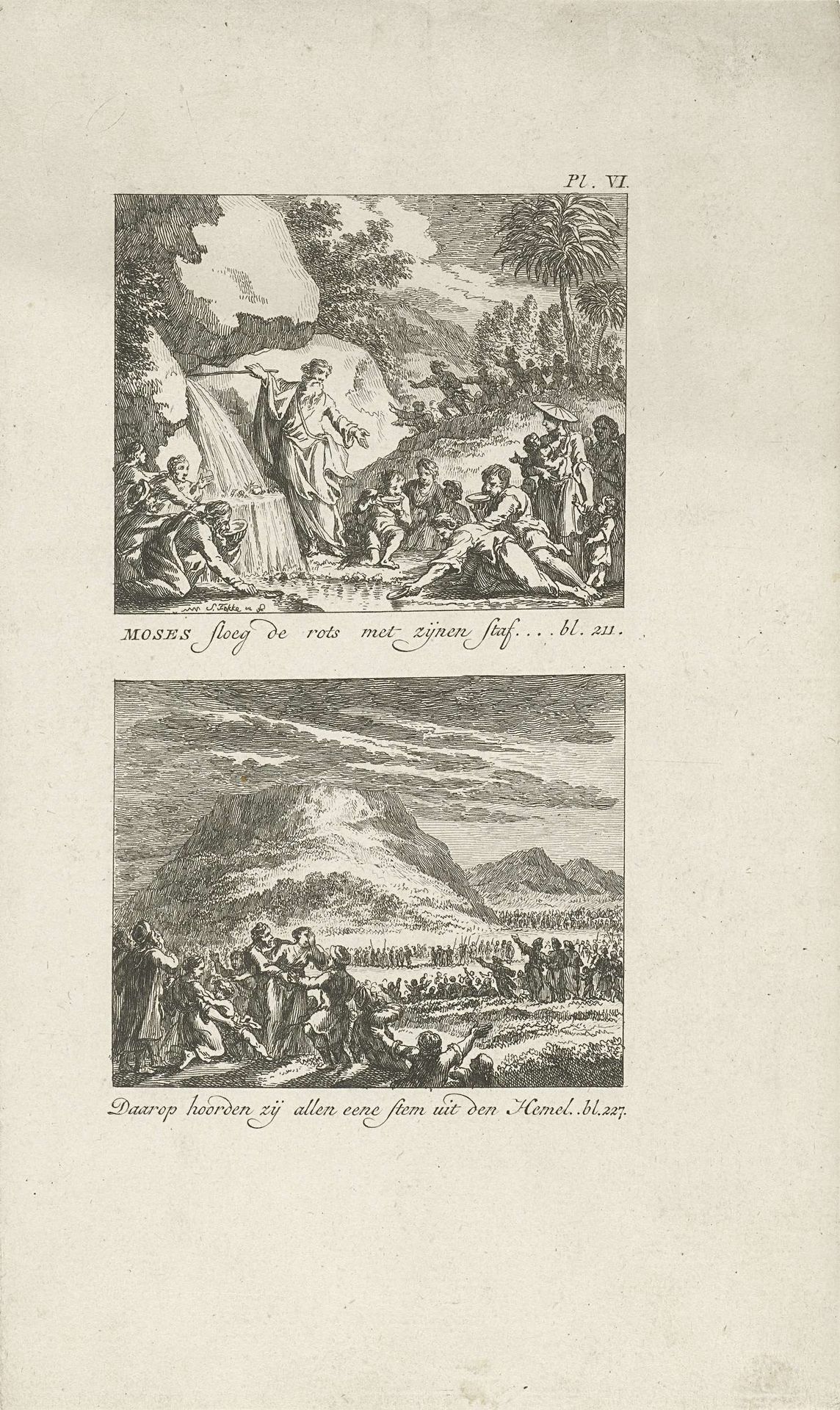
Mozes slaat water uit een rots, en Mozes op de berg Sinaï

Simon Fokke
1712 - 1784Location
RijksmuseumListen to curator's interpretation
Curatorial notes
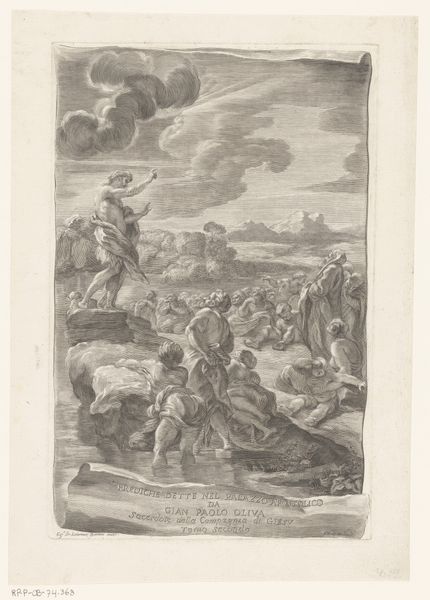
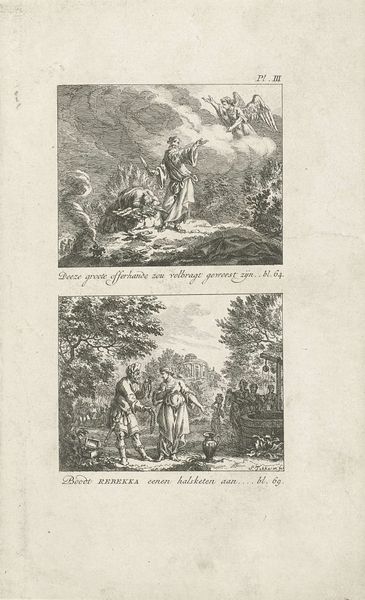
This print by Simon Fokke, made around the 18th century, depicts two scenes from the life of Moses. Above, Moses strikes a rock with his staff, and water flows forth, providing sustenance to his people. The staff—a symbol of authority and divine power—resonates with ancient scepters of pharaohs and deities. Think of the Rod of Asclepius, entwined with snakes, symbolizing healing and medicine. Similarly, Moses's staff is a conduit, transforming the barren rock into a life-giving spring. Below, Moses stands atop Mount Sinai, receiving the Ten Commandments. Mountains have often been seen as liminal spaces, connecting humanity to the divine. This symbolic ascent echoes motifs found in diverse cultures, from the ziggurats of Mesopotamia to the pyramids of Egypt, where rulers sought to bridge the earthly and celestial realms. The mountain motif thus becomes a stage for divine revelation, an eternal return to sacred origins. The image is more than a historical depiction, it is a powerful reminder of our enduring quest for meaning, a timeless echo reverberating across cultures.