About this artwork
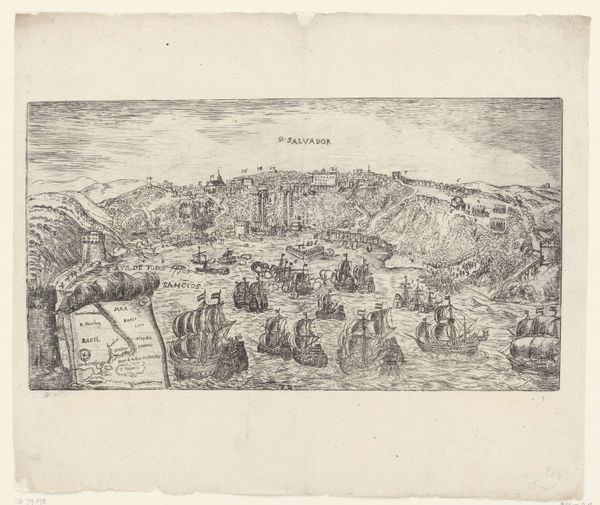
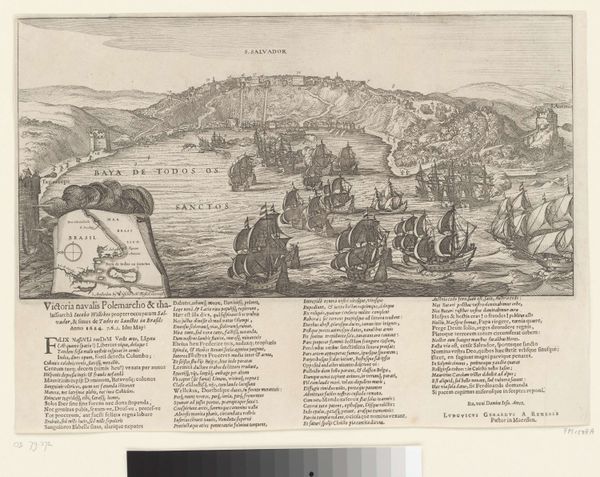
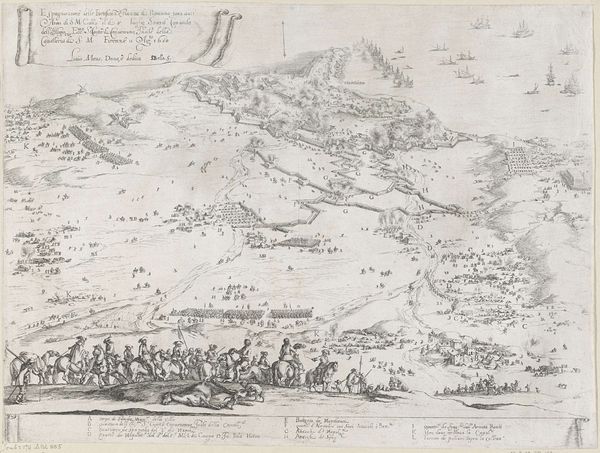
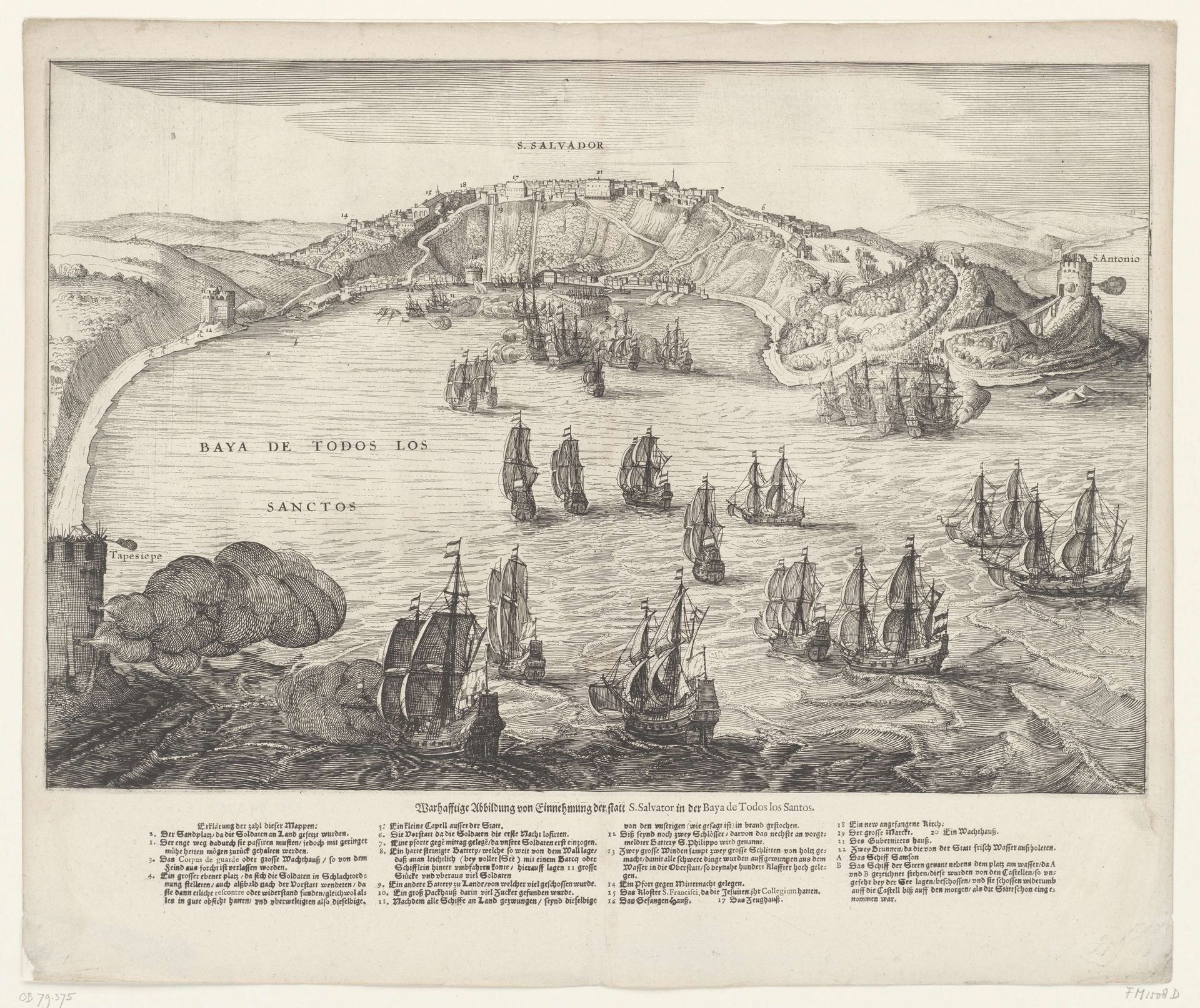
This print, dating to 1624, depicts the conquest of San Salvador in Brazil by Admiral Jacob Willekes. Although the artist is unknown, they would have been a skilled printmaker. The print is made from an engraving on a copper plate. Copper was favored for its ability to hold fine detail, crucial for depicting the ships and the landscape. The process began with the artist meticulously incising the design into the plate with specialized tools like burins and etching needles. Each line, dot, and hatch mark on the print represents a physical cut into the metal. The act of engraving itself has social significance. The print was likely commissioned to celebrate Dutch maritime power and colonial ambitions in Brazil. The labor-intensive engraving process reflects the value placed on accurate historical representation and disseminating political messages to a wider audience. Ultimately, it's a reminder that even seemingly straightforward images are products of labor, skill, and social context.
Verovering van San Salvador in Brazilië door admiraal Jacob Willekes, 1624
1624

Anonymous
@anonymousLocation
RijksmuseumArtwork details
- Medium
- print, engraving
- Dimensions
- height 387 mm, width 463 mm
- Location
- Rijksmuseum
- Copyright
- Rijks Museum: Open Domain
Tags
Comments
Share your thoughts
About this artwork
This print, dating to 1624, depicts the conquest of San Salvador in Brazil by Admiral Jacob Willekes. Although the artist is unknown, they would have been a skilled printmaker. The print is made from an engraving on a copper plate. Copper was favored for its ability to hold fine detail, crucial for depicting the ships and the landscape. The process began with the artist meticulously incising the design into the plate with specialized tools like burins and etching needles. Each line, dot, and hatch mark on the print represents a physical cut into the metal. The act of engraving itself has social significance. The print was likely commissioned to celebrate Dutch maritime power and colonial ambitions in Brazil. The labor-intensive engraving process reflects the value placed on accurate historical representation and disseminating political messages to a wider audience. Ultimately, it's a reminder that even seemingly straightforward images are products of labor, skill, and social context.
Comments
Share your thoughts