1918
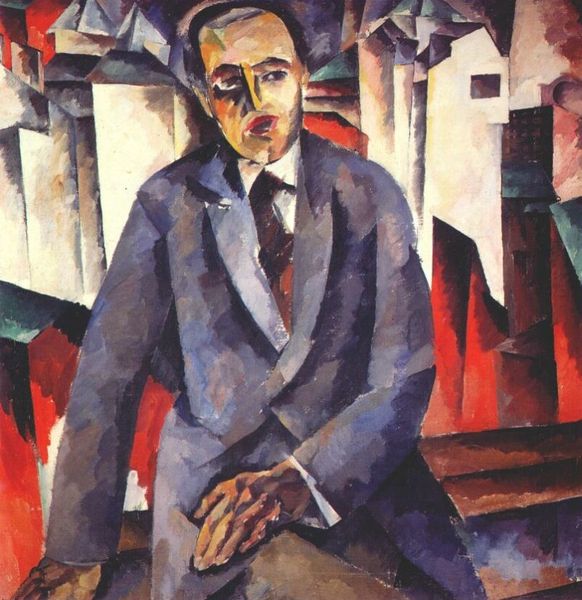
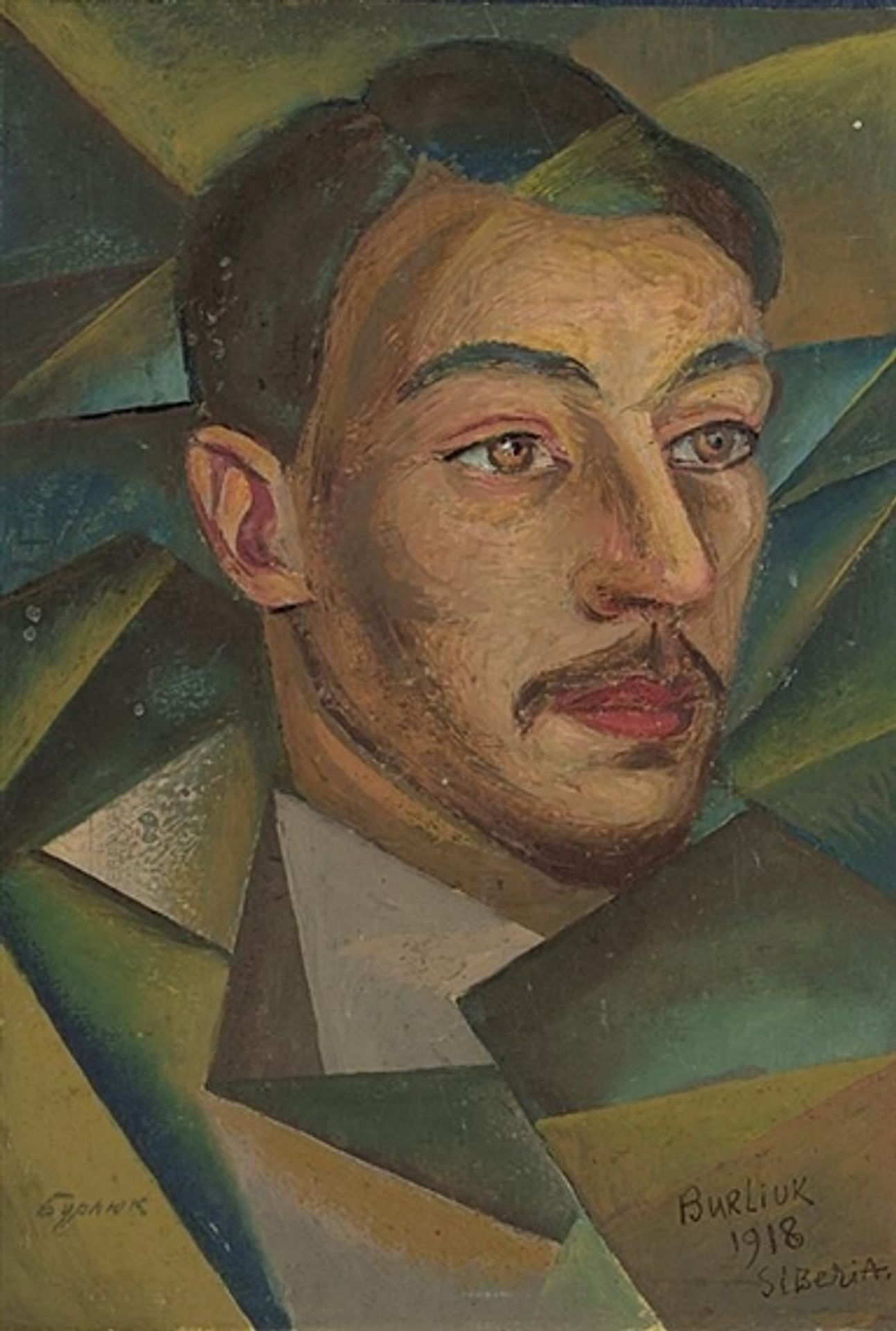
Russian poet in Siberia

David Burliuk
1882 - 1967Location
Private CollectionListen to curator's interpretation
Curatorial notes
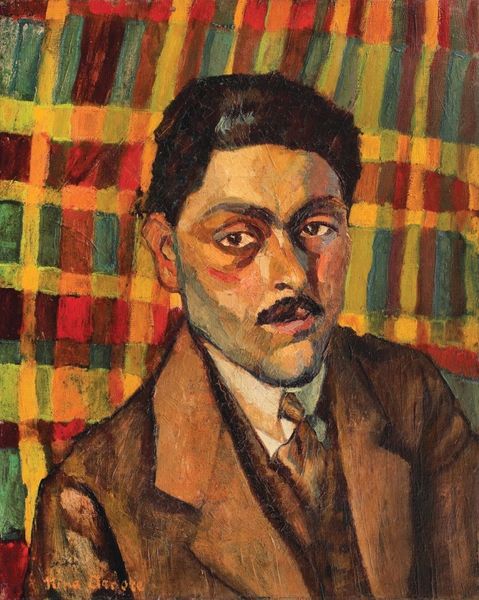
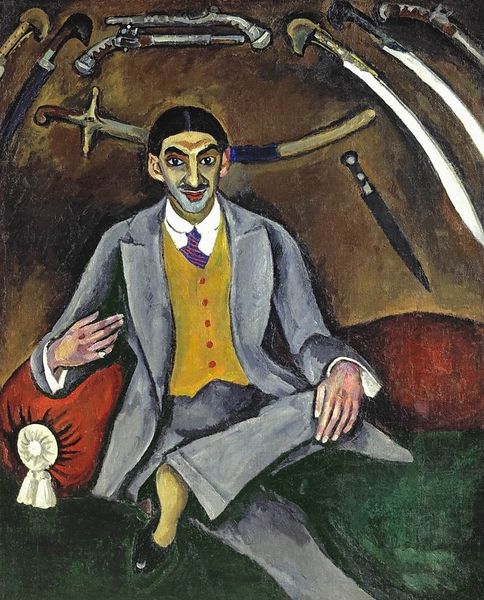
Editor: David Burliuk's 1918 oil on canvas, "Russian Poet in Siberia," intrigues me. There's a striking cubist fragmentation happening, particularly in the background. What symbolic reading might be embedded in that fracturing of space, given the title? Curator: Well, the title is key, isn't it? Siberia conjures notions of exile, both physical and perhaps existential. Look at how Burliuk uses Cubist techniques not just for form, but to express a kind of psychological displacement. The fractured background might symbolize a disrupted sense of place and identity. Notice how the figure's face, though rendered in a somewhat conventional portrait style, is framed and almost imprisoned by those sharp, geometric shapes. Do you feel a sense of tension? Editor: Yes, the angular forms definitely create a sense of unease. It's as if the poet's inner turmoil is projected onto the external world. The colors are rather muted, too. Curator: Exactly. What might those colors, or lack thereof, signify in the visual language of the piece, considering that this was painted during a period of tremendous social upheaval? Think about the emotional and historical context. Editor: The muted colors suggest a certain bleakness or perhaps even resignation in the face of adversity. It underscores a sense of confinement and reflects the poet’s experience, both inner and outer. Curator: And there you have it. This painting utilizes Cubist fragmentation and a somber palette to communicate profound emotional and historical realities. It speaks to the resilience of the creative spirit amidst the most desolate circumstances, a powerful meditation. Editor: I see the symbolic layering so clearly now, thank you! The symbols and imagery reflect Russian cultural and historical memory and carry tremendous psychological weight.