About this artwork
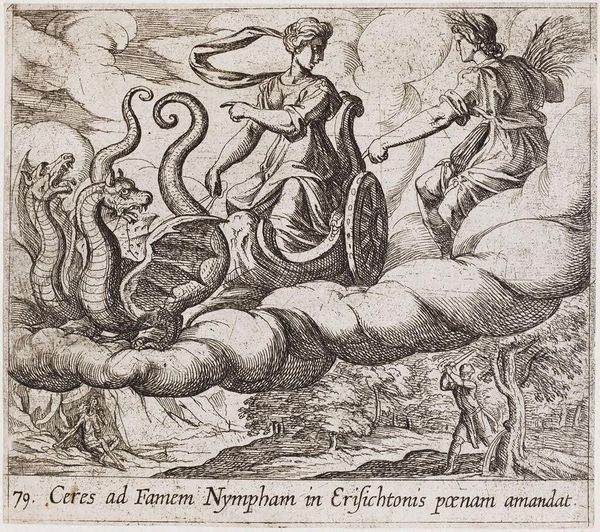
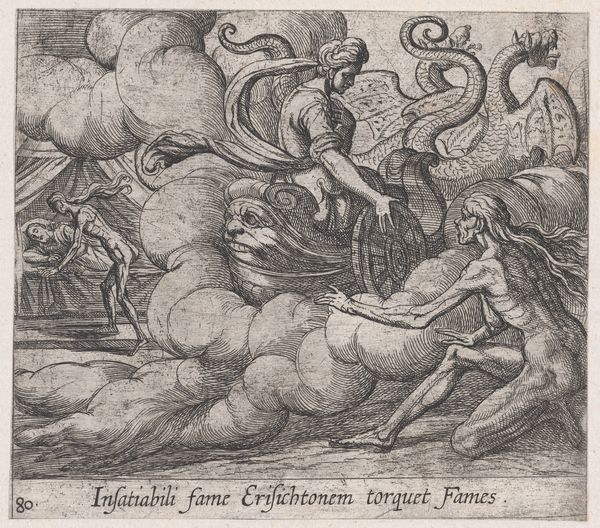
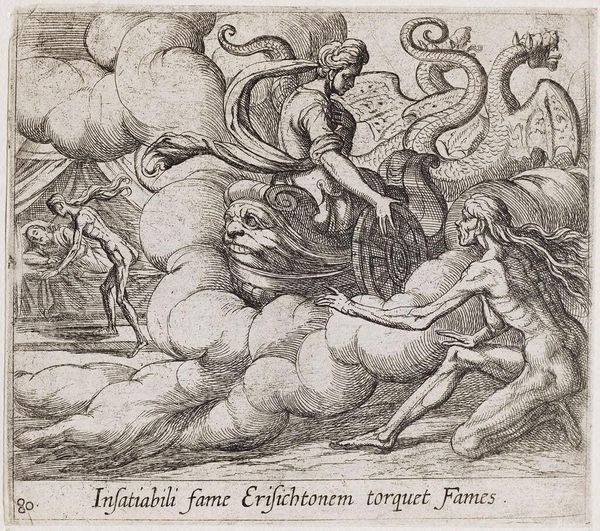
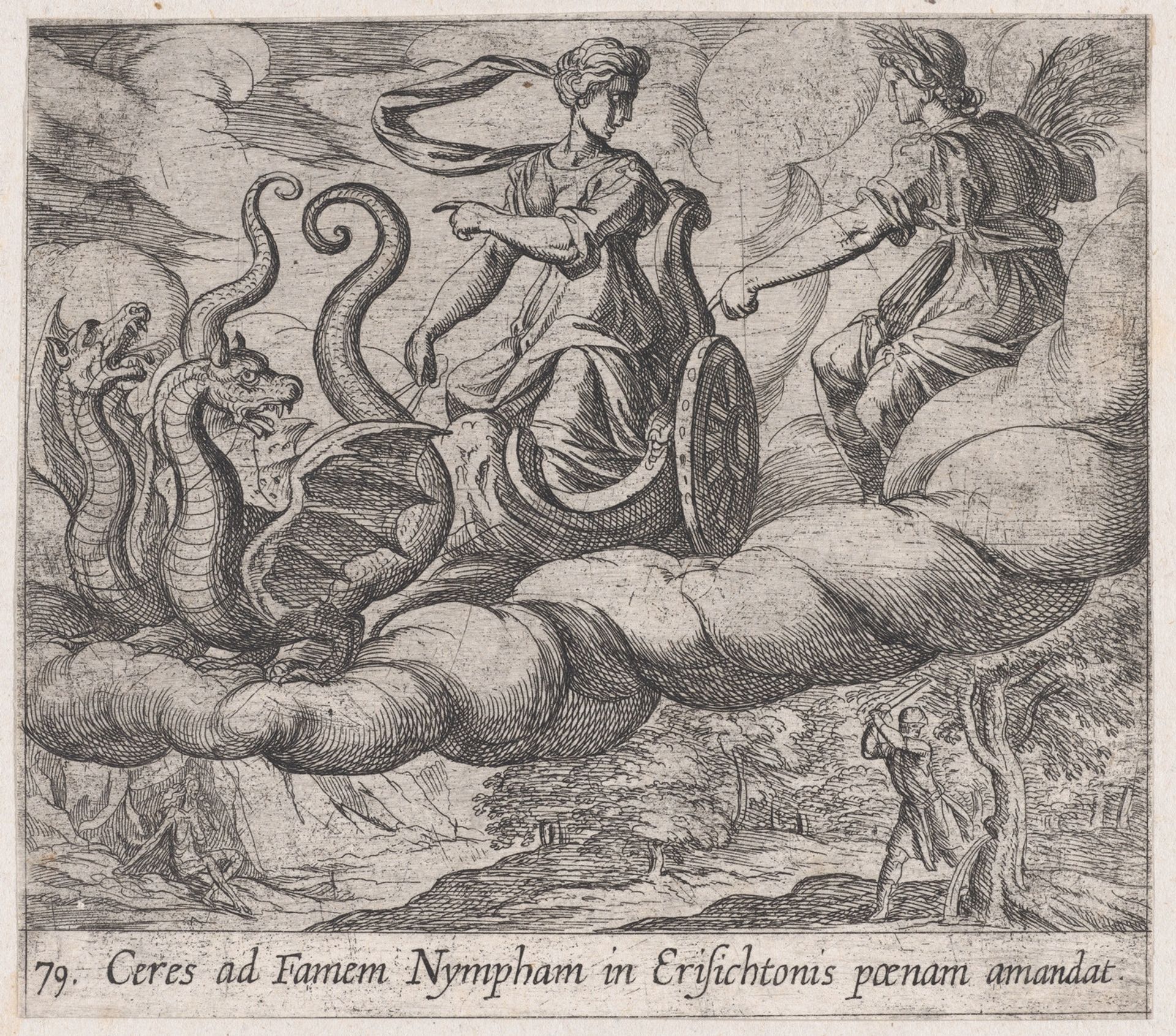
Curator: Look at the intricate lines in this engraving from 1606 by Antonio Tempesta titled 'Plate 79: Ceres Ordering Erysichthon's Punishment,' part of his series based on Ovid’s 'Metamorphoses'. Editor: My first thought? It's chaotic and precise all at once. Like a bad dream rendered with absolute clarity. Curator: Absolutely. The composition is a cascade. Ceres, goddess of agriculture, rides her dragon-drawn chariot on a cloud, indicting a nymph while an ordinary mortal chops away at a tree below, apparently inviting the goddess’s wrath. It’s classic baroque dynamism, filled with underlying commentary on our impact upon the natural world and divine retribution. Editor: Retribution is right! She looks furious. You can almost hear the screech of those dragon-serpents as she orders starvation, personified in that skeletal nymph to wreak havoc. Gives me chills. What a way to represent divine power. It’s so… theatrical. Curator: Tempesta really captures the drama inherent in Ovid's narrative. It's not just history painting; it's allegory, packed with visual metaphors. Ceres, normally associated with bounty and nourishment, is here orchestrating famine. The scales are upset by Erysichthon’s hubris, by cutting down her sacred grove. Editor: Yeah, you definitely get the feeling of disruption, upsetting the natural order. And he’s such a tiny figure, this poor tree-chopper, so powerless in the face of divine rage! The engraving itself, with its precise lines, somehow heightens the feeling of cold, inescapable fate. Curator: Indeed. Every detail has symbolic weight, doesn’t it? Editor: It really does. What seemed initially just complex now feels deliberate. Curator: Well, I find that exploring how visual culture is used in historical stories helps me understand my connection to people who may not live now, but live on in cultural memory. Editor: This piece feels both so old and remarkably resonant. Kind of makes you want to reconsider your carbon footprint before lunch, eh?
Plate 79: Ceres Ordering Erysichthon's Punishment (Ceres ad Famem Mypham in Erisichtonis paenam amandat), from Ovid's 'Metamorphoses' 1606


Artwork details
- Medium
- drawing, print, engraving
- Dimensions
- Sheet: 4 in. × 4 1/2 in. (10.1 × 11.5 cm)
- Location
- Metropolitan Museum of Art, New York, NY
- Copyright
- Public Domain
Tags
drawing
allegory
baroque
history-painting
engraving
Comments
No comments
About this artwork
Curator: Look at the intricate lines in this engraving from 1606 by Antonio Tempesta titled 'Plate 79: Ceres Ordering Erysichthon's Punishment,' part of his series based on Ovid’s 'Metamorphoses'. Editor: My first thought? It's chaotic and precise all at once. Like a bad dream rendered with absolute clarity. Curator: Absolutely. The composition is a cascade. Ceres, goddess of agriculture, rides her dragon-drawn chariot on a cloud, indicting a nymph while an ordinary mortal chops away at a tree below, apparently inviting the goddess’s wrath. It’s classic baroque dynamism, filled with underlying commentary on our impact upon the natural world and divine retribution. Editor: Retribution is right! She looks furious. You can almost hear the screech of those dragon-serpents as she orders starvation, personified in that skeletal nymph to wreak havoc. Gives me chills. What a way to represent divine power. It’s so… theatrical. Curator: Tempesta really captures the drama inherent in Ovid's narrative. It's not just history painting; it's allegory, packed with visual metaphors. Ceres, normally associated with bounty and nourishment, is here orchestrating famine. The scales are upset by Erysichthon’s hubris, by cutting down her sacred grove. Editor: Yeah, you definitely get the feeling of disruption, upsetting the natural order. And he’s such a tiny figure, this poor tree-chopper, so powerless in the face of divine rage! The engraving itself, with its precise lines, somehow heightens the feeling of cold, inescapable fate. Curator: Indeed. Every detail has symbolic weight, doesn’t it? Editor: It really does. What seemed initially just complex now feels deliberate. Curator: Well, I find that exploring how visual culture is used in historical stories helps me understand my connection to people who may not live now, but live on in cultural memory. Editor: This piece feels both so old and remarkably resonant. Kind of makes you want to reconsider your carbon footprint before lunch, eh?
Comments
No comments