About this artwork
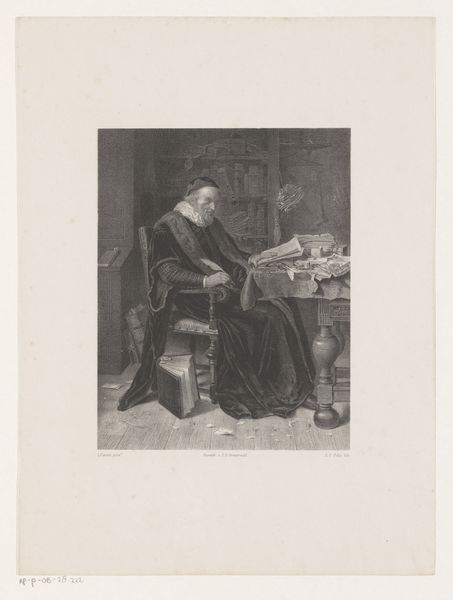
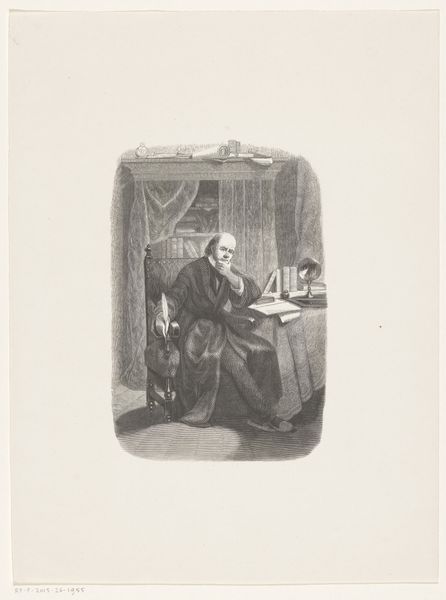
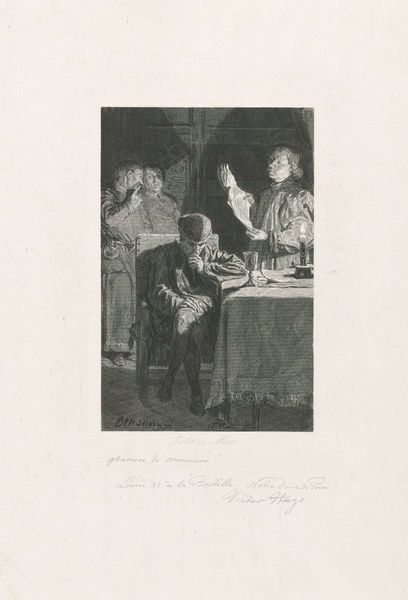
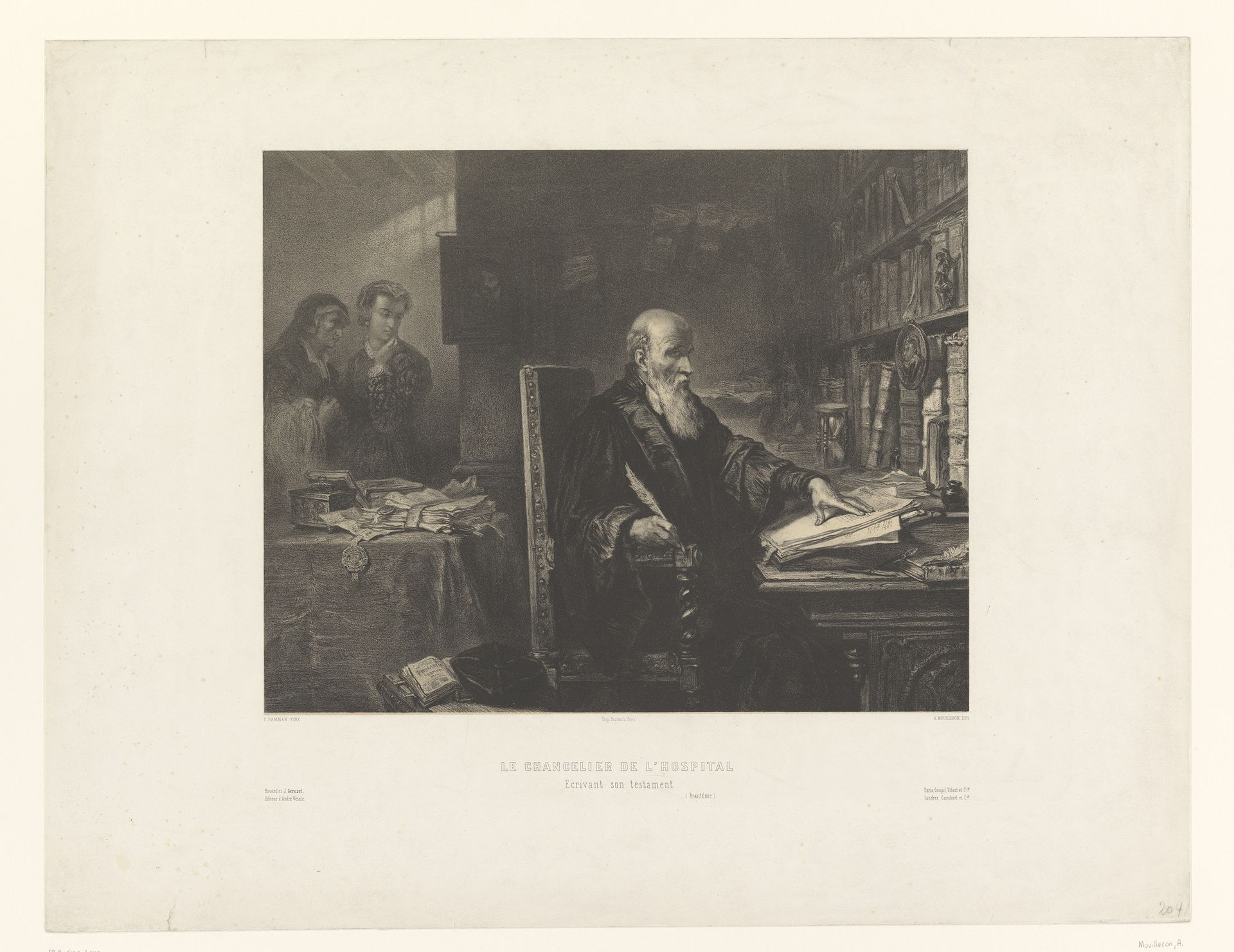
Adolphe Mouilleron made this print of “Kanselier Michel de l'Hospital schrijft zijn testament” using an unspecified printing technique. It seems likely this was made in France, given the artist and subject, and probably dates to the mid 19th century. Michel de l’Hospital was a 16th century French statesman known for advocating religious tolerance during the French Wars of Religion. The image presents him as a learned, thoughtful man, surrounded by books, hard at work on his final testament. We might ask ourselves what kind of political message this image would carry in 19th century France. Was it a commentary on contemporary politics or perhaps a call for greater religious tolerance? To understand the image better we can research the 19th-century French political landscape and study the artist's other works and any writings about his artistic or political views. The meaning of art is always contingent on the social and institutional context in which it was made and viewed.
Kanselier Michel de l'Hospital schrijft zijn testament
1841 - 1850

Adolphe Mouilleron
1820 - 1881Location
RijksmuseumArtwork details
- Medium
- print, engraving
- Dimensions
- height 510 mm, width 654 mm
- Location
- Rijksmuseum
- Copyright
- Rijks Museum: Open Domain
Tags
Comments
Share your thoughts
About this artwork
Adolphe Mouilleron made this print of “Kanselier Michel de l'Hospital schrijft zijn testament” using an unspecified printing technique. It seems likely this was made in France, given the artist and subject, and probably dates to the mid 19th century. Michel de l’Hospital was a 16th century French statesman known for advocating religious tolerance during the French Wars of Religion. The image presents him as a learned, thoughtful man, surrounded by books, hard at work on his final testament. We might ask ourselves what kind of political message this image would carry in 19th century France. Was it a commentary on contemporary politics or perhaps a call for greater religious tolerance? To understand the image better we can research the 19th-century French political landscape and study the artist's other works and any writings about his artistic or political views. The meaning of art is always contingent on the social and institutional context in which it was made and viewed.
Comments
Share your thoughts