

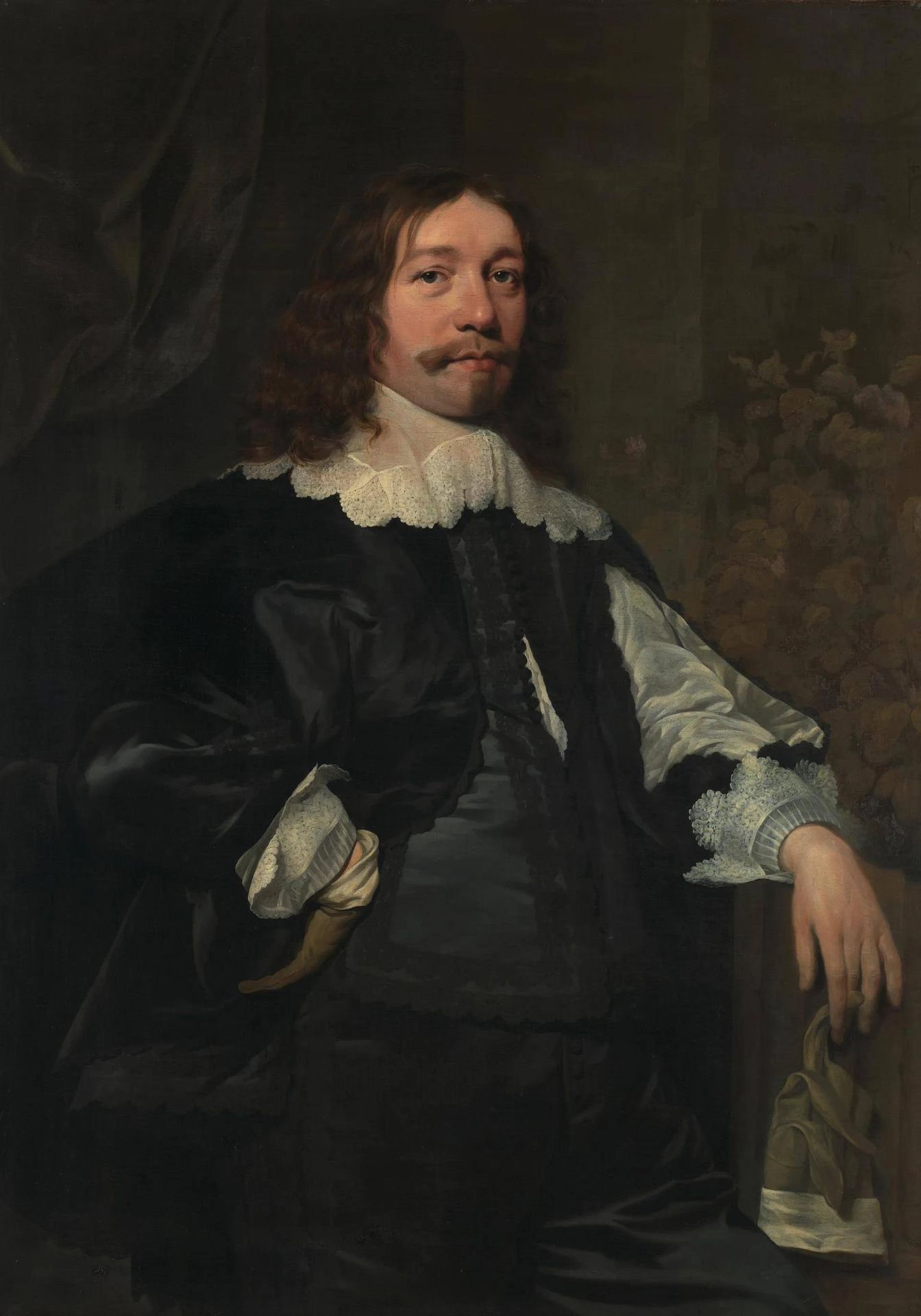
Portrait of a Man in Black holding a Glove


Listen to curator's interpretation
Curatorial notes
Bartholomeus van der Helst painted this portrait of an unknown man in black, holding a glove, sometime in the 17th century. During this period, the Dutch Republic was experiencing its Golden Age, marked by unprecedented economic prosperity and cultural flourishing. This painting reflects the values and aspirations of the rising merchant class, who sought to display their wealth and status through portraiture. The sitter’s black attire, though seemingly simple, conveys an air of understated elegance and sophistication. The lace collar and cuffs add a touch of refinement, while the glove serves as a symbol of his elevated social standing. Consider the gaze of the man. There is a quiet confidence, a sense of self-possession that speaks to the sitter’s identity within the economic and social structures of the time. Through composition, Van der Helst offers us a glimpse into the complexities of identity and representation during the Dutch Golden Age. The work resonates with both the societal values and the personal aspirations of its time.