About this artwork
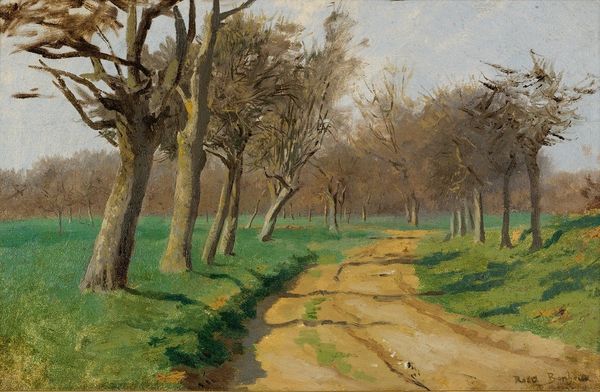
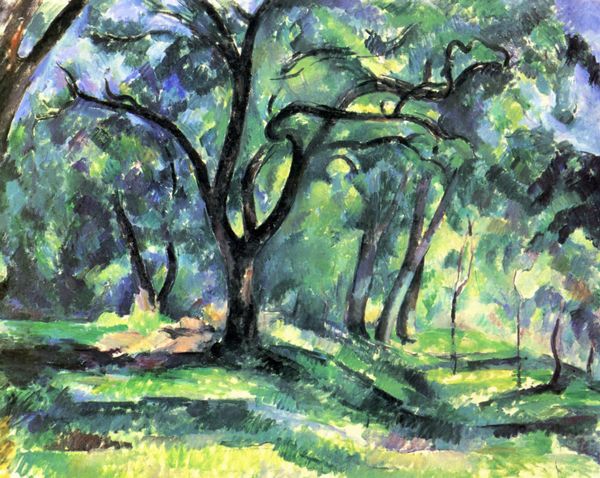
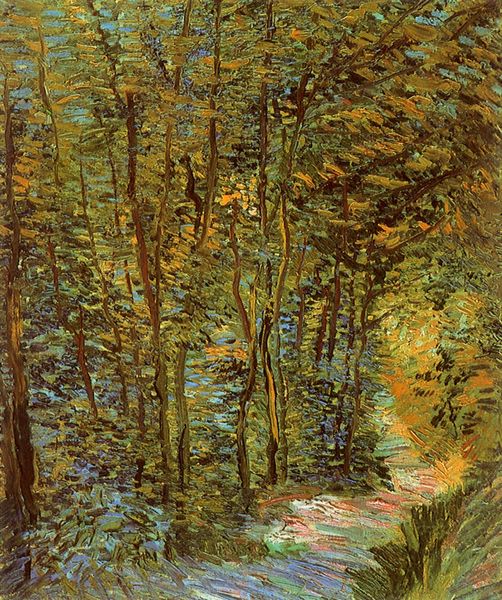
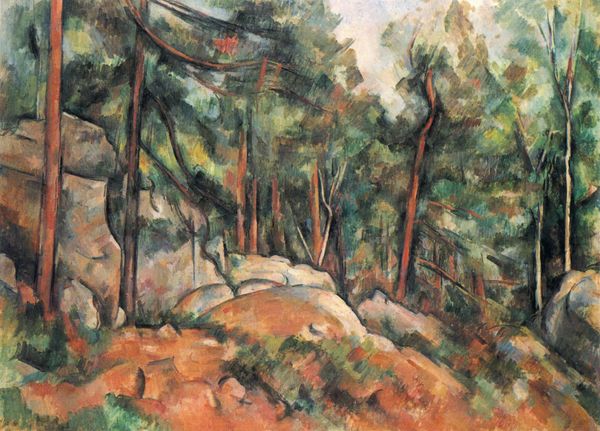
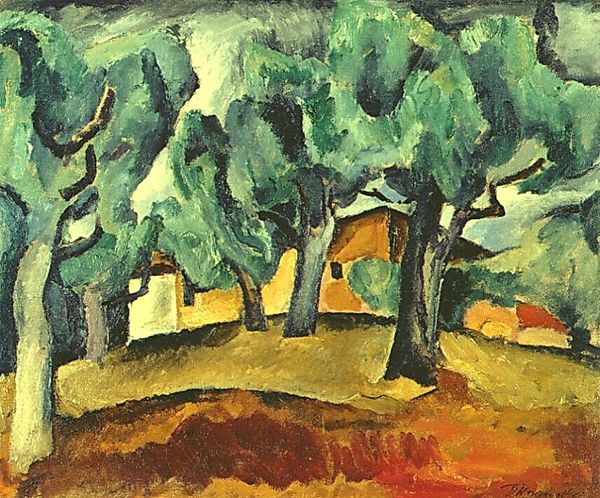
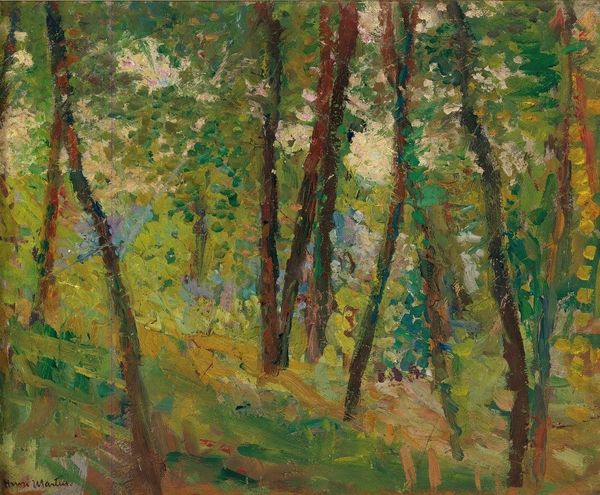
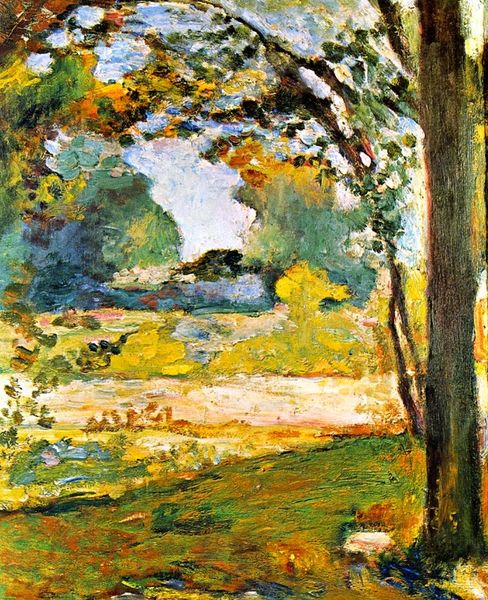
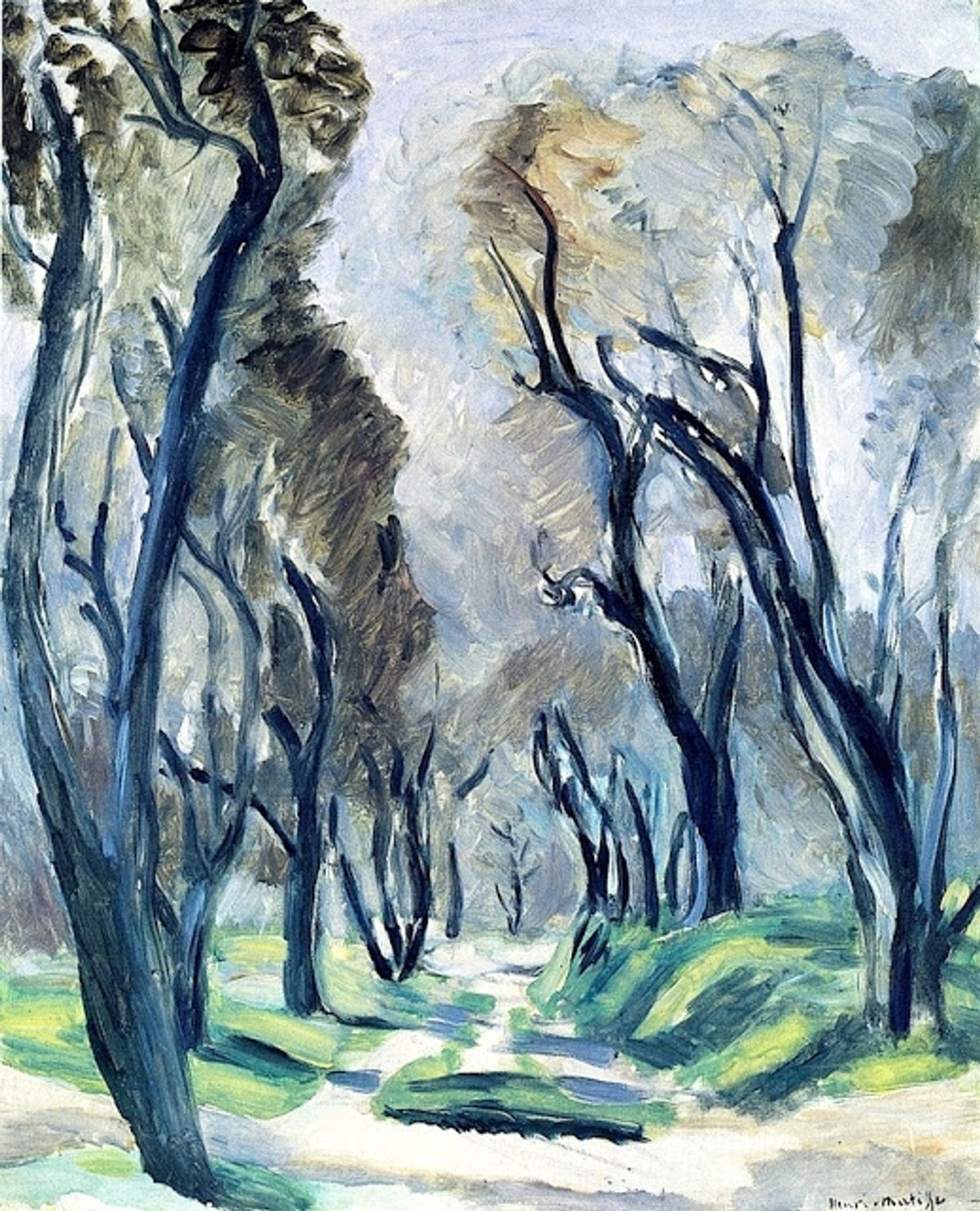
Curator: This is Henri Matisse's "The Path of Olive Trees," painted in 1920. He's working "en plein air" here with oil paint. There's a tangible atmospheric quality, what's your impression? Editor: A somber mood immediately strikes me. The muted blues and grays give it this wintry, almost haunting feel. You can almost feel the dampness in the air, clinging to the path. Curator: Interestingly, this work comes relatively late in Matisse's career when we might expect sunnier climes and palettes given his southern location, specifically in Nice at this time. I am very fascinated with his brushstrokes that really draw attention to the act of applying the paint, look here along the bottom left. Editor: Yes, those marks are thick and very visible. One thinks of Impressionism here. Yet the handling feels distinctly more, expressionistic—he is using that outdoor experience as a jumping-off point to evoke something internal. Where and how would such a piece have been displayed? What role do the critics play? Curator: These kinds of paintings would have circulated among other artists, smaller independent galleries, perhaps shown in artists' studios. There are not strong indicators of any kind of traditional canvas that indicates the type of supports are part of his process that makes them easily transportable. This method of 'plain-air' practice allows to explore with this support various techniques in this particular work. Editor: It really pushes at the boundaries between preparatory sketches, process, and final work of art, doesn’t it? It challenges this academic view that paintings are not so perfect, this kind of technique leaves marks on the canvas. It has an intimate feeling, despite being a landscape. Curator: I concur; the way the materiality informs the image makes the final landscape less a picture of the landscape and more a meditation on the process of painting itself, this also is thanks to its monochromatism. Editor: Absolutely. Knowing this work makes me reconsider Matisse entirely. Thanks for helping me see it anew! Curator: It was my pleasure to explore its materiality and social context with you today!

Artwork details
- Medium
- plein-air, oil-paint
- Copyright
- Public domain US
Tags
tree
abstract painting
impressionist painting style
plein-air
oil-paint
landscape
impressionist landscape
oil painting
expressionism
water
expressionist
monochrome
Comments
No comments
About this artwork
Curator: This is Henri Matisse's "The Path of Olive Trees," painted in 1920. He's working "en plein air" here with oil paint. There's a tangible atmospheric quality, what's your impression? Editor: A somber mood immediately strikes me. The muted blues and grays give it this wintry, almost haunting feel. You can almost feel the dampness in the air, clinging to the path. Curator: Interestingly, this work comes relatively late in Matisse's career when we might expect sunnier climes and palettes given his southern location, specifically in Nice at this time. I am very fascinated with his brushstrokes that really draw attention to the act of applying the paint, look here along the bottom left. Editor: Yes, those marks are thick and very visible. One thinks of Impressionism here. Yet the handling feels distinctly more, expressionistic—he is using that outdoor experience as a jumping-off point to evoke something internal. Where and how would such a piece have been displayed? What role do the critics play? Curator: These kinds of paintings would have circulated among other artists, smaller independent galleries, perhaps shown in artists' studios. There are not strong indicators of any kind of traditional canvas that indicates the type of supports are part of his process that makes them easily transportable. This method of 'plain-air' practice allows to explore with this support various techniques in this particular work. Editor: It really pushes at the boundaries between preparatory sketches, process, and final work of art, doesn’t it? It challenges this academic view that paintings are not so perfect, this kind of technique leaves marks on the canvas. It has an intimate feeling, despite being a landscape. Curator: I concur; the way the materiality informs the image makes the final landscape less a picture of the landscape and more a meditation on the process of painting itself, this also is thanks to its monochromatism. Editor: Absolutely. Knowing this work makes me reconsider Matisse entirely. Thanks for helping me see it anew! Curator: It was my pleasure to explore its materiality and social context with you today!
Comments
No comments