About this artwork
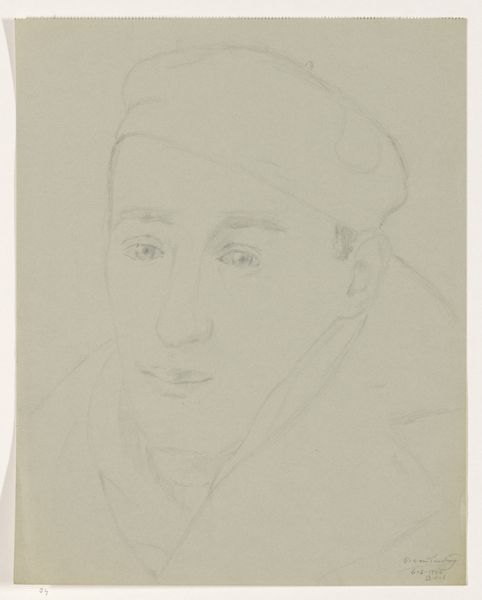
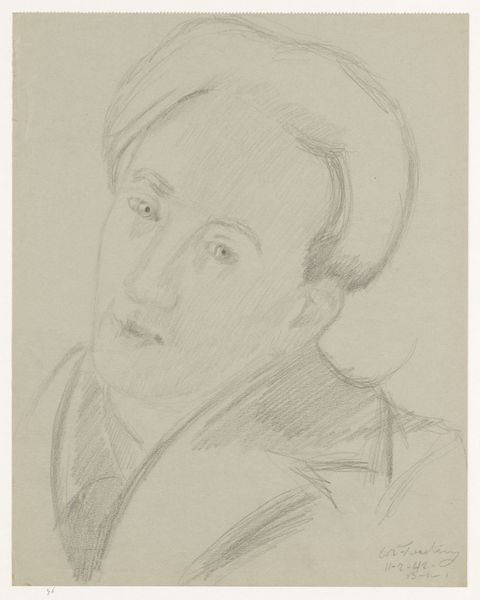
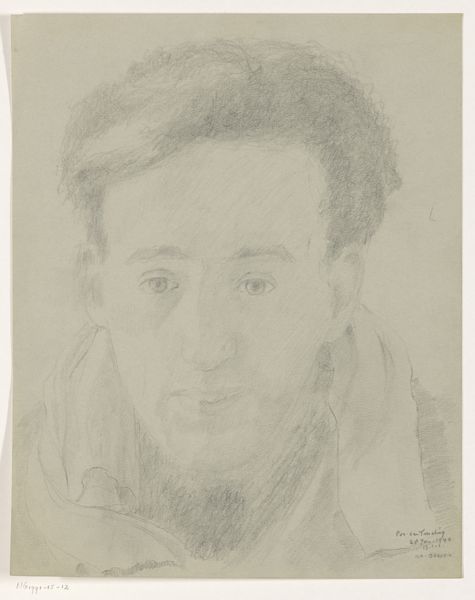
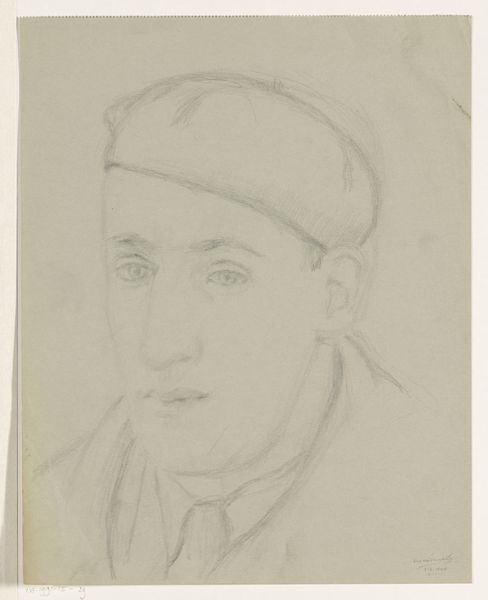
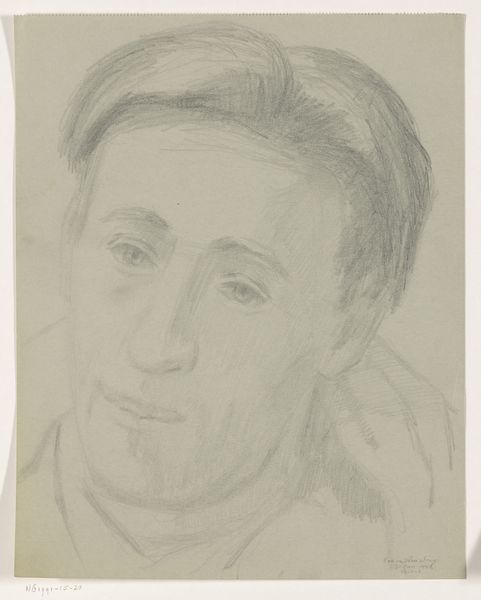
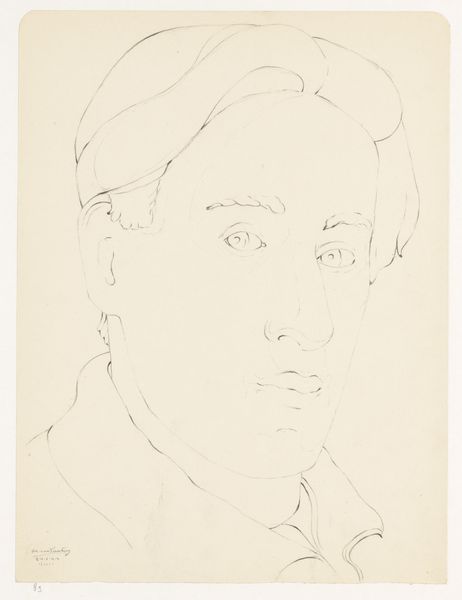
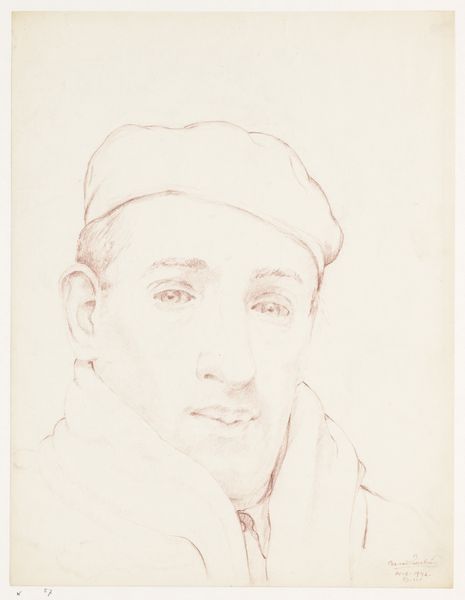
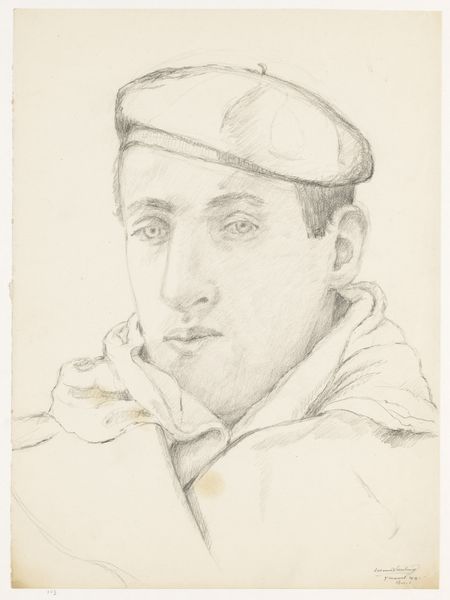
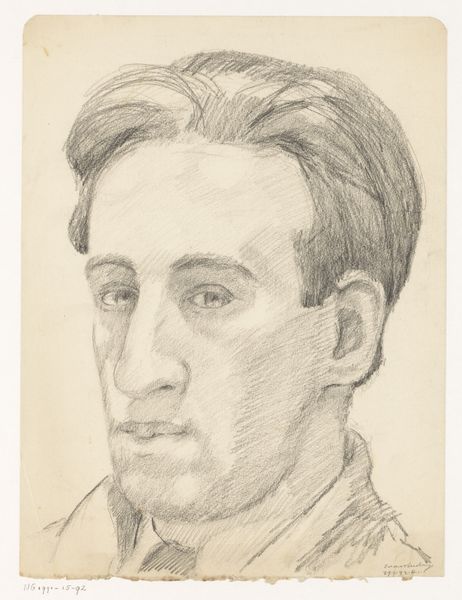
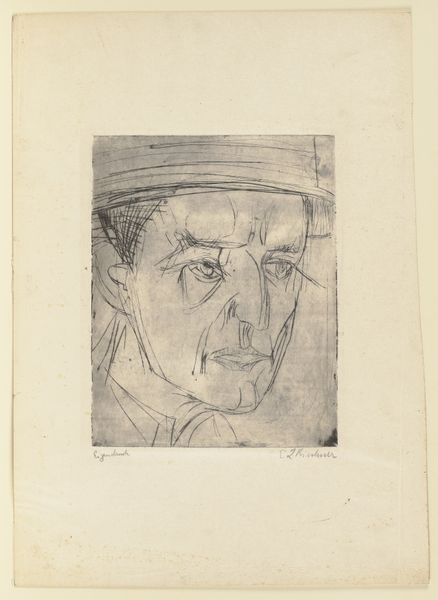
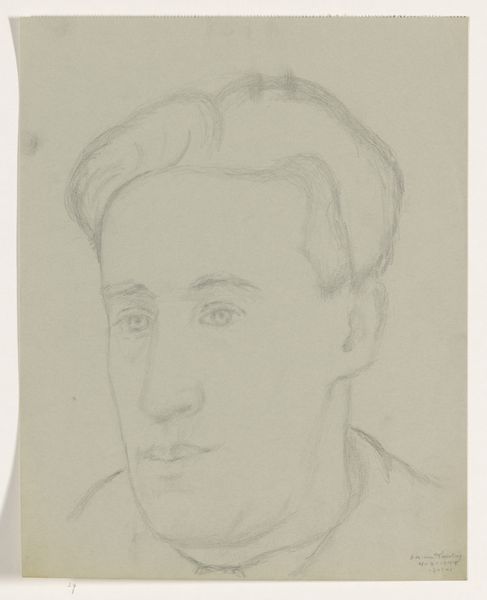
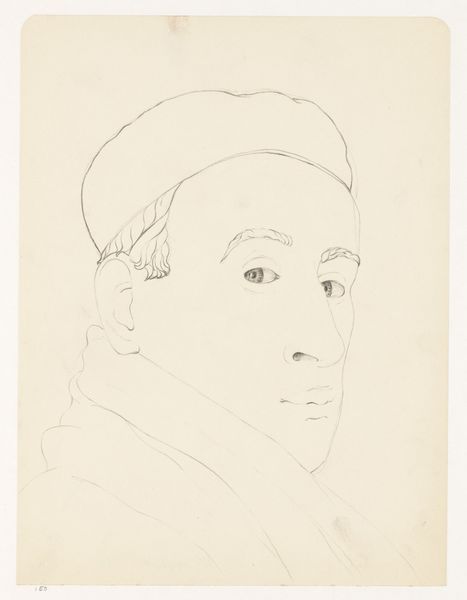
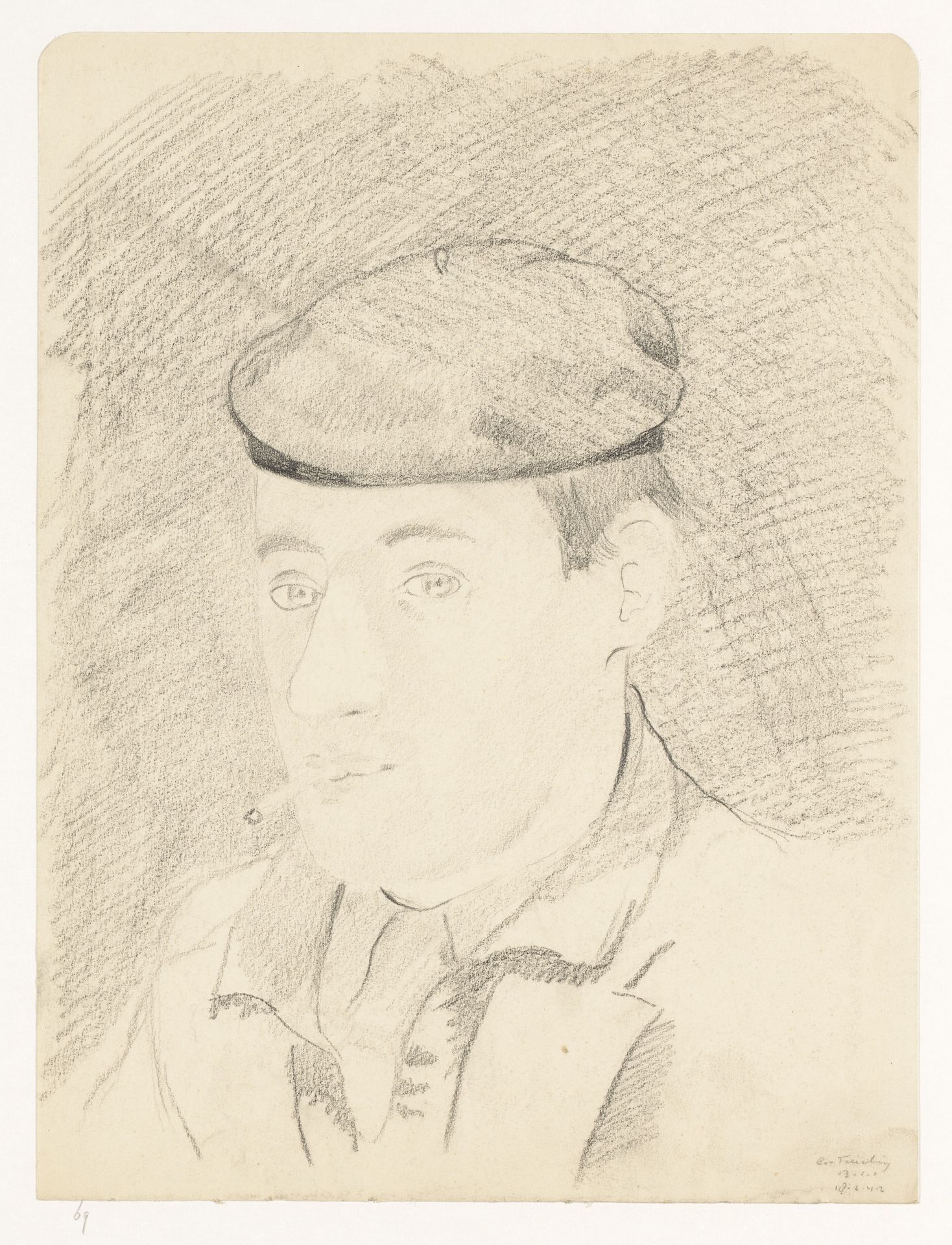
Curator: Here we have Cor van Teeseling’s "Self-Portrait with Cap and Cigarette: B-1-1, February 18th." It’s possibly from 1942, a pencil drawing held at the Rijksmuseum. Editor: It strikes me as melancholic, almost haunted. The shading is so intense around the figure, it's as if the artist is struggling to emerge from the darkness. Curator: The social context is crucial here. The date suggests this was created during the Nazi occupation of the Netherlands. Self-portraits, during such times, were often acts of quiet defiance or introspective reflection amidst turmoil. Editor: Exactly! We see so many self-portraits created under duress that embody a profound sense of alienation. Note the subtle details – the cap, the cigarette, both working-class identifiers. They’re understated symbols of identity in a time when identity was being stripped away. Curator: The museum setting also influences our reading. Exhibiting this today elevates it, grants it historical importance, even as it portrays a potentially private, perhaps even clandestine, moment. Was this meant for public consumption? Editor: I don't know. But it does prompt reflections on resistance and survival, especially in a historical context of marginalization and social repression. Van Teeseling captures a quiet determination; it's not a heroic pose, but it still communicates the power of resilience. Curator: It reminds us of the everyday people caught in extraordinary circumstances, whose stories are often lost. This small sketch speaks to the humanity within even the harshest of historical narratives. Editor: For me, seeing the piece invokes considerations of selfhood in the face of oppressive systems, a silent dialogue on inner strength and endurance. Curator: It makes you wonder about his story, about what happened to him, about the countless other faces we don't see in the history books. Editor: Yes, this intimate self-portrait evokes larger questions about human dignity, and what it means to exist under oppressive constraints, doesn’t it?
Zelfportret met pet en sigaret: B-1-1, 18 februari
Possibly 1942

Cor van Teeseling
1915 - 1942Location
RijksmuseumArtwork details
- Medium
- drawing, pencil
- Dimensions
- height 32.0 cm, width 24.0 cm
- Location
- Rijksmuseum
- Copyright
- Rijks Museum: Open Domain
Tags
Comments
Share your thoughts
About this artwork
Curator: Here we have Cor van Teeseling’s "Self-Portrait with Cap and Cigarette: B-1-1, February 18th." It’s possibly from 1942, a pencil drawing held at the Rijksmuseum. Editor: It strikes me as melancholic, almost haunted. The shading is so intense around the figure, it's as if the artist is struggling to emerge from the darkness. Curator: The social context is crucial here. The date suggests this was created during the Nazi occupation of the Netherlands. Self-portraits, during such times, were often acts of quiet defiance or introspective reflection amidst turmoil. Editor: Exactly! We see so many self-portraits created under duress that embody a profound sense of alienation. Note the subtle details – the cap, the cigarette, both working-class identifiers. They’re understated symbols of identity in a time when identity was being stripped away. Curator: The museum setting also influences our reading. Exhibiting this today elevates it, grants it historical importance, even as it portrays a potentially private, perhaps even clandestine, moment. Was this meant for public consumption? Editor: I don't know. But it does prompt reflections on resistance and survival, especially in a historical context of marginalization and social repression. Van Teeseling captures a quiet determination; it's not a heroic pose, but it still communicates the power of resilience. Curator: It reminds us of the everyday people caught in extraordinary circumstances, whose stories are often lost. This small sketch speaks to the humanity within even the harshest of historical narratives. Editor: For me, seeing the piece invokes considerations of selfhood in the face of oppressive systems, a silent dialogue on inner strength and endurance. Curator: It makes you wonder about his story, about what happened to him, about the countless other faces we don't see in the history books. Editor: Yes, this intimate self-portrait evokes larger questions about human dignity, and what it means to exist under oppressive constraints, doesn’t it?
Comments
Share your thoughts