1832 - 1833
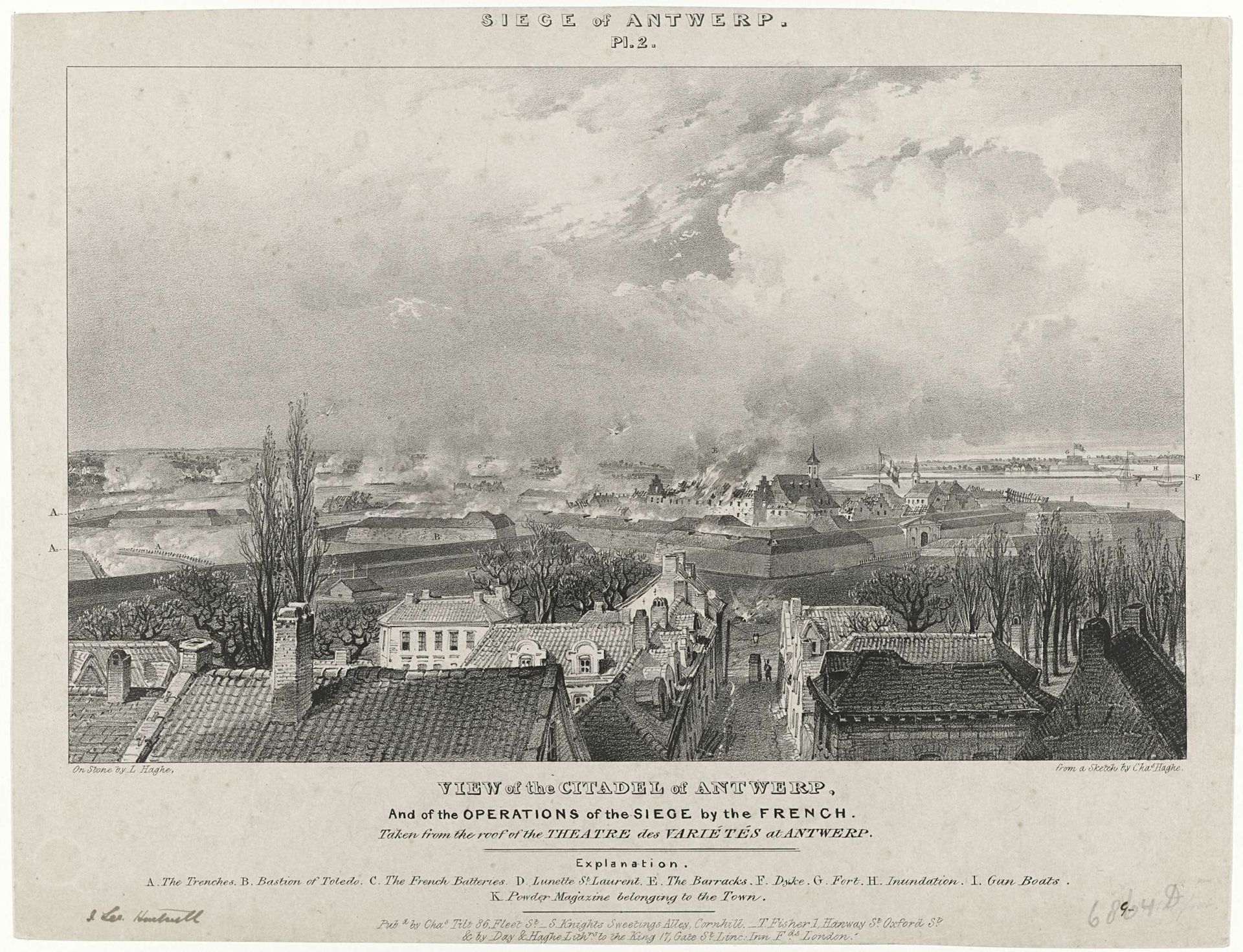
Beleg van de Citadel van Antwerpen, 1832

Louis Haghe
1806 - 1885Location
RijksmuseumListen to curator's interpretation
Curatorial notes
Louis Haghe's lithograph depicts the Siege of Antwerp in 1832, capturing the chaos and intensity of the siege. The image pulses with the drama of the battle, as indicated by the smoke, the citadel, and the clearly emphasized military operations. Yet, let us look closer at the symbol of the citadel itself, a fortress under siege, to understand its meaning within the cultural landscape. Citadels, historically, represented not only physical strongholds but also symbols of power, authority, and resilience. Across diverse cultures and eras, the besieged fortress emerges as a recurring motif, its walls tested by external forces. This image calls to mind the ancient sieges of Troy or Jerusalem, each battle etching itself into the collective memory of humankind. Consider how the image of the citadel morphs through time, from a symbol of unwavering power to one of vulnerability and conflict. It embodies a primal narrative—the struggle for dominance, the resilience of the besieged, and the inevitable transformation brought about by conflict. Just as the citadel in this lithograph stands as a testament to historical events, it also serves as a reflection of humanity’s ongoing engagement with themes of power, conflict, and change.