About this artwork
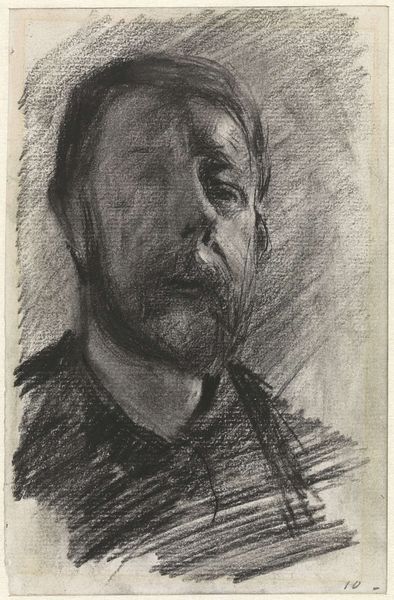
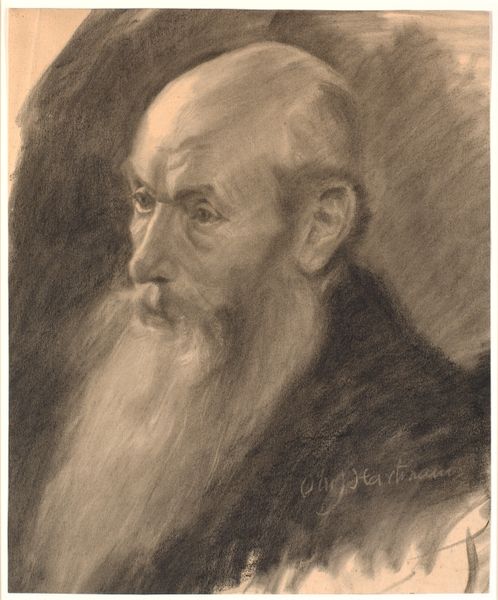
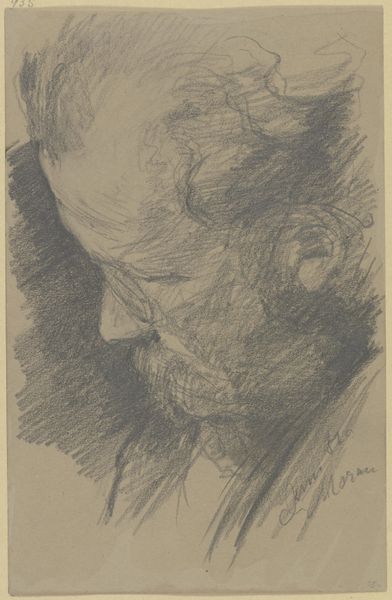
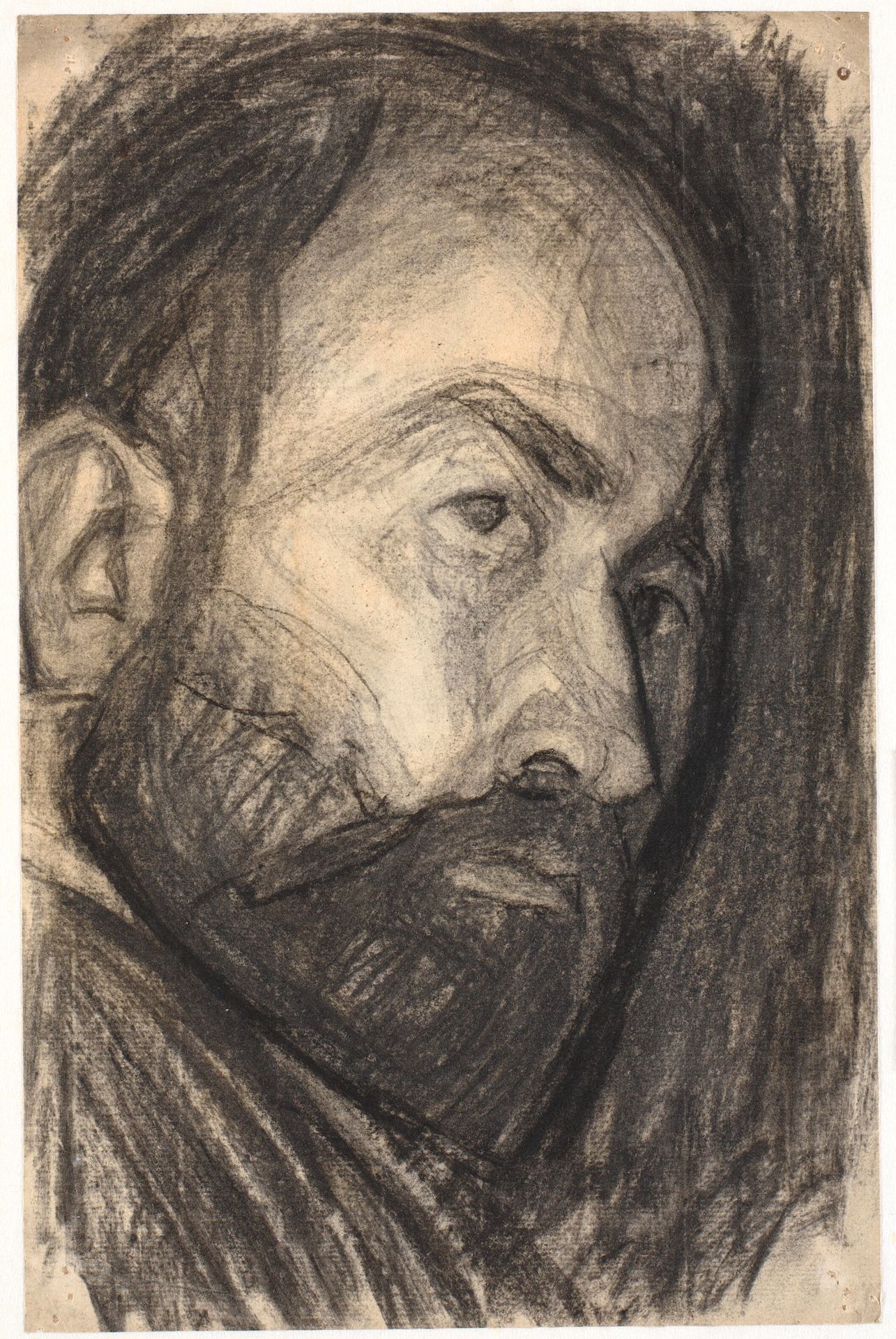
Editor: This is Niels Larsen Stevns’ self-portrait from 1902-1903, rendered in graphite and charcoal. The stark contrast gives it a very intense feel. What do you see when you look at how the drawing was made? Curator: The first thing that strikes me is the directness of the materials. Graphite and charcoal are relatively inexpensive, accessible mediums. Consider the implications of an artist choosing these materials for a self-portrait during this period. Was it a matter of financial constraint, or was there a conscious decision to reject more 'refined' media? How might that choice reflect Stevns’s view of his own labor as an artist? Editor: That’s interesting, I hadn't thought about the choice of materials being a deliberate statement. Does the drawing technique suggest anything about his process? Curator: Absolutely. The visible strokes and smudging indicate a process of layering and reworking. It doesn’t aim for a polished, idealized image. Instead, the emphasis is on the process of *making*. We could ask, what’s the role of imperfection, the rough and raw in conveying sincerity? Editor: So it’s less about the finished product and more about understanding the labor and choices that went into creating it? Curator: Precisely! And how those choices challenge established hierarchies. Is this drawing just a study, a 'lesser' form of art compared to a painting? Or is it actively questioning the value placed on different types of artistic labor and materials? Editor: This has given me a lot to think about. I didn’t expect to consider a simple self-portrait in such a socio-economic light! Curator: Exactly! Art doesn't exist in a vacuum. The materials and the way they're used always have something to say about the broader context of production and consumption.
Selvportræt. Hoved 3/4 profil mod højre
1902 - 1903


Artwork details
- Medium
- drawing, graphite, charcoal
- Dimensions
- 332 mm (height) x 216 mm (width) (bladmaal)
- Location
- SMK - Statens Museum for Kunst
Tags
Comments
Share your thoughts
About this artwork
Editor: This is Niels Larsen Stevns’ self-portrait from 1902-1903, rendered in graphite and charcoal. The stark contrast gives it a very intense feel. What do you see when you look at how the drawing was made? Curator: The first thing that strikes me is the directness of the materials. Graphite and charcoal are relatively inexpensive, accessible mediums. Consider the implications of an artist choosing these materials for a self-portrait during this period. Was it a matter of financial constraint, or was there a conscious decision to reject more 'refined' media? How might that choice reflect Stevns’s view of his own labor as an artist? Editor: That’s interesting, I hadn't thought about the choice of materials being a deliberate statement. Does the drawing technique suggest anything about his process? Curator: Absolutely. The visible strokes and smudging indicate a process of layering and reworking. It doesn’t aim for a polished, idealized image. Instead, the emphasis is on the process of *making*. We could ask, what’s the role of imperfection, the rough and raw in conveying sincerity? Editor: So it’s less about the finished product and more about understanding the labor and choices that went into creating it? Curator: Precisely! And how those choices challenge established hierarchies. Is this drawing just a study, a 'lesser' form of art compared to a painting? Or is it actively questioning the value placed on different types of artistic labor and materials? Editor: This has given me a lot to think about. I didn’t expect to consider a simple self-portrait in such a socio-economic light! Curator: Exactly! Art doesn't exist in a vacuum. The materials and the way they're used always have something to say about the broader context of production and consumption.
Comments
Share your thoughts