About this artwork
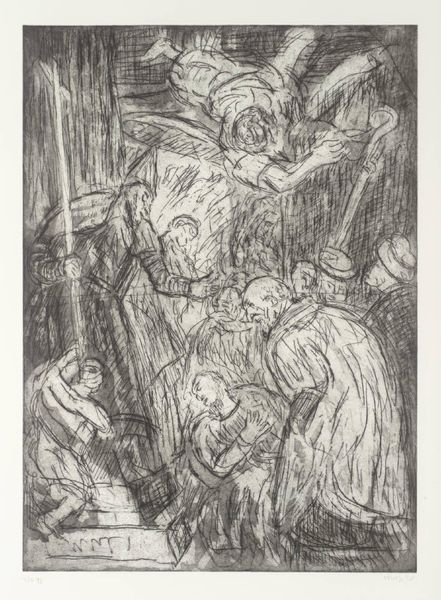
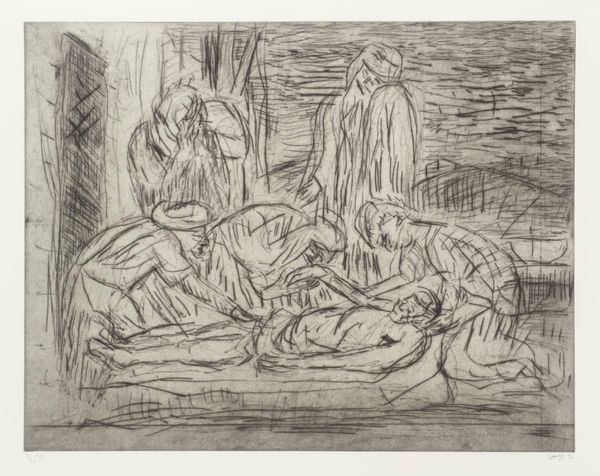
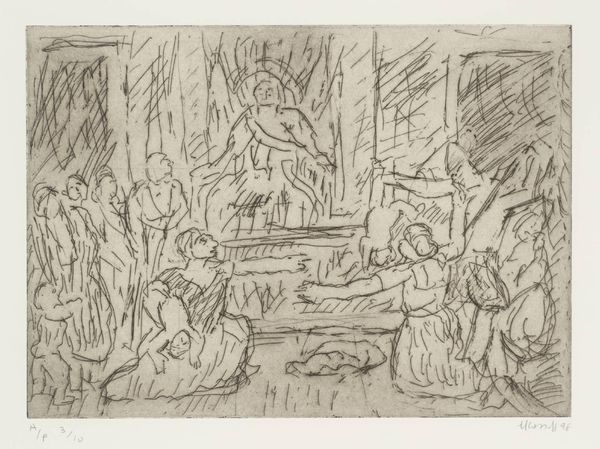
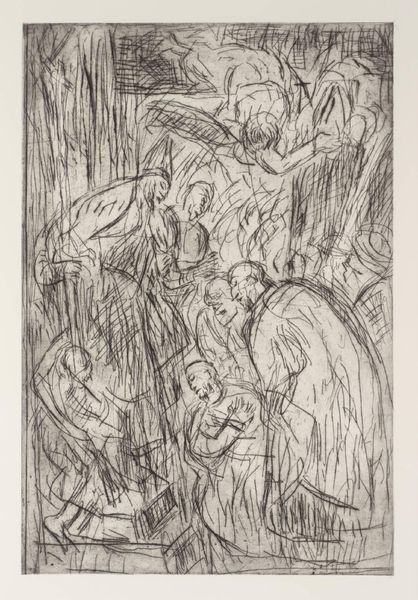
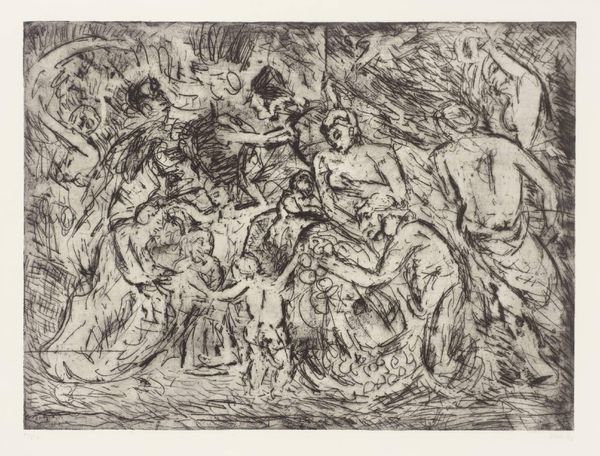
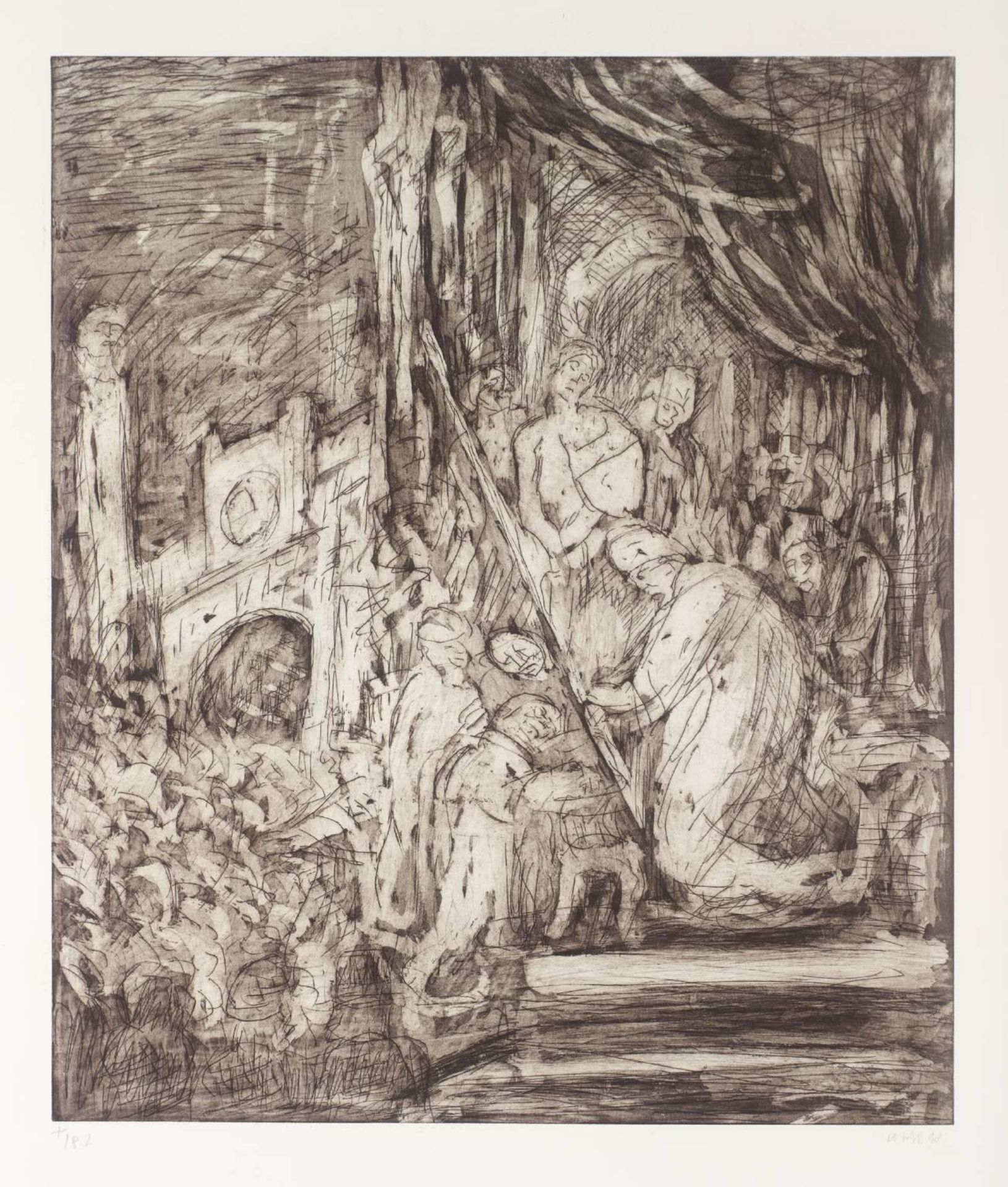
Curator: Leon Kossoff's "Christ Brought before the People," held here at the Tate, confronts us with a moment of stark, raw intensity. Editor: It feels less like a biblical scene and more like a frantic newsprint image of a riot, or some kind of intense political rally gone wrong. Curator: The etching technique seems to amplify the emotional turmoil. I find myself focusing on the symbols—the draped figure reminiscent of Pontius Pilate, the faceless crowd. It’s a potent depiction of the individual versus the collective. Editor: And the architectural elements! They’re almost collapsing under the weight of the moment. Kossoff seems to be asking: what structures uphold, and which ones fail us in these moments of decision? This work makes a powerful statement about power and its display. Curator: Indeed, it’s an important statement about the cyclical nature of power, and how easily it can be swayed by the crowd. Editor: Yes, it's a reminder that images themselves can participate in the sway of power, for better or worse.


Artwork details
- Dimensions
- image: 506 x 428 mm
- Location
- Tate Collections
- Copyright
- © Leon Kossoff | CC-BY-NC-ND 4.0 DEED, Photo: Tate
Comments

http://www.tate.org.uk/art/artworks/kossoff-christ-brought-before-the-people-p11693
This print is one of many etchings executed by Leon Kossoff in response to, and literally in the presence of, oil paintings by old masters; in this case Ecco Homo, 1634, by Rembrandt Harmenszoon van Rijn (1606-1669), owned by the Rijksmuseum, Amsterdam. This print was never published as an edition; Tate owns the second trial proof.
About this artwork
Curator: Leon Kossoff's "Christ Brought before the People," held here at the Tate, confronts us with a moment of stark, raw intensity. Editor: It feels less like a biblical scene and more like a frantic newsprint image of a riot, or some kind of intense political rally gone wrong. Curator: The etching technique seems to amplify the emotional turmoil. I find myself focusing on the symbols—the draped figure reminiscent of Pontius Pilate, the faceless crowd. It’s a potent depiction of the individual versus the collective. Editor: And the architectural elements! They’re almost collapsing under the weight of the moment. Kossoff seems to be asking: what structures uphold, and which ones fail us in these moments of decision? This work makes a powerful statement about power and its display. Curator: Indeed, it’s an important statement about the cyclical nature of power, and how easily it can be swayed by the crowd. Editor: Yes, it's a reminder that images themselves can participate in the sway of power, for better or worse.
Comments
http://www.tate.org.uk/art/artworks/kossoff-christ-brought-before-the-people-p11693
This print is one of many etchings executed by Leon Kossoff in response to, and literally in the presence of, oil paintings by old masters; in this case Ecco Homo, 1634, by Rembrandt Harmenszoon van Rijn (1606-1669), owned by the Rijksmuseum, Amsterdam. This print was never published as an edition; Tate owns the second trial proof.