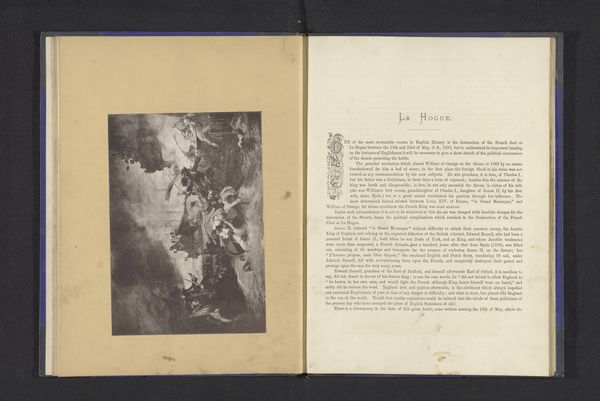
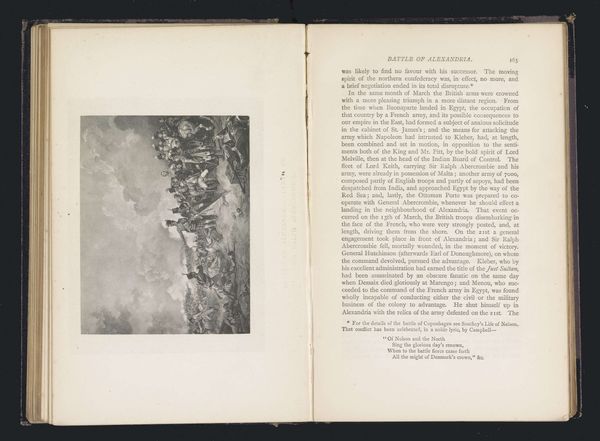
Reproductie van een schilderij van de overgave van De Winter na de verloren zeeslag bij Kamperduin before 1881
0:00
0:00

anonymous
Rijksmuseum
print, etching, engraving
# print
#
etching
#
history-painting
#
engraving
Dimensions: height 164 mm, width 222 mm
Copyright: Rijks Museum: Open Domain
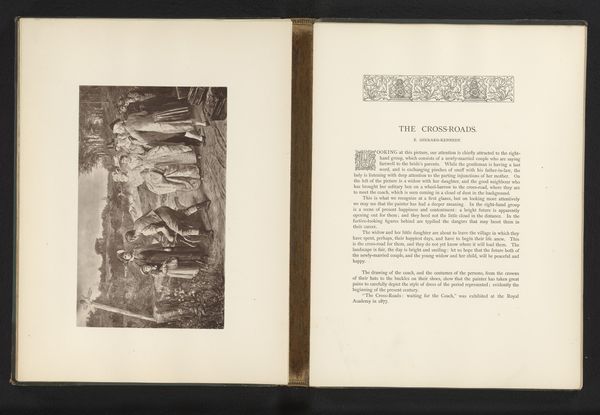
Editor: We're looking at an etching and engraving called "Reproductie van een schilderij van de overgave van De Winter na de verloren zeeslag bij Kamperduin," which translates to Reproduction of a Painting of the Surrender of De Winter after the Lost Naval Battle at Kamperduin. It dates from before 1881 and is currently held at the Rijksmuseum. The scene is quite chaotic and overwhelming, packed with figures. What historical context shapes our understanding of this print? Curator: This image reproduces a history painting depicting a pivotal naval battle and surrender, key events ripe with political significance, especially as memorialized and circulated in print. Consider the role of the Rijksmuseum itself – founded to showcase national history and identity. How does this reproduction, intended for mass consumption, contribute to the construction of Dutch national narrative concerning the Battle of Kamperduin? Editor: So, it's not just about depicting an event, but about solidifying a specific memory of it for the public? Curator: Exactly. Think about how the visual choices – the emphasis on the 'surrender,' the portrayal of figures involved – might serve particular ideological ends. What details strike you as potentially reinforcing a particular view of the Dutch and British at the time? Editor: The way the central figures are positioned, with De Winter perhaps appearing less defeated, more dignified... that could influence the viewer. I also wonder about the circulation of this print—who was the intended audience, and how accessible was it? Curator: Excellent questions! Examining those distribution networks and intended audiences allows us to consider the socio-political power dynamics inherent in visual representations of history. The engraving’s availability shapes how the broader public forms opinions of the event, and its actors, De Winter specifically. Editor: This makes me think about how even seemingly objective historical depictions are loaded with subjective interpretations shaped by power structures. Curator: Precisely. By recognizing these underlying forces, we can approach historical artworks not just as records, but as active participants in shaping collective memory and national identity.
Comments
No comments
Be the first to comment and join the conversation on the ultimate creative platform.
 Collect
 React
React Comment
More like this