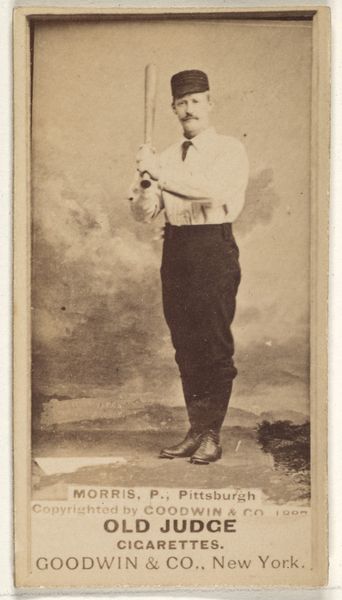
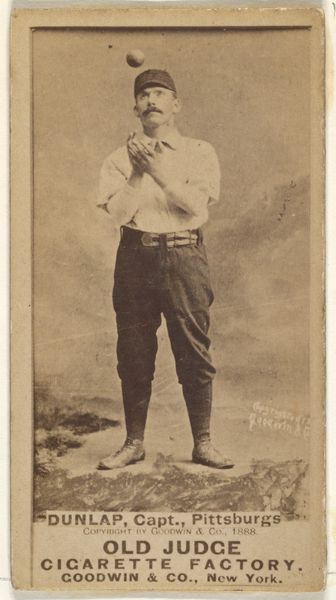
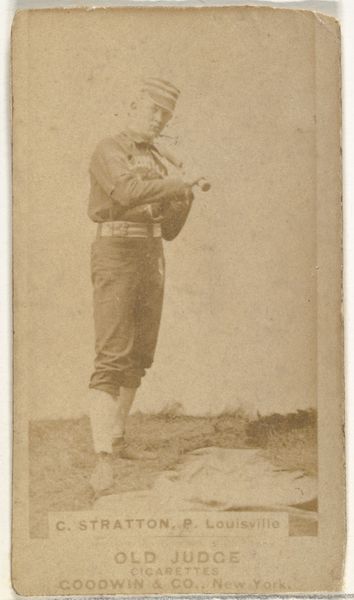
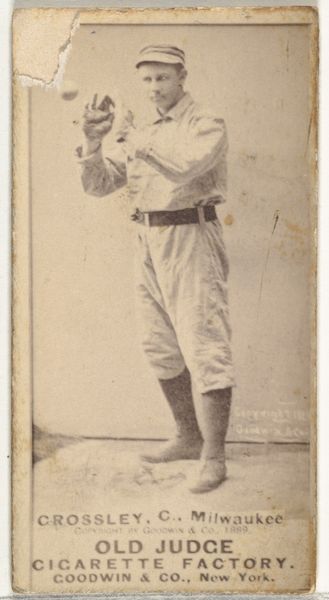
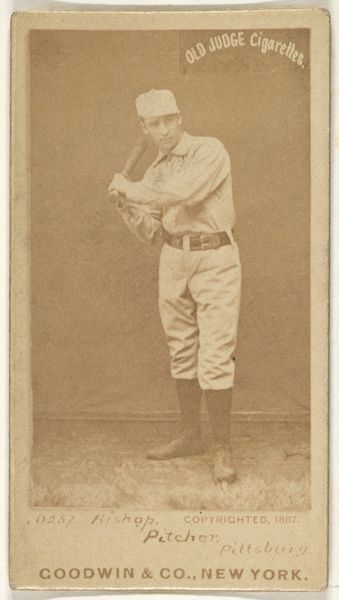
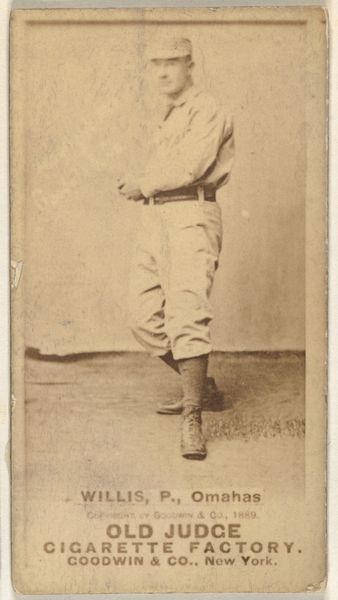
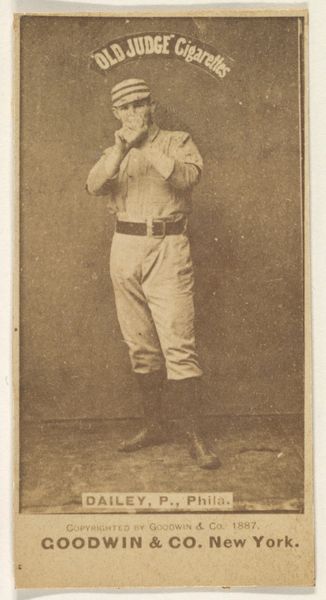
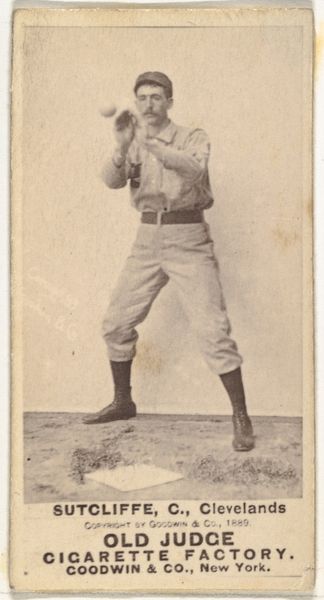
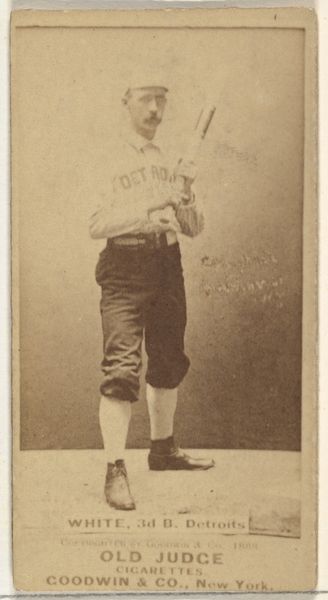
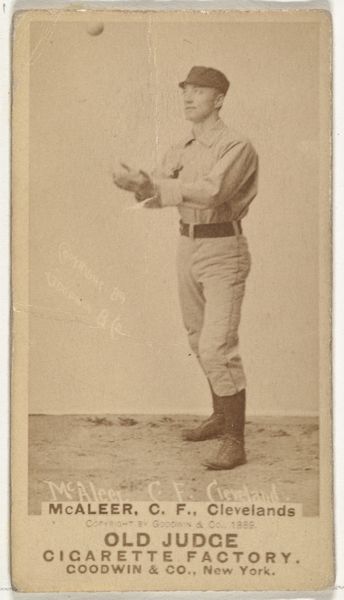
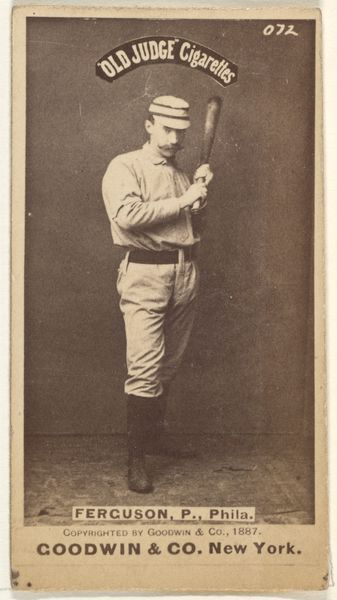
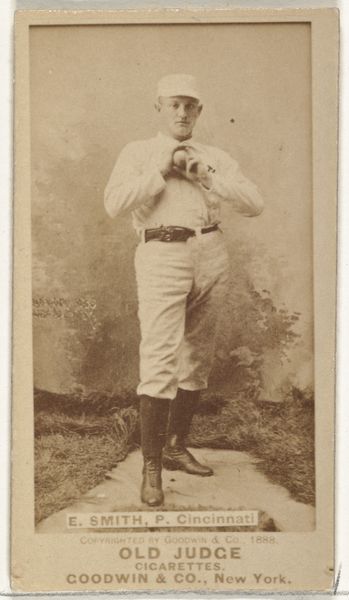
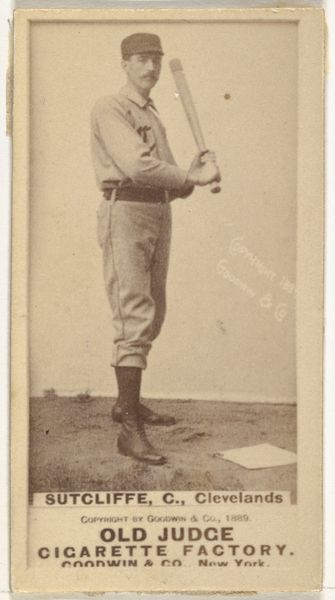
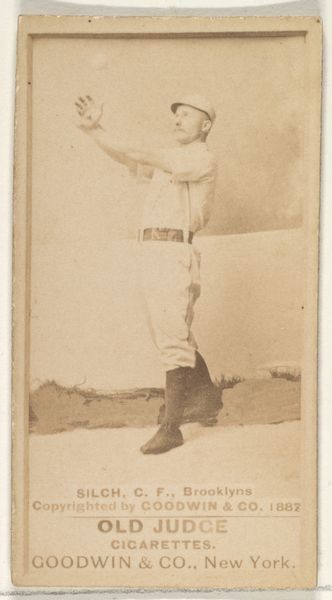
Andrews, Center Field, Philadelphia, from the Kalamazoo Bats series (N690) issued by Chas. Gross & Co. to promote Kalamazoo Bats 1887


drawing, print, photography, albumen-print
portrait
drawing
aged paper
toned paper
baseball
photography
historical photography
albumen-print
Dimensions: Sheet: 4 in. × 2 1/4 in. (10.1 × 5.7 cm)
Copyright: Public Domain
Editor: This is "Andrews, Center Field, Philadelphia, from the Kalamazoo Bats series," a baseball card created by Chas. Gross & Co. in 1887. It's an albumen print, giving it that warm, sepia tone. I’m struck by how clearly it showcases both the individual and the commercial context. What should we consider when we look at it? Curator: Consider the means of production, first. Photography at this time was tied to specific materials and chemical processes—how does that influence our understanding of this card as a commodity, a product marketed alongside Kalamazoo Bats? Notice the explicit copyright notice; its production was regulated, and valuable. Editor: So, it's not just about celebrating the baseball player; it’s equally about promoting and protecting the business interests involved? Curator: Precisely. This card exists at the intersection of burgeoning professional sports and industrial manufacturing. Think about the albumen itself – egg whites used to create a glossy surface – transforming an everyday substance into a medium for mass-produced imagery. Who had access to this image and who was being targeted in the late 19th century? Editor: It's interesting to consider the raw materials involved— eggs, photographic chemicals, paper— and how their transformation results in both a portrait and an advertisement, democratizing image production and consumption but also commodifying Andrews, baseball and labor. Curator: Yes. This card also signifies the increased intersection of sport, fame, and advertising as an aspirational way of life, where consumption blurs with representation and identity. How do the economics shape the aesthetics? Editor: So by considering the materials, production, and purpose of this card, it provides some social and cultural insight into that time? Thanks! Curator: It also makes us wonder, what “collectables” say about *our* present values and production methods today.
Comments
No comments
Be the first to comment and join the conversation on the ultimate creative platform.
 React
React Comment