About this artwork
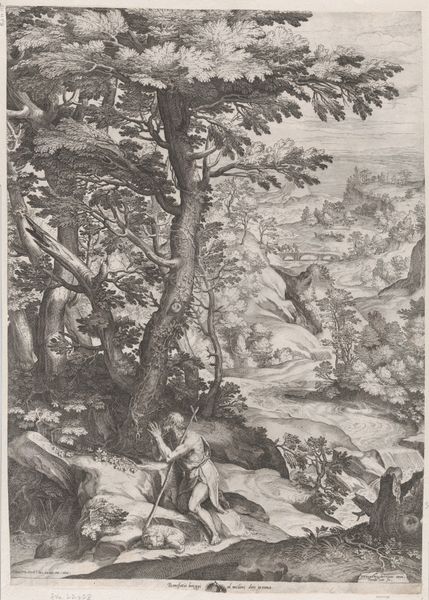
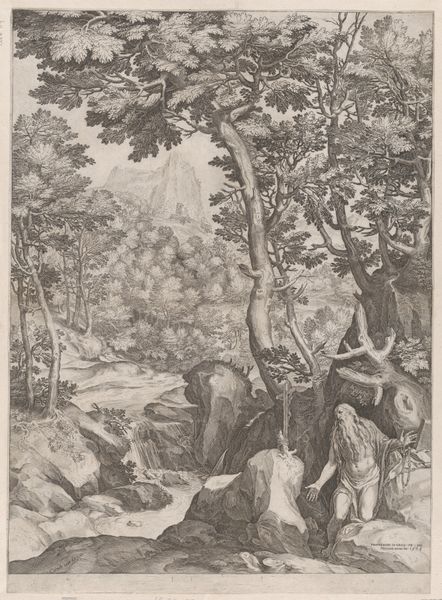
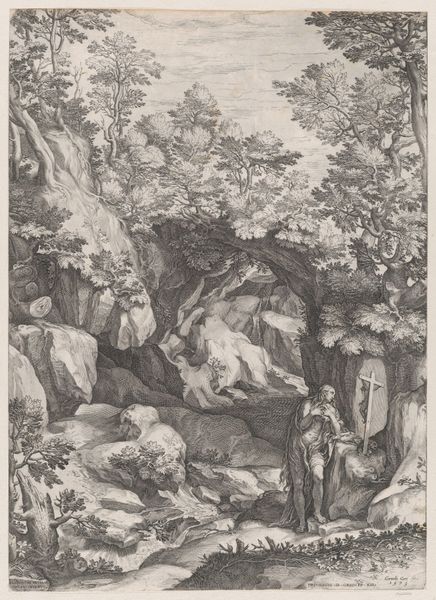
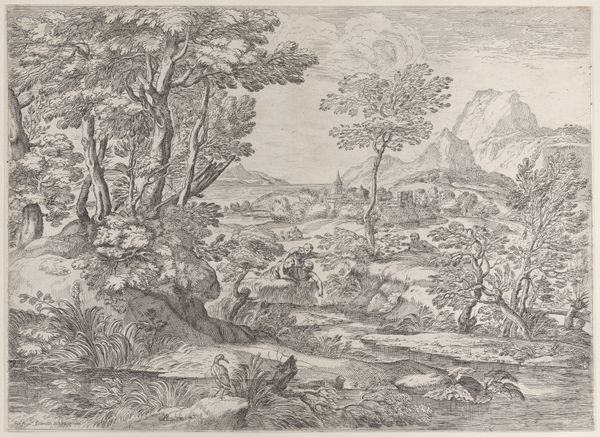
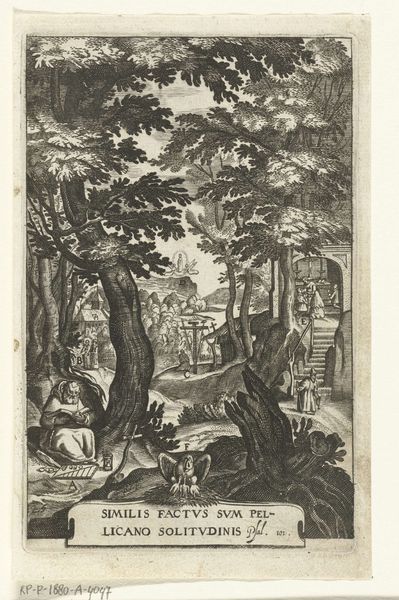
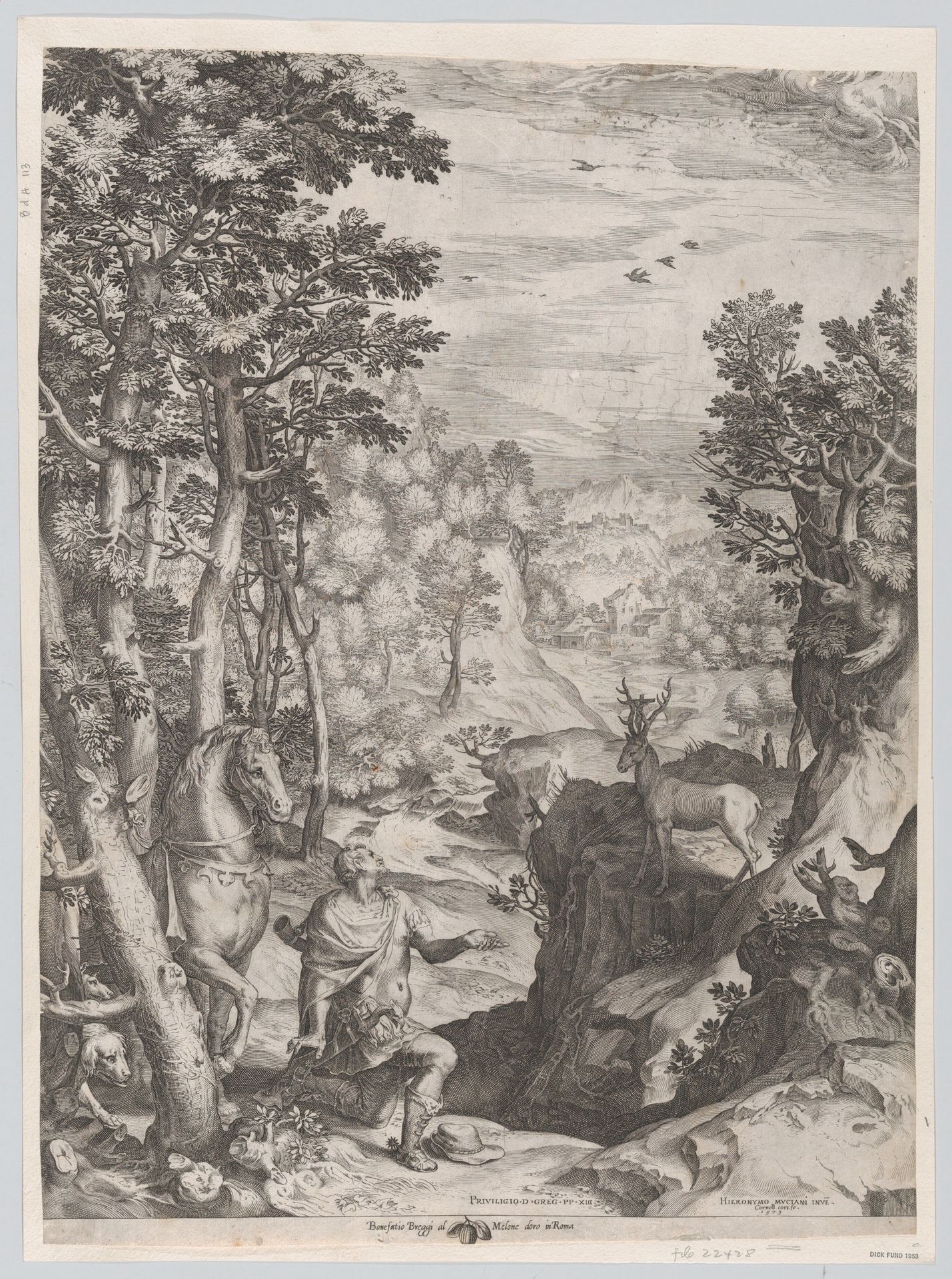
Cornelis Cort created this engraving, "St Eustace in the Wilderness", in the late 16th century. During this period, the intersection of religious belief and the natural world was a recurring theme in art. Here, we see Eustace, a Roman general, who, while hunting, had a vision of Christ between the antlers of a stag. Stripped of his military garb, Eustace kneels in supplication, his encounter triggering a profound spiritual and social transformation. His conversion led him to renounce his former life, embrace Christianity, and eventually face martyrdom with his family. This piece is more than a religious narrative; it's a study of shifting identities and the cost of radical change, a tension that resonates through the ages. Cort invites us to consider how personal epiphanies can disrupt established societal norms. The wilderness then, becomes both a site of revelation and a metaphor for the journey of self-discovery.
St Eustace in the Wilderness
1573


Artwork details
- Medium
- drawing, print, etching
- Location
- Metropolitan Museum of Art, New York, NY
- Copyright
- Public Domain
Tags
Comments
Share your thoughts
About this artwork
Cornelis Cort created this engraving, "St Eustace in the Wilderness", in the late 16th century. During this period, the intersection of religious belief and the natural world was a recurring theme in art. Here, we see Eustace, a Roman general, who, while hunting, had a vision of Christ between the antlers of a stag. Stripped of his military garb, Eustace kneels in supplication, his encounter triggering a profound spiritual and social transformation. His conversion led him to renounce his former life, embrace Christianity, and eventually face martyrdom with his family. This piece is more than a religious narrative; it's a study of shifting identities and the cost of radical change, a tension that resonates through the ages. Cort invites us to consider how personal epiphanies can disrupt established societal norms. The wilderness then, becomes both a site of revelation and a metaphor for the journey of self-discovery.
Comments
Share your thoughts