About this artwork
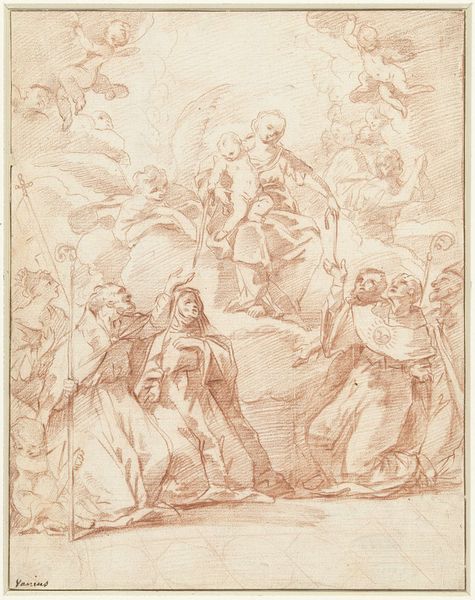
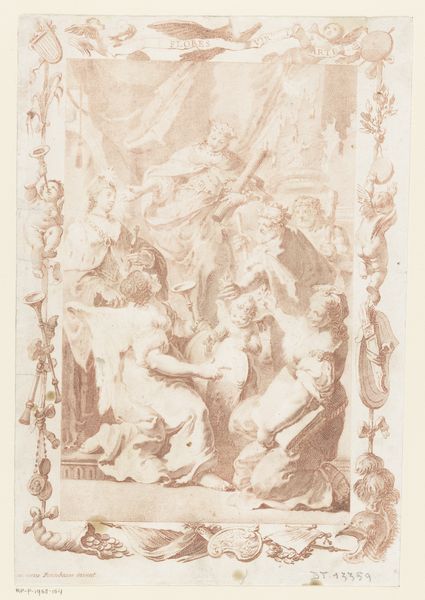
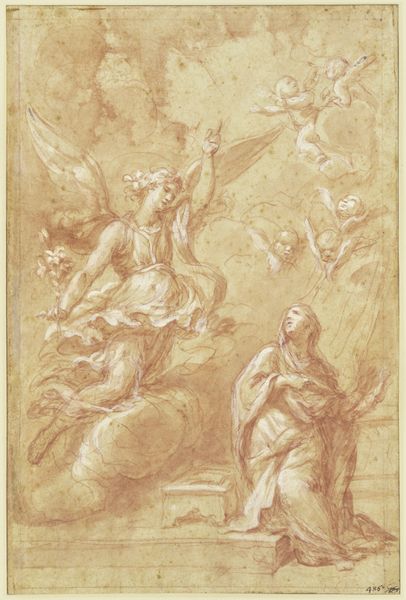
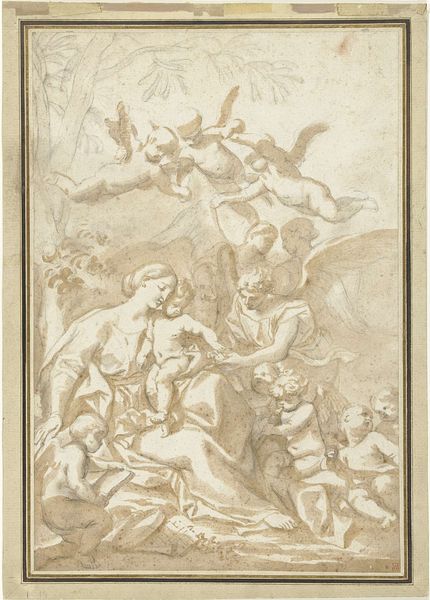
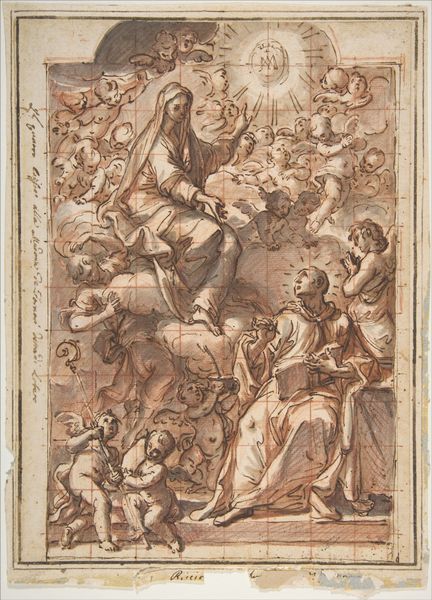
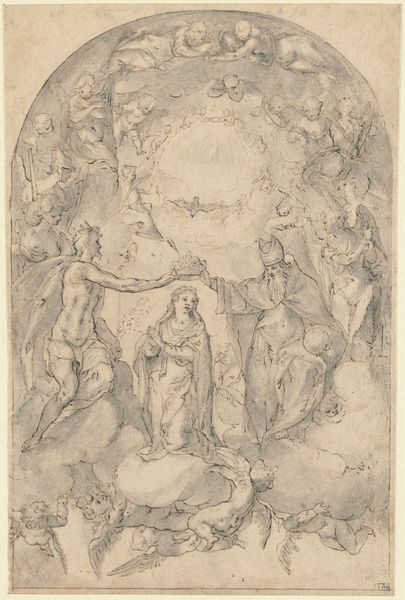
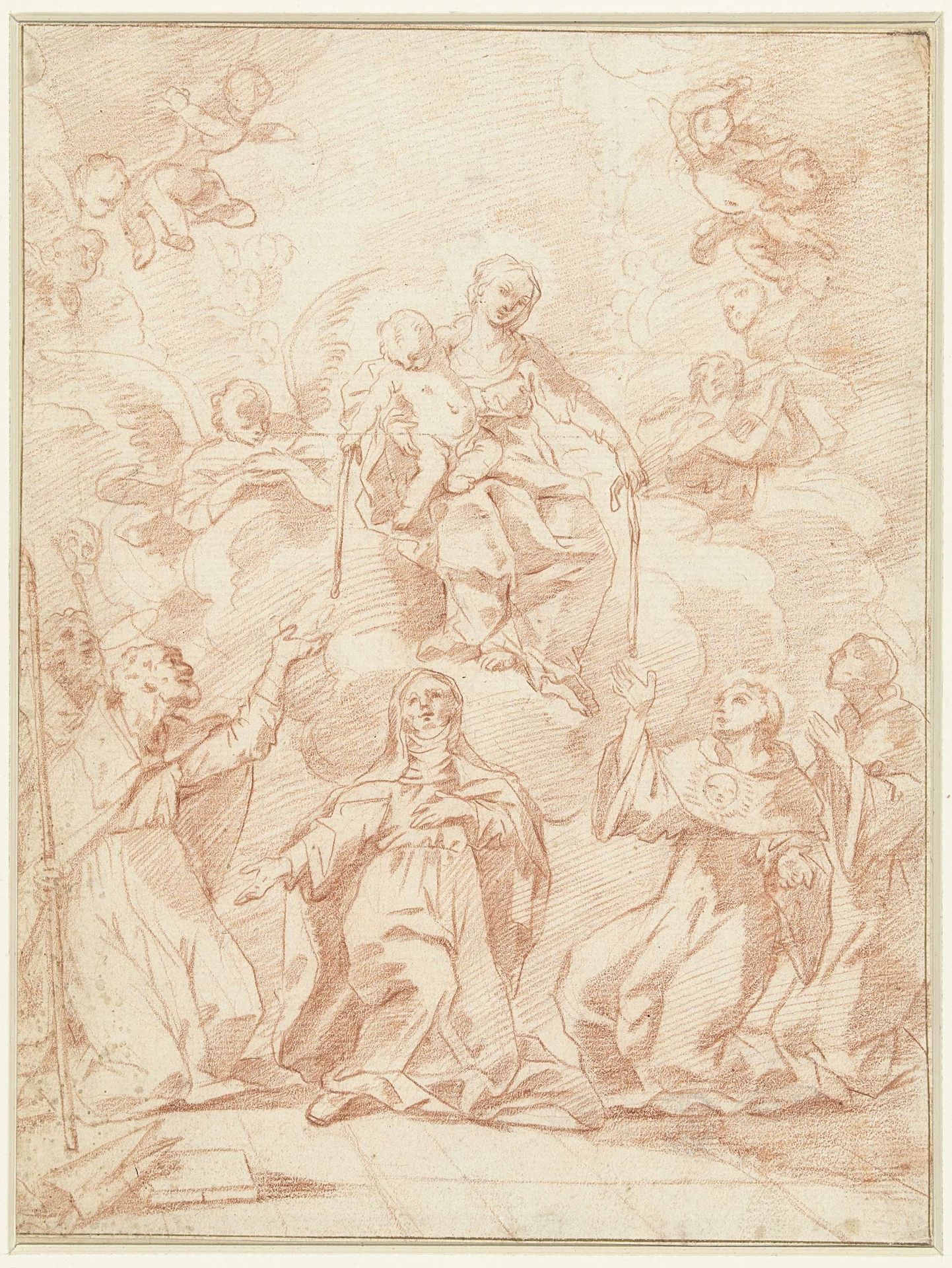
Francesco Vanni created this red chalk drawing, *Madonna and Child Presenting Scapulars*, in Italy sometime between 1578 and 1610. The image depicts the Virgin Mary and the infant Jesus, surrounded by angels and saints, bestowing scapulars, or devotional garments, to kneeling figures. The drawing reflects the cultural and religious context of Counter-Reformation Italy. The Catholic Church used art to reinforce doctrine and inspire piety. Vanni, trained in Siena, infused his work with a blend of graceful Mannerism and Counter-Reformation ideals. The image creates meaning through established visual codes. Mary's elevated position and the presence of angels signify her divine status. The act of bestowing scapulars symbolizes divine grace and protection offered to the faithful. To fully understand the drawing, we need to consider the history of religious orders, devotional practices, and the social functions of art in early modern Italy. By exploring these avenues of inquiry, we gain a deeper understanding of the dynamic interplay between art, culture, and belief.
Madonna en het kind reiken scapulieren uit
1573 - 1610

Francesco Vanni
1563 - 1610Location
RijksmuseumArtwork details
- Medium
- drawing, paper, pen
- Dimensions
- height 260 mm, width 195 mm
- Location
- Rijksmuseum
- Copyright
- Rijks Museum: Open Domain
Tags
Comments
Share your thoughts
About this artwork
Francesco Vanni created this red chalk drawing, *Madonna and Child Presenting Scapulars*, in Italy sometime between 1578 and 1610. The image depicts the Virgin Mary and the infant Jesus, surrounded by angels and saints, bestowing scapulars, or devotional garments, to kneeling figures. The drawing reflects the cultural and religious context of Counter-Reformation Italy. The Catholic Church used art to reinforce doctrine and inspire piety. Vanni, trained in Siena, infused his work with a blend of graceful Mannerism and Counter-Reformation ideals. The image creates meaning through established visual codes. Mary's elevated position and the presence of angels signify her divine status. The act of bestowing scapulars symbolizes divine grace and protection offered to the faithful. To fully understand the drawing, we need to consider the history of religious orders, devotional practices, and the social functions of art in early modern Italy. By exploring these avenues of inquiry, we gain a deeper understanding of the dynamic interplay between art, culture, and belief.
Comments
Share your thoughts