About this artwork
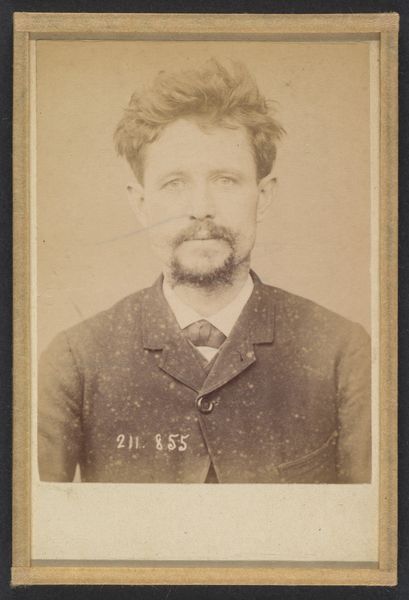
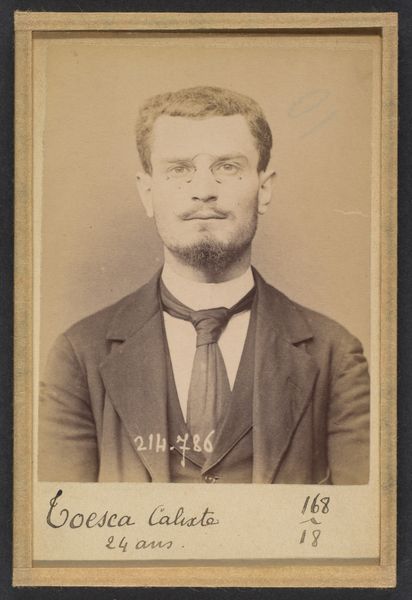
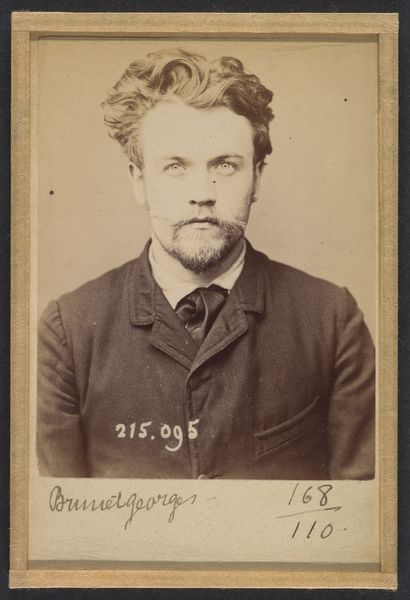
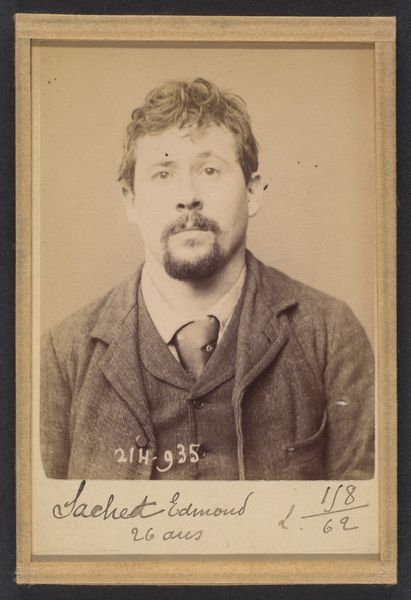
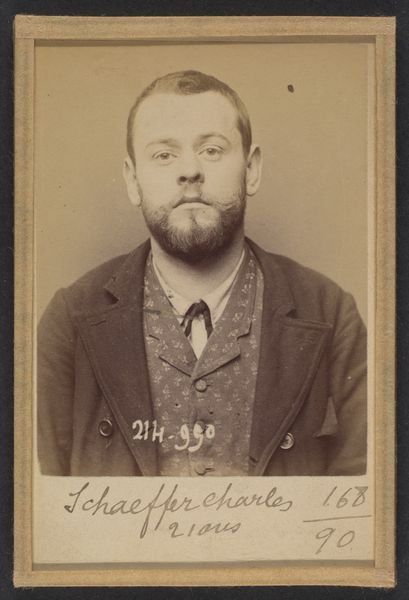
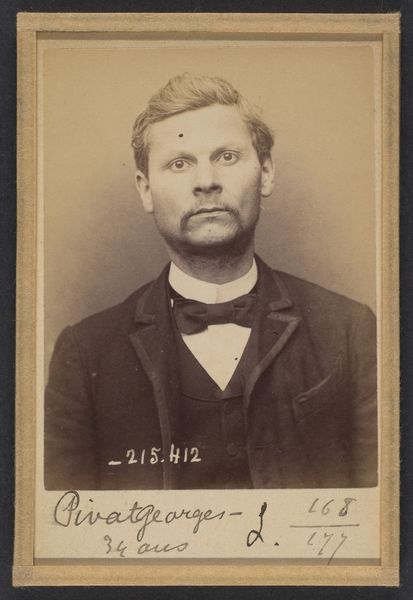
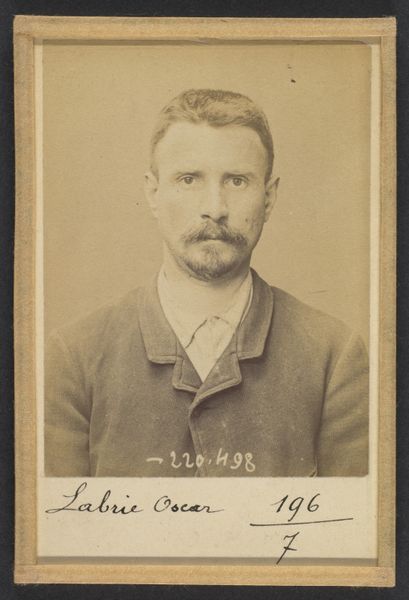
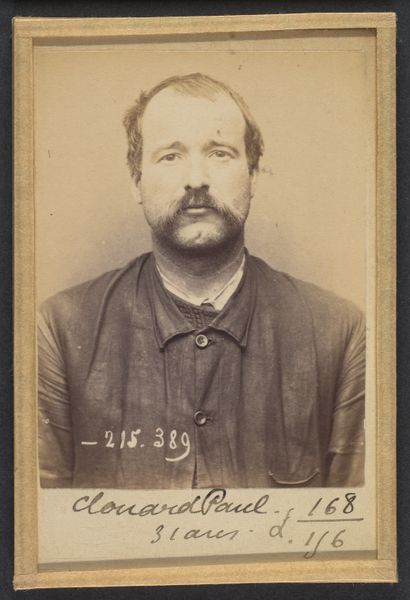
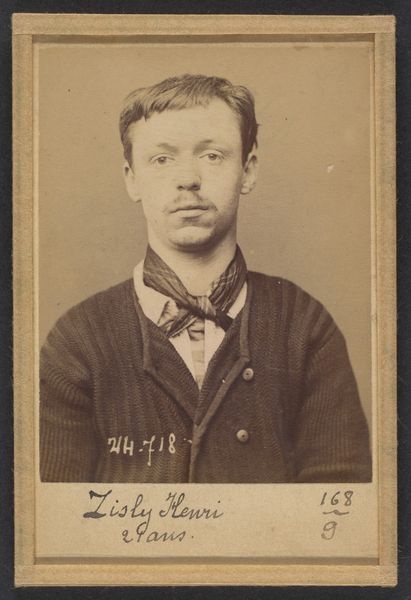
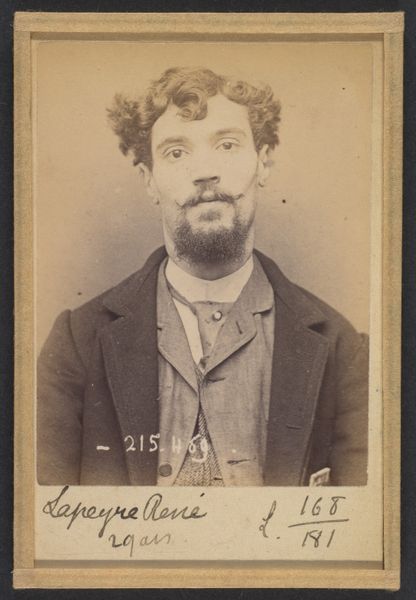
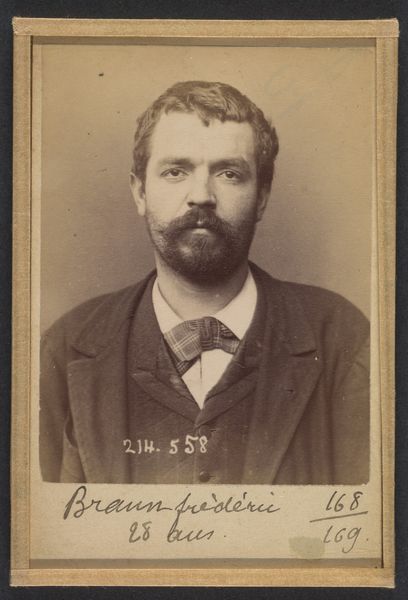
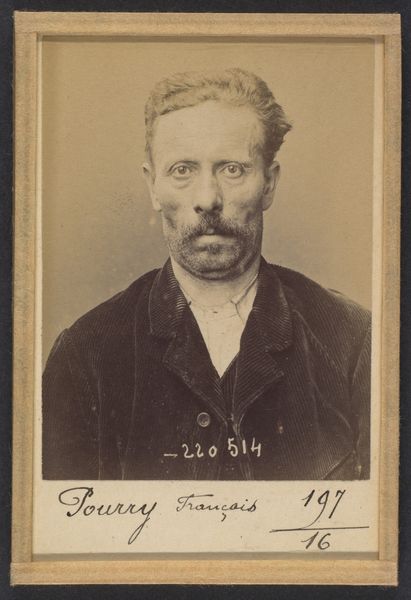
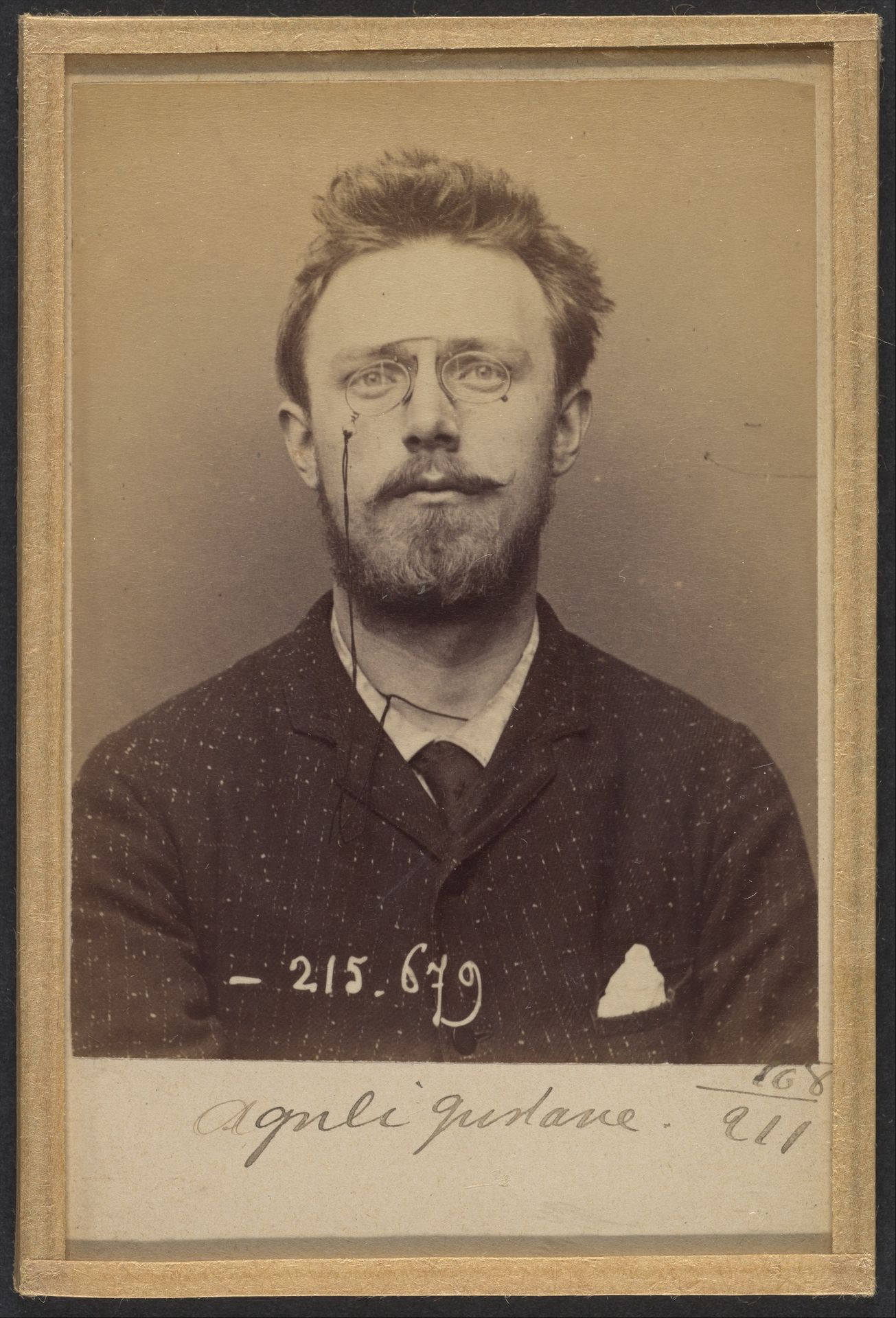
This is a mugshot taken in France on March 14, 1894, by Alphonse Bertillon using photography and paper. Here we see Gustave Aguéli, a 24-year-old Swedish artist and anarchist. Bertillon was a French police officer and biometrics researcher who pioneered the use of photography for criminal identification. His “portrait parlé,” or speaking portrait, was a system of detailed measurements and standardized photographs intended to create a reliable record for law enforcement. This image raises questions about the relationship between art, crime, and social control. Anarchism, a political philosophy advocating self-governed societies based on voluntary institutions, was viewed as a threat to the established order in the late 19th century. As such, the institutional power of the police sought to document and categorize individuals deemed dangerous. To understand this image better, historians might consult police archives, anarchist publications, and art historical sources. This mugshot serves as a reminder that art and its interpretation are always embedded in a specific social and institutional context.
Aguéli Gustave. 24 ans, né à Sala (Suède) le 24-5-69. Artiste-peintre. Anarchiste. 14-3-94.
1894


Artwork details
- Medium
- photography, gelatin-silver-print
- Dimensions
- 10.5 x 7 x 0.5 cm (4 1/8 x 2 3/4 x 3/16 in.) each
- Location
- Metropolitan Museum of Art, New York, NY
- Copyright
- Public Domain
Tags
Comments
Share your thoughts
About this artwork
This is a mugshot taken in France on March 14, 1894, by Alphonse Bertillon using photography and paper. Here we see Gustave Aguéli, a 24-year-old Swedish artist and anarchist. Bertillon was a French police officer and biometrics researcher who pioneered the use of photography for criminal identification. His “portrait parlé,” or speaking portrait, was a system of detailed measurements and standardized photographs intended to create a reliable record for law enforcement. This image raises questions about the relationship between art, crime, and social control. Anarchism, a political philosophy advocating self-governed societies based on voluntary institutions, was viewed as a threat to the established order in the late 19th century. As such, the institutional power of the police sought to document and categorize individuals deemed dangerous. To understand this image better, historians might consult police archives, anarchist publications, and art historical sources. This mugshot serves as a reminder that art and its interpretation are always embedded in a specific social and institutional context.
Comments
Share your thoughts