drawing, painting, wood
#
drawing
#
wood texture
#
painting
#
landscape
#
folk-art
#
wood
#
decorative-art
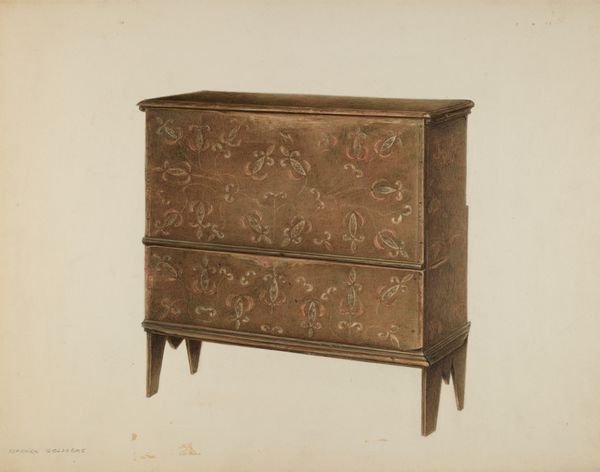
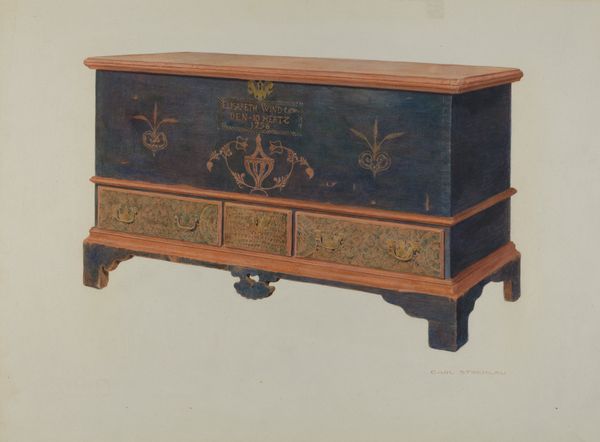
Dimensions: overall: 24.5 x 28.5 cm (9 5/8 x 11 1/4 in.) Original IAD Object: 42"high; 36"long; 16 1/2"wide.
Copyright: National Gallery of Art: CC0 1.0
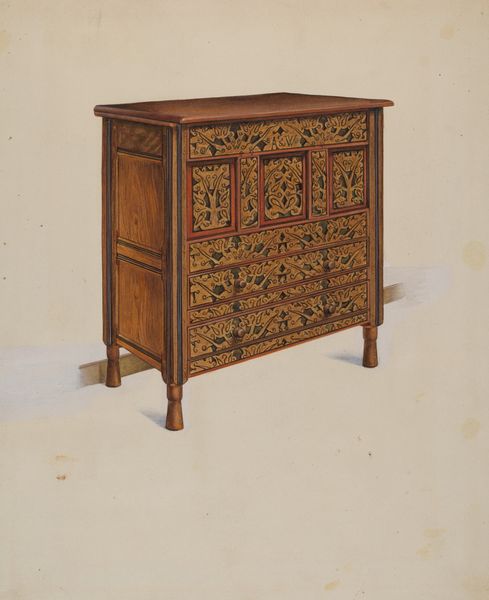
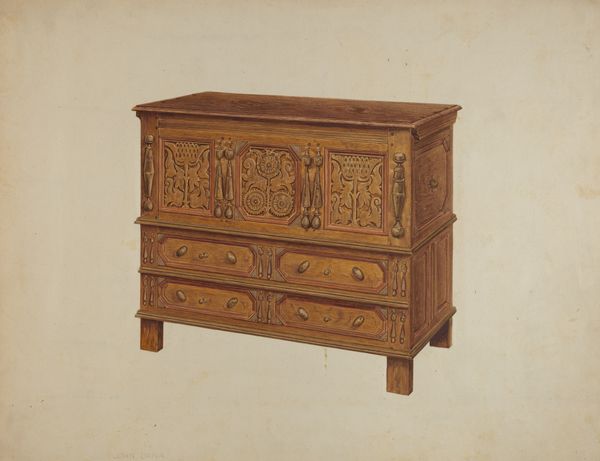
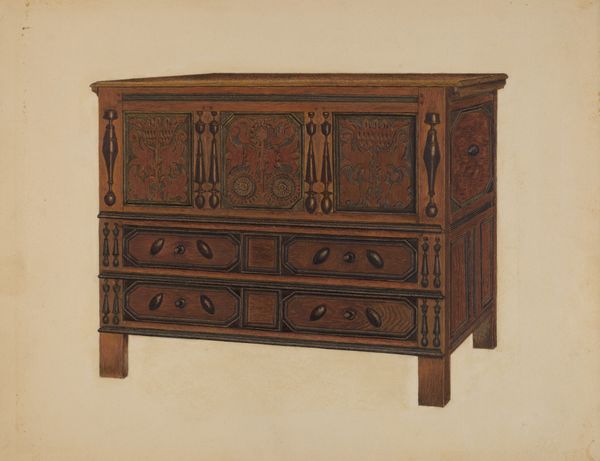
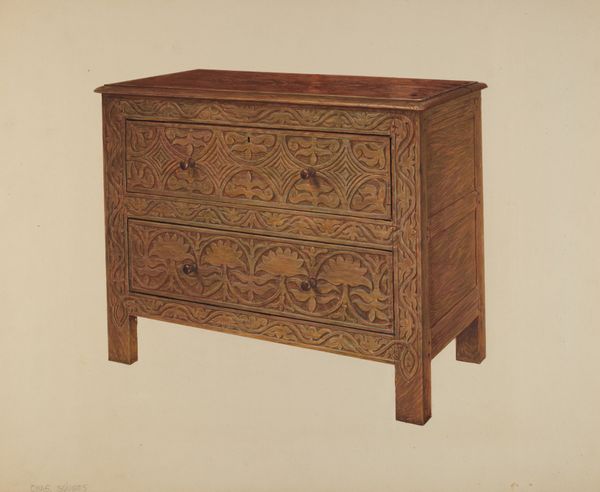
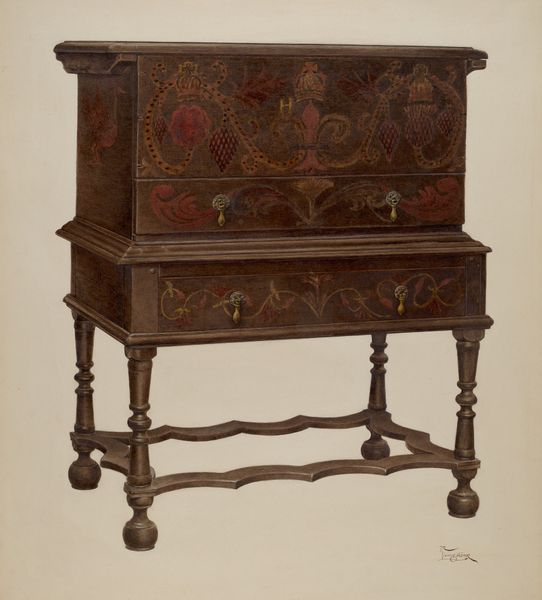
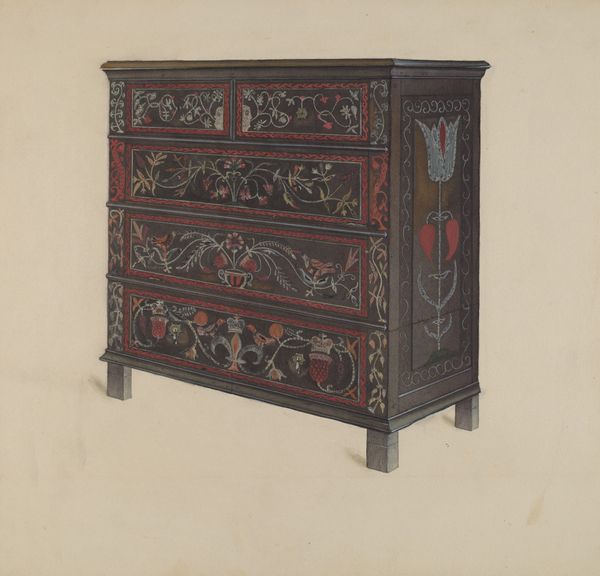
Editor: Here we have a piece called "Painted Chest" from around 1937. It looks to be a wood chest with paint and drawings embellishing it. There's a folk-art style that feels both whimsical and practical. How do you interpret this piece through the lens of cultural symbols? Curator: The symmetry and repetition are key. Notice how the floral motifs are presented almost like ancestral trees, each blossom and leaf representing a branch of familial history. What emotions do these stylized "family trees" evoke for you? Editor: There’s definitely a sense of comfort, of home. But there's also a formal quality, like these images are trying to organize the chaos of life into something neat and understandable. Curator: Exactly. The chest itself, traditionally used to store valued possessions, becomes a repository of cultural memory. The imagery is not merely decorative; it's an attempt to give form to the intangible, to visualize inheritance. Editor: The hardware is small, yet golden. Does this detail suggest wealth or something else? Curator: It could represent idealized prosperity. The gold tones might symbolize aspirations for the future embedded within the security of tradition. Each pull serves almost like a guardian to personal heirlooms and secrets passed down through generations. Editor: That's a very interesting reading! It makes me appreciate the depth within what initially seemed like simple, charming designs. I learned to recognize the emotional depth through visual patterns. Curator: Indeed. Art, especially folk art like this, speaks in symbols, creating connections across time and cultures. Examining cultural memories helps uncover layered stories in objects we often overlook.
Comments
No comments
Be the first to comment and join the conversation on the ultimate creative platform.
 Collect
 React
React Comment
More like this