About this artwork
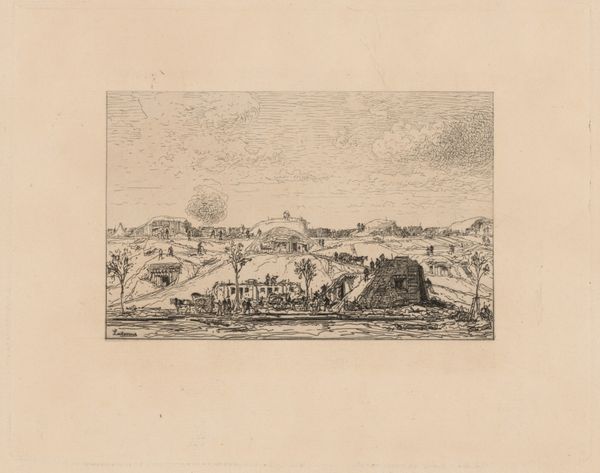
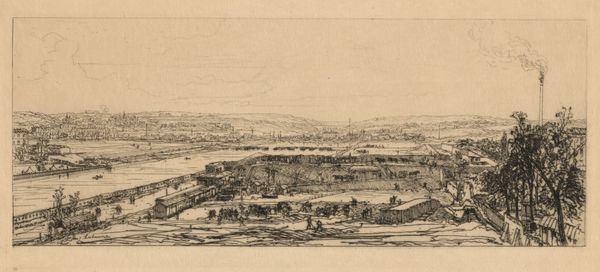
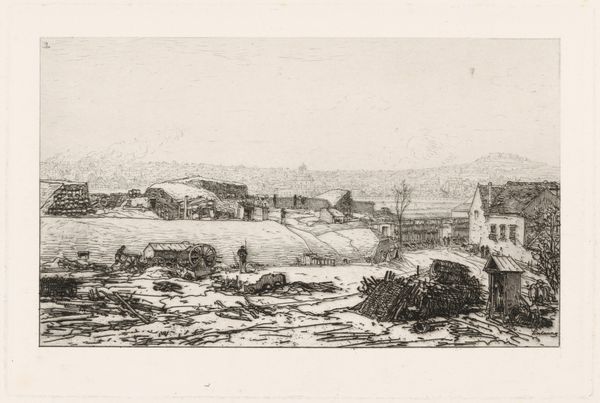
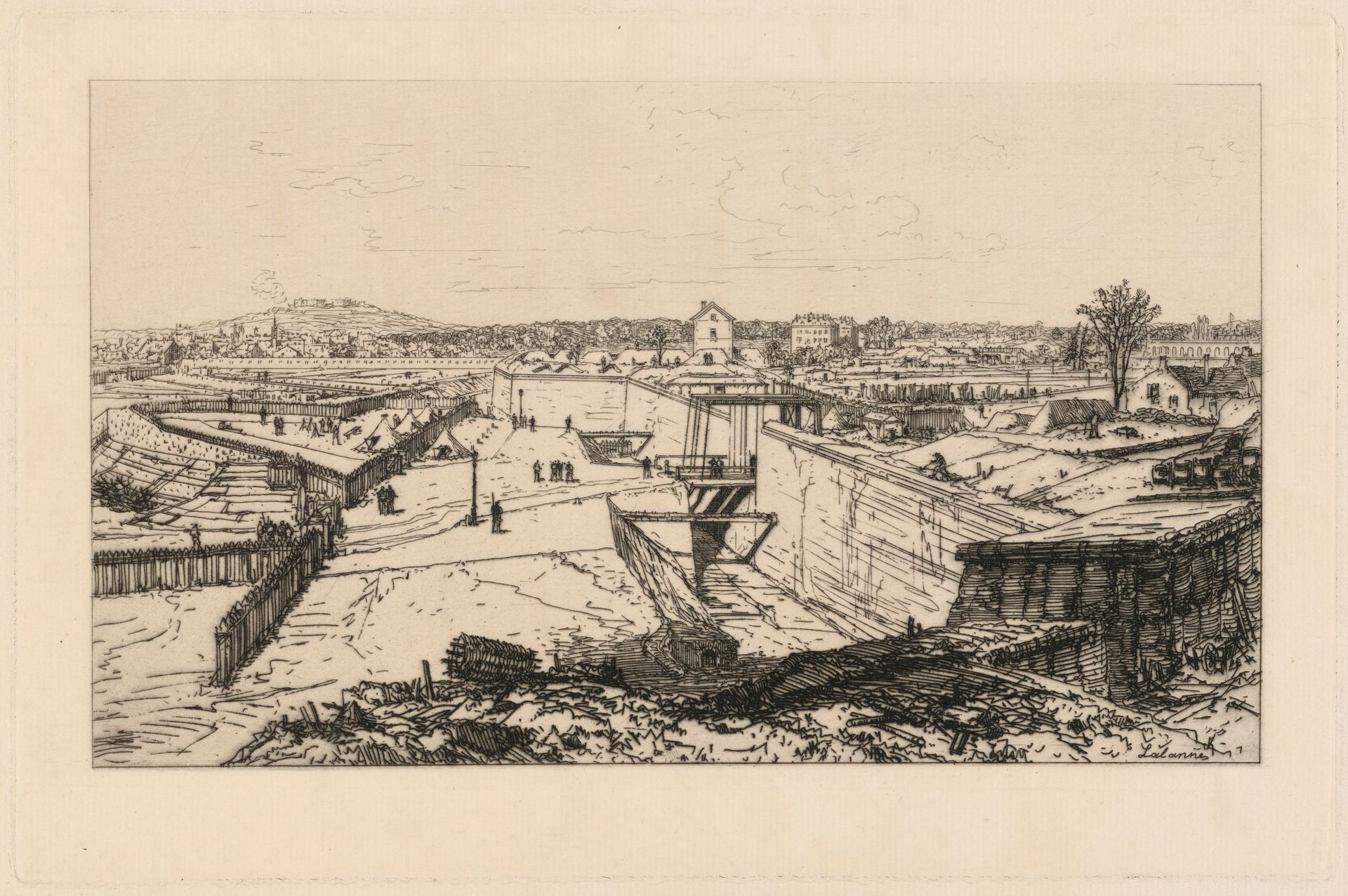
Maxime Lalanne created this etching, The Porte de Versailles at Pont du Jour, using a metal plate, acid, and ink. Etching is an indirect process. The artist covers a metal plate with a waxy, acid-resistant coating, then scratches an image into the coating, exposing the metal. When the plate is dipped in acid, the exposed lines are eaten away, creating grooves. The plate is then inked, and the surface wiped clean, leaving ink only in the etched lines. Finally, the plate is pressed onto paper, transferring the image. This method, born from the metalworking trades, was embraced by artists for its precise linework and reproducibility. The fine lines create a scene of Paris's fortifications, a layered landscape reflecting both military engineering and urban life. Consider how Lalanne’s mastery transforms industrial materials into art, bridging the gap between craft and fine art traditions.
The Porte de Versailles at Pont du Jour
1871


Artwork details
- Medium
- print, etching, engraving
- Dimensions
- image: 12.5 × 21.4 cm (4 15/16 × 8 7/16 in.) plate: 16 × 24.3 cm (6 5/16 × 9 9/16 in.) sheet: 19.7 × 27.5 cm (7 3/4 × 10 13/16 in.)
- Copyright
- National Gallery of Art: CC0 1.0
Tags
Comments
Share your thoughts
About this artwork
Maxime Lalanne created this etching, The Porte de Versailles at Pont du Jour, using a metal plate, acid, and ink. Etching is an indirect process. The artist covers a metal plate with a waxy, acid-resistant coating, then scratches an image into the coating, exposing the metal. When the plate is dipped in acid, the exposed lines are eaten away, creating grooves. The plate is then inked, and the surface wiped clean, leaving ink only in the etched lines. Finally, the plate is pressed onto paper, transferring the image. This method, born from the metalworking trades, was embraced by artists for its precise linework and reproducibility. The fine lines create a scene of Paris's fortifications, a layered landscape reflecting both military engineering and urban life. Consider how Lalanne’s mastery transforms industrial materials into art, bridging the gap between craft and fine art traditions.
Comments
Share your thoughts