About this artwork
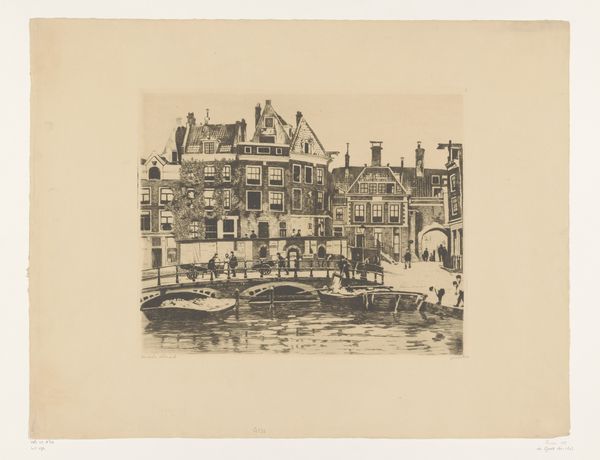
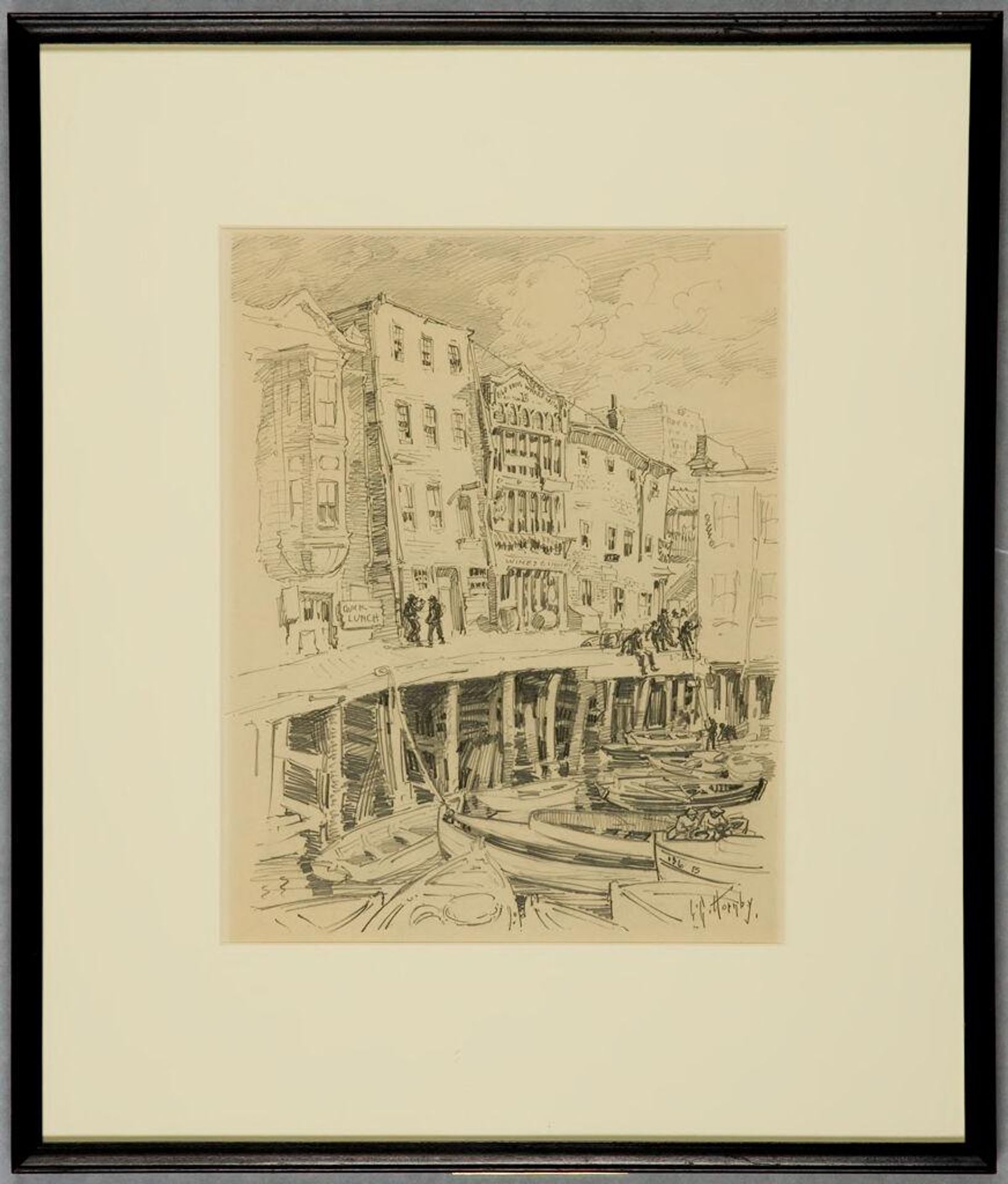
Curator: Lester George Hornby's "A Bit of Old Long Wharf, Boston" presents us with a fascinating depiction of Boston's maritime history. Editor: The texture! You can almost smell the salt and tar; the materials used—paper, ink—are incredibly effective in evoking the industrial grit of the wharf. Curator: Indeed. The composition highlights the Long Wharf as a crucial space for commerce, as well as social interactions within a bustling, working city. Editor: The repetition of the boats, the pilings, the buildings—it speaks volumes about the daily labor involved in keeping a port city afloat. Curator: And that labor reflects the socio-economic history, where the city's development was intrinsically linked to maritime trade. Editor: It is amazing how Hornby used those modest materials to document the daily routines of manufacture, trade, and social life along Boston's waterfront. Curator: I agree. It gives us insight into how the urban landscape shapes civic identity. Editor: Absolutely. This piece really underscores the power of everyday objects to reveal significant aspects of urban materiality.
A Bit of Old Long Wharf, Boston
19th-20th century


Artwork details
- Dimensions
- actual: 29.6 x 23.4 cm (11 5/8 x 9 3/16 in.)
- Location
- Harvard Art Museums
- Copyright
- CC0 1.0
Comments
Share your thoughts
About this artwork
Curator: Lester George Hornby's "A Bit of Old Long Wharf, Boston" presents us with a fascinating depiction of Boston's maritime history. Editor: The texture! You can almost smell the salt and tar; the materials used—paper, ink—are incredibly effective in evoking the industrial grit of the wharf. Curator: Indeed. The composition highlights the Long Wharf as a crucial space for commerce, as well as social interactions within a bustling, working city. Editor: The repetition of the boats, the pilings, the buildings—it speaks volumes about the daily labor involved in keeping a port city afloat. Curator: And that labor reflects the socio-economic history, where the city's development was intrinsically linked to maritime trade. Editor: It is amazing how Hornby used those modest materials to document the daily routines of manufacture, trade, and social life along Boston's waterfront. Curator: I agree. It gives us insight into how the urban landscape shapes civic identity. Editor: Absolutely. This piece really underscores the power of everyday objects to reveal significant aspects of urban materiality.
Comments
Share your thoughts