1677 - 1755
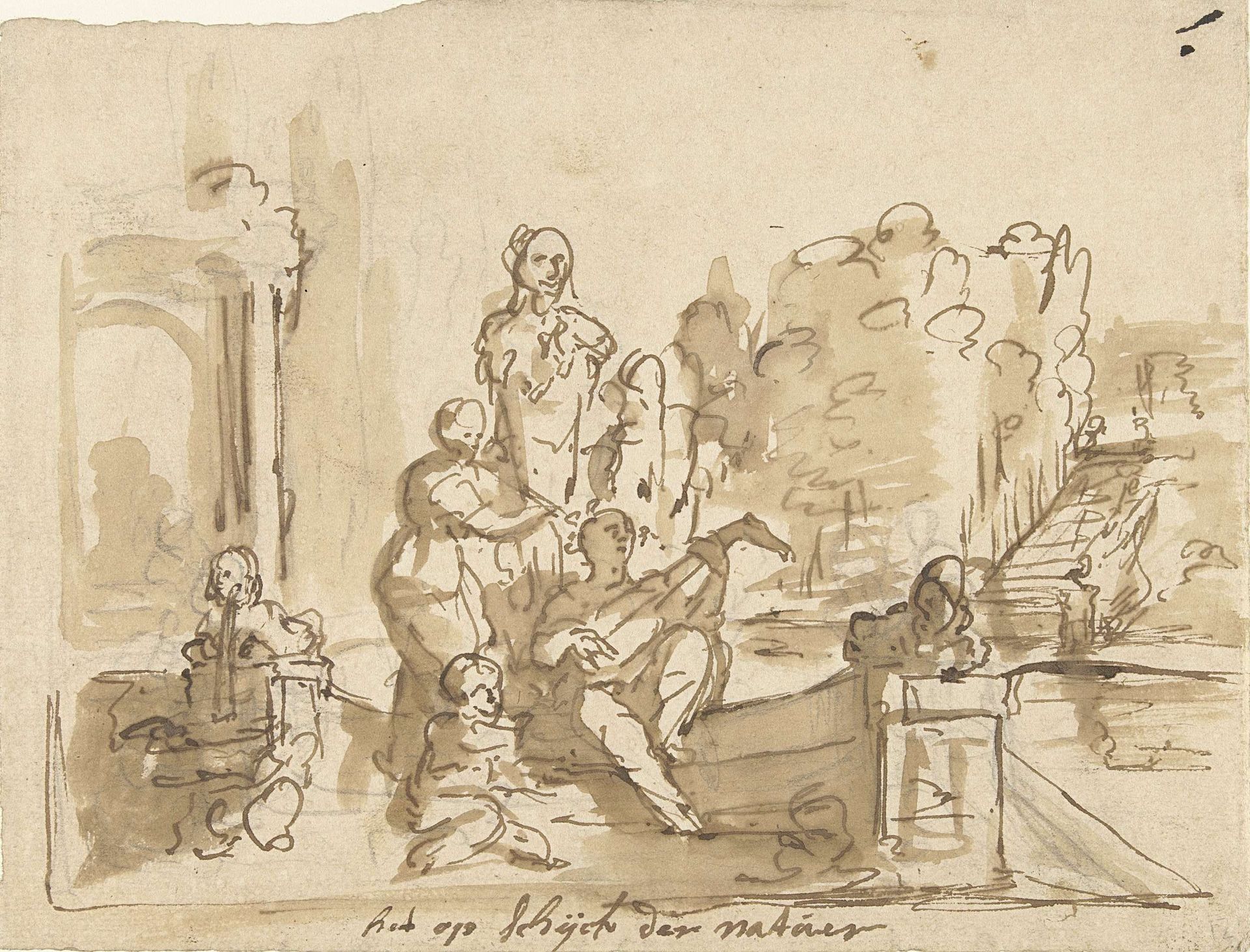
Allegorie met musicerende figuren in een tuin

Listen to curator's interpretation
Curatorial notes
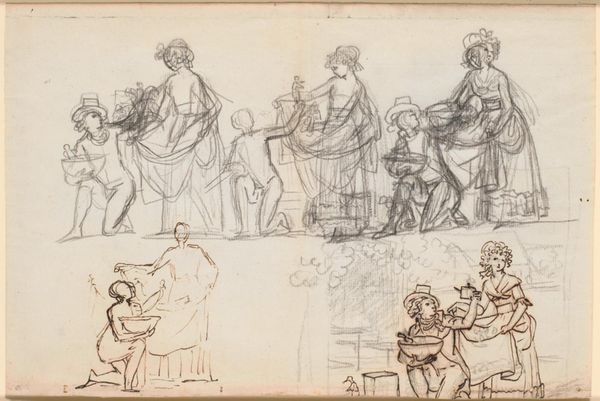
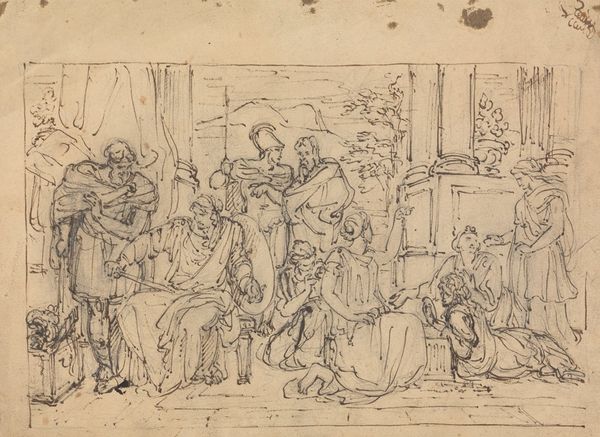
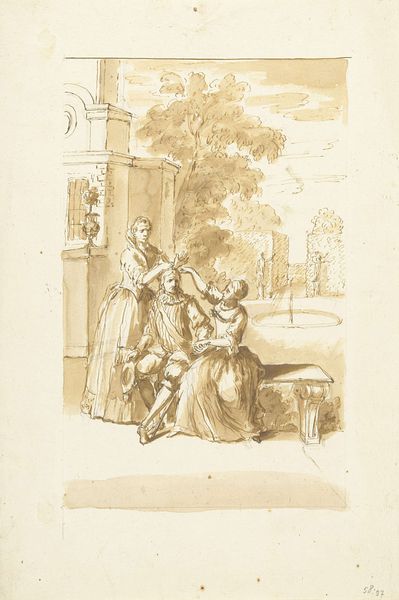
Editor: So, this is “Allegory with Music-Making Figures in a Garden” by Elias van Nijmegen, created sometime between 1677 and 1755. It's a pen, ink and wash drawing, and it feels almost dreamlike. The figures are so loosely sketched. What jumps out at you when you look at it? Curator: It’s interesting how Van Nijmegen situates music within a specific social and cultural context. The depiction of leisurely figures enjoying music in a garden points to a culture of elite patronage and entertainment. How does the setting - the garden - influence your understanding of the role of music at that time? Editor: Well, it makes me think of these private concerts that were happening…almost exclusive, really. Is that the point? Who would this work have been made *for* originally? Curator: Exactly! And it prompts us to think about access. Was this art intended for public consumption or a more closed circle? Also, look closely at the figures: how does their posture, their clothing contribute to the reading of social class or gender roles? Editor: I see…the women seem more upright, whereas some of the men are lounging, playing instruments. It reinforces established power structures, maybe? Curator: Precisely. Consider also how institutions such as the church, the state, or wealthy families used art and music to project power and legitimacy. Do you think that’s being reinforced here? Editor: Probably. It wasn't just art for art's sake, but serving a purpose, especially regarding displays of power, right? Thanks! It's helped me see so much more. Curator: It's about understanding the complex relationship between artistic expression and its place in society. Thinking about this piece encourages that exploration.