About this artwork
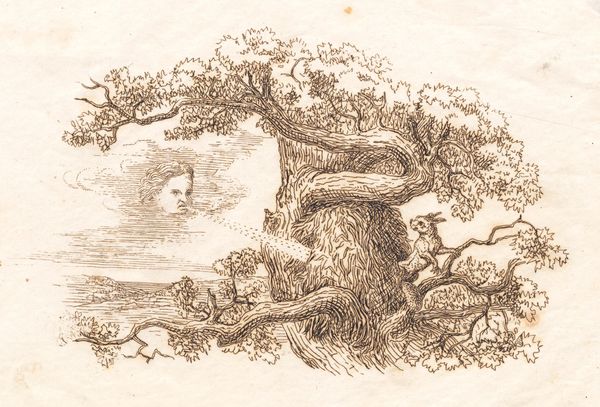
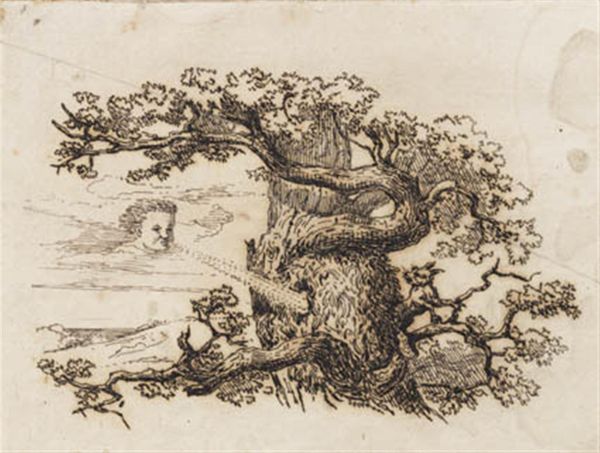
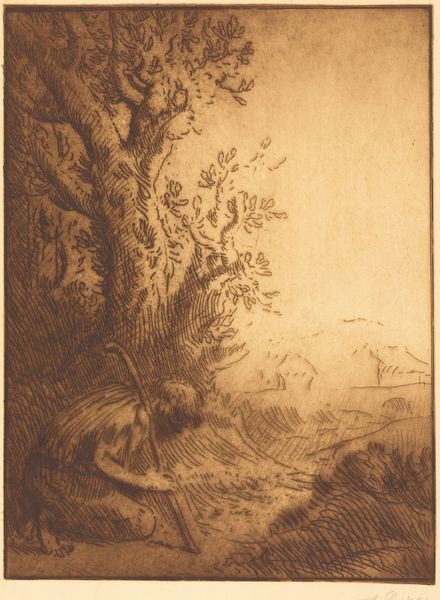
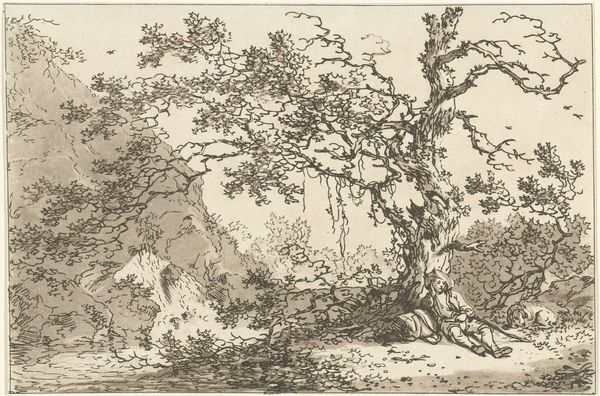
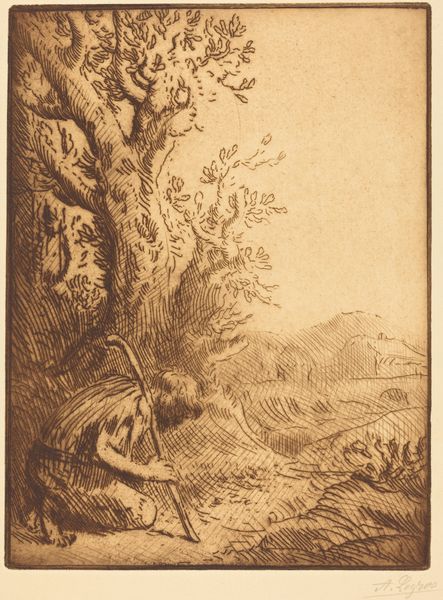
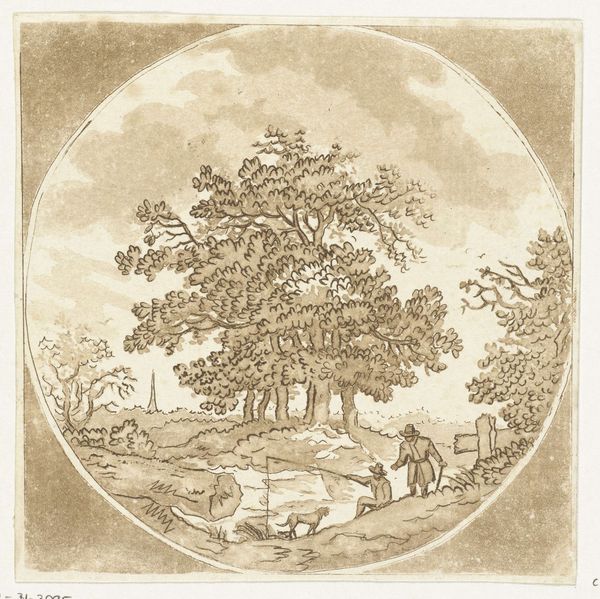
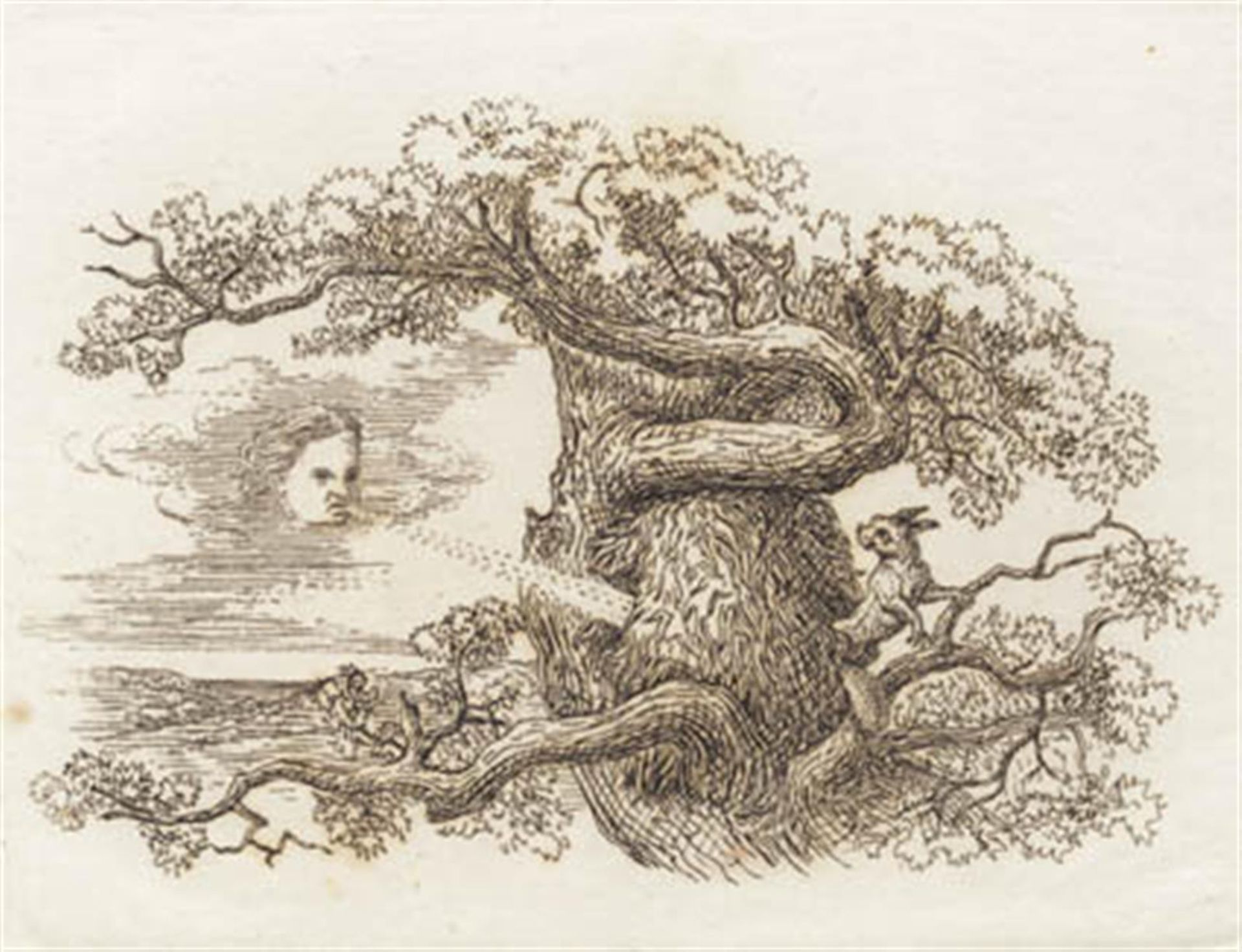
Martinus Rørbye created this illustration for "Fifty Fables for Children" with pen and ink. Dominating the scene, we see a large tree juxtaposed with a floating head in the distance. The tree, a universal symbol of life and growth, suggests nature's enduring presence. The disembodied head evokes ancient myths and dreams, reminiscent of figures from Ovid’s Metamorphoses, or the severed head of Orpheus, continuing to sing. Such images tap into our collective memory, stirring primal fears and fascinations. The head is serene, yet unsettling, engaging viewers on a subconscious level, a visual echo passed down through generations. The cyclical progression of the symbols resurfaces, evolves, and takes on new meanings in different historical contexts.
Illustration til "Halvhundrede Fabler for Børn" af Hey
1834


Artwork details
- Medium
- print, engraving
- Dimensions
- 143 mm (height) x 261 mm (width) (bladmaal)
- Location
- SMK - Statens Museum for Kunst
Tags
Comments
Share your thoughts
About this artwork
Martinus Rørbye created this illustration for "Fifty Fables for Children" with pen and ink. Dominating the scene, we see a large tree juxtaposed with a floating head in the distance. The tree, a universal symbol of life and growth, suggests nature's enduring presence. The disembodied head evokes ancient myths and dreams, reminiscent of figures from Ovid’s Metamorphoses, or the severed head of Orpheus, continuing to sing. Such images tap into our collective memory, stirring primal fears and fascinations. The head is serene, yet unsettling, engaging viewers on a subconscious level, a visual echo passed down through generations. The cyclical progression of the symbols resurfaces, evolves, and takes on new meanings in different historical contexts.
Comments
Share your thoughts