painting, paper, ink
#
portrait
#
painting
#
asian-art
#
paper
#
oil painting
#
ink
#
portrait art
Copyright: Public domain China
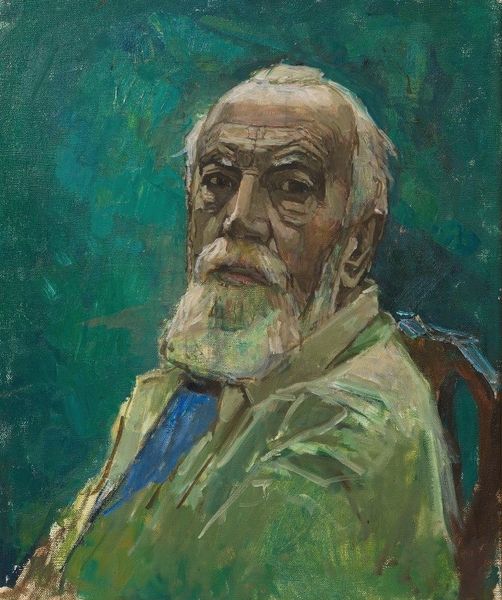
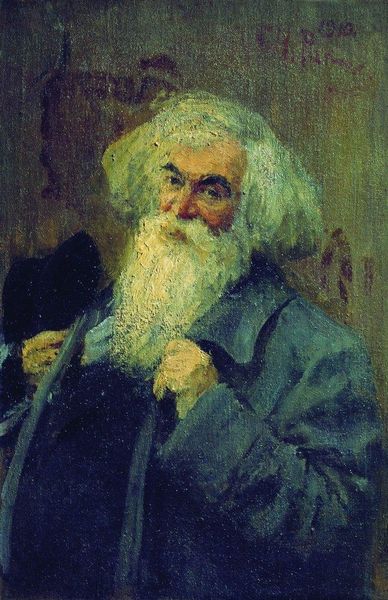
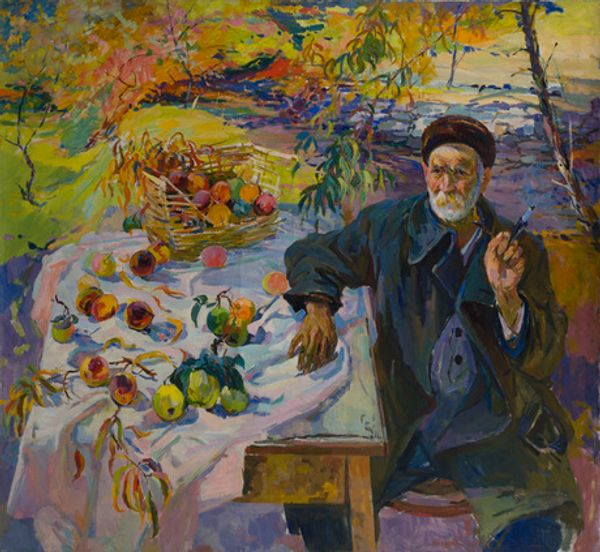
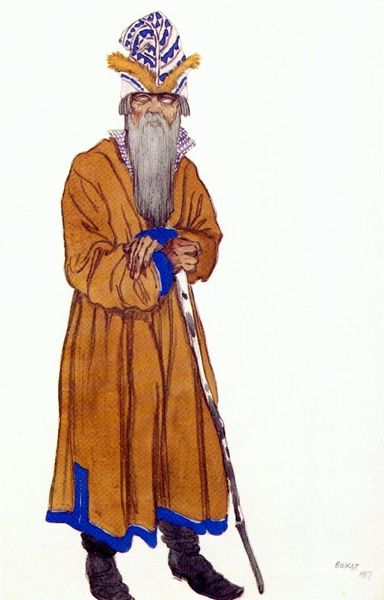
Curator: This is Xu Beihong's "Portrait of Rabindranath Tagore," executed in ink and color on paper. Editor: The first thing that strikes me is how subdued yet complex the color palette is. Browns, greens, and blues create a calming, reflective mood. I wonder about the specific pigments he employed. Curator: I see it as a contemplation on wisdom and creative insight, rendered through a visual vocabulary that balances realism with symbolism. Notice the birds perched above Tagore—perhaps symbolizing freedom of thought or poetic inspiration? Editor: Definitely. And considering Beihong’s background in both Chinese ink painting and European academic styles, I'm keen to explore his process here. How did he blend traditional ink techniques with a Western approach to portraiture? What kind of paper was it painted on? The texture looks crucial. Curator: Absolutely, the synthesis is fascinating. The presence of Tagore with his characteristic long white beard suggests experience and knowledge. But there’s also something vulnerable in his gaze. Editor: The execution suggests speed but the color palette looks labored, there are hints of the different materials blending with the other, suggesting slow carefulness. What would it mean that Rabindranath Tagore is painted this way? Curator: I think the portrait captures not just the likeness of Tagore but also speaks to a cultural exchange and mutual respect between the artist and the subject. It elevates a humanist figure with his associated values to an almost venerable state. Editor: It’s interesting to me, seeing that portraiture almost never includes context. Is the natural context significant? And how does that affect what is communicated about him? Curator: Indeed. It deepens our understanding, doesn't it? I appreciate the nuanced way the portrait reveals aspects of human existence, using both representational and symbolic elements. Editor: And for me, investigating the materiality helps me appreciate the complexity of cultural translation occurring at a critical juncture. The method matters just as much as the man it pictures.
Comments
No comments
Be the first to comment and join the conversation on the ultimate creative platform.
 Collect
 React
React Comment
More like this