1564
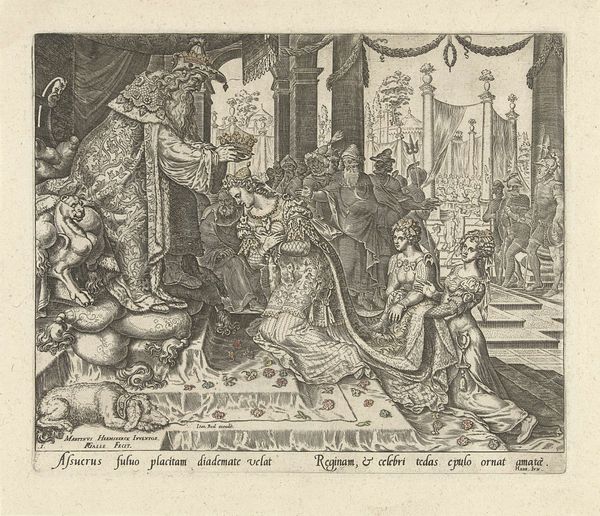
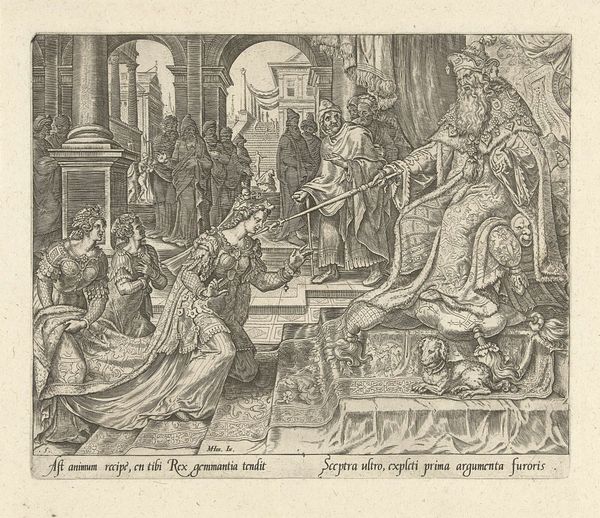
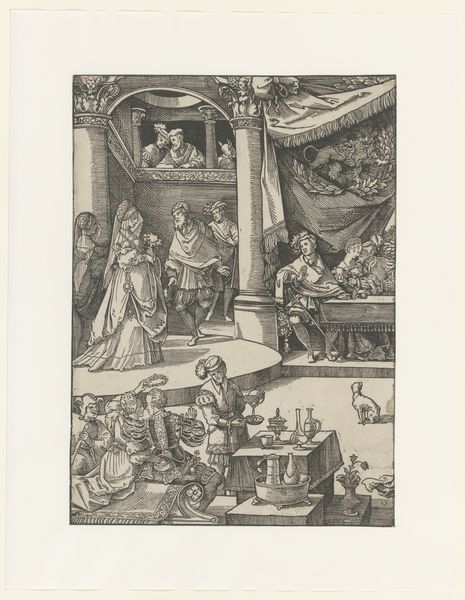
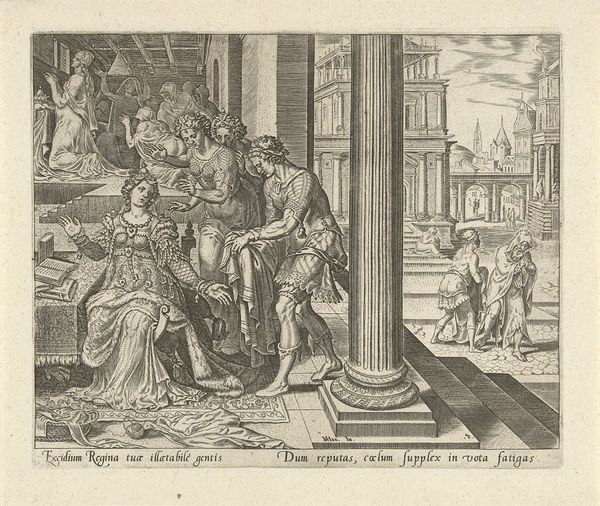
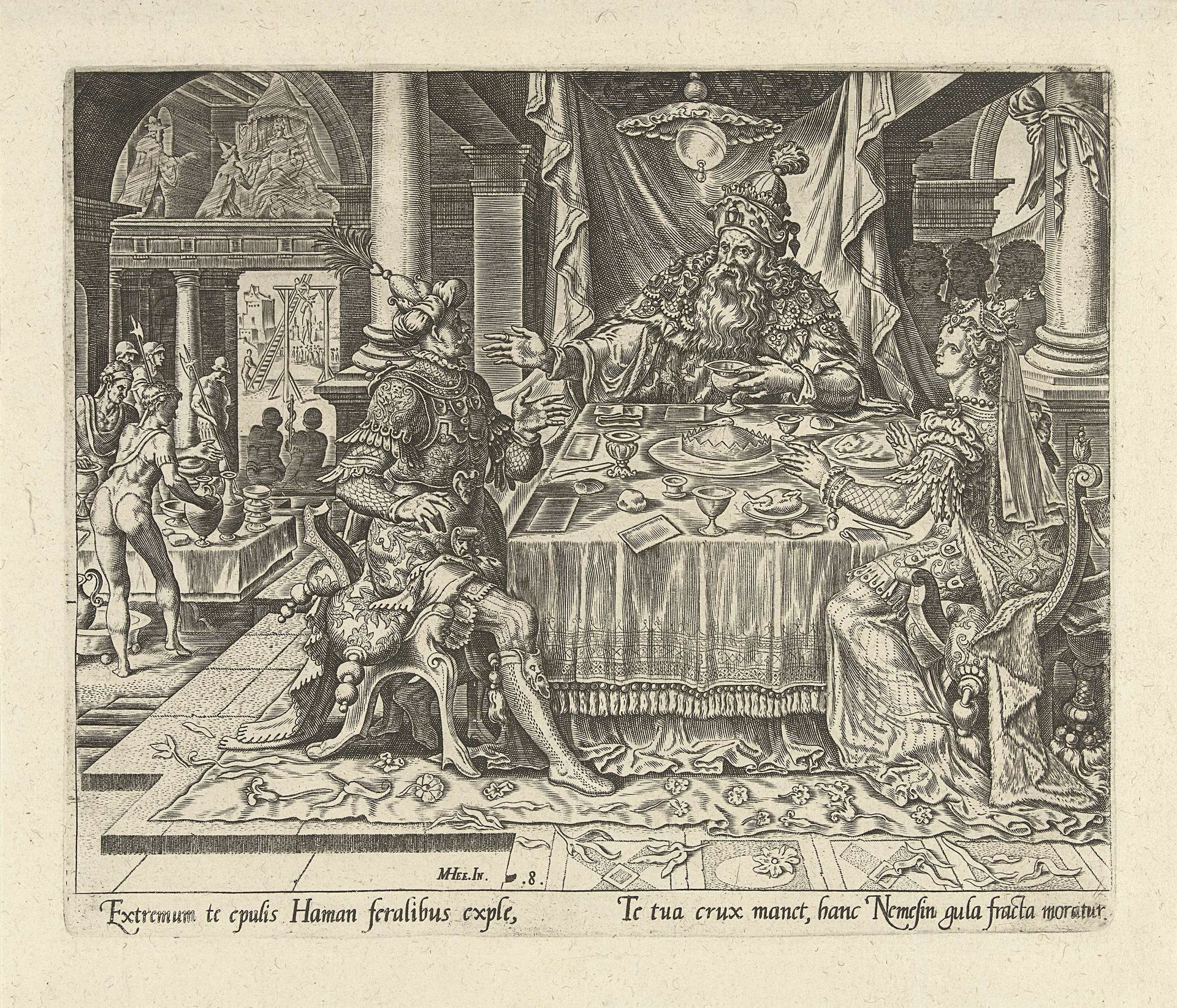
Ahasveros en Haman te gast bij Ester

Philips Galle
1537 - 1612Location
RijksmuseumListen to curator's interpretation
Curatorial notes
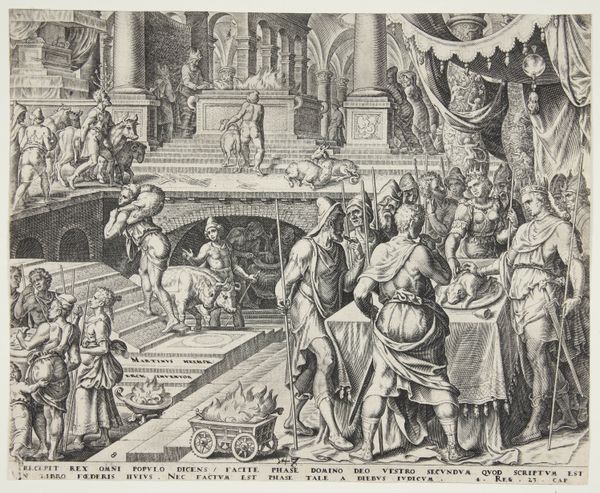
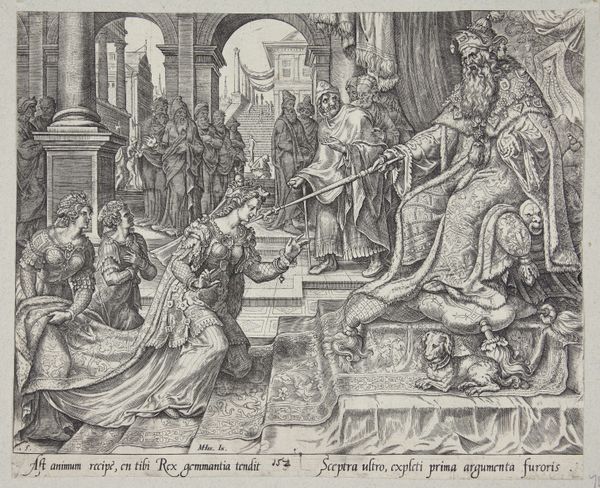
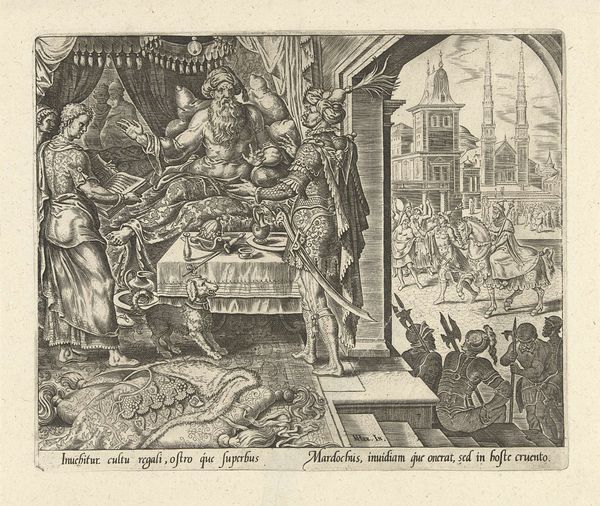
Philips Galle created this engraving, "Ahasveros en Haman te gast bij Ester," in the late 16th century. Galle was working during a period marked by religious and political upheaval, which profoundly shaped his artistic output. The image depicts a biblical scene where Queen Esther reveals to her husband, King Ahasuerus, the evil plot of Haman to annihilate the Jewish people. Galle’s choice to portray this narrative is not simply religious; it reflects the anxieties of a society grappling with issues of persecution and identity. The figures are sumptuously dressed, underscoring the themes of power, deception, and moral reckoning that are central to the story. What strikes me most about this piece is how Galle uses this moment to probe questions of justice. Esther’s courage in the face of potential danger is a powerful statement on the role of women in challenging oppressive structures, and a reflection on the period’s attitudes towards minority groups and the ever-present threat of religious intolerance.