

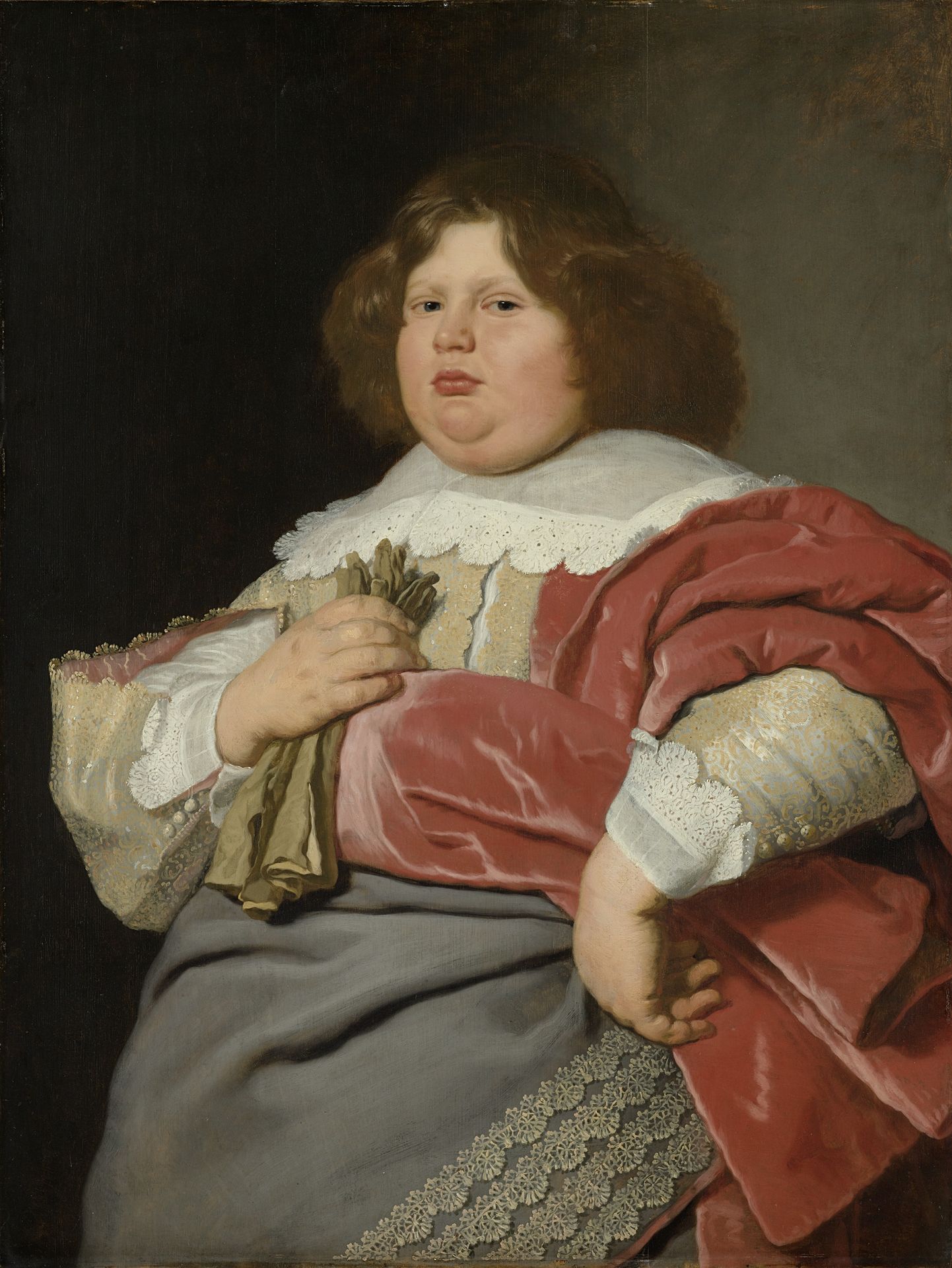
c. 1642
Portrait of Gerard Andriesz Bicker

Bartholomeus van der Helst
1612 - 1670Location
RijksmuseumListen to curator's interpretation
Curatorial notes
Editor: So, here we have "Portrait of Gerard Andriesz Bicker," an oil painting from around 1642 by Bartholomeus van der Helst. The subject's pose seems a little stiff, almost like he's deliberately posing. What do you see when you look at this painting? Curator: Precisely. Notice how van der Helst meticulously renders the textures and colors of the garments, the sumptuous velvet, the delicate lace. The formal construction, almost rigid, conveys the sitter's social status, wouldn’t you agree? The contrasting light and shadow further accentuate the texture and contribute to the subject's powerful presence. Editor: I see what you mean about the texture, especially with the lace. I initially saw it just as ornamentation but now it contributes to the sense of formality. But do you think the sharp contrast flattens the face somewhat? Curator: That may be so. Yet the chiaroscuro employed, reminiscent of Baroque aesthetics, directs the viewer's gaze toward the face. And how the carefully crafted detail, down to the ruffled trim on the sleeves, helps construct the man’s identity. Can you sense the calculated composition meant to evoke notions of wealth and societal importance? Editor: I suppose it’s hard to escape the impression of wealth when every fabric looks so touchable, and rendered with such precision! Now, that I look closer I can appreciate how the structure emphasizes status rather than softens any flaws. I learned a lot from analyzing his rendering with these ideas in mind. Curator: It has been a delight looking through the painting with you as well! Focusing on what is present rather than absent makes the painting even more intriguing.
