1650 - 1660
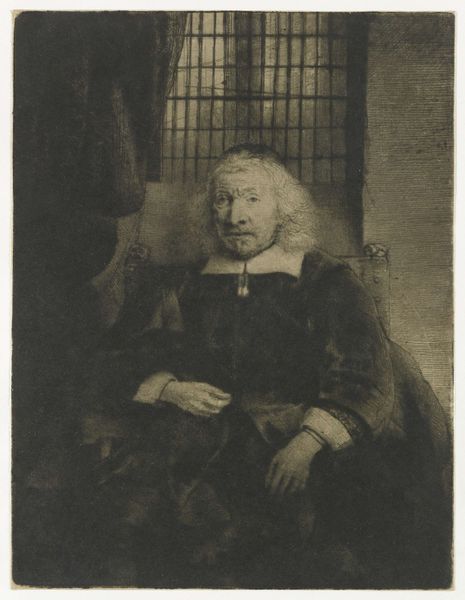
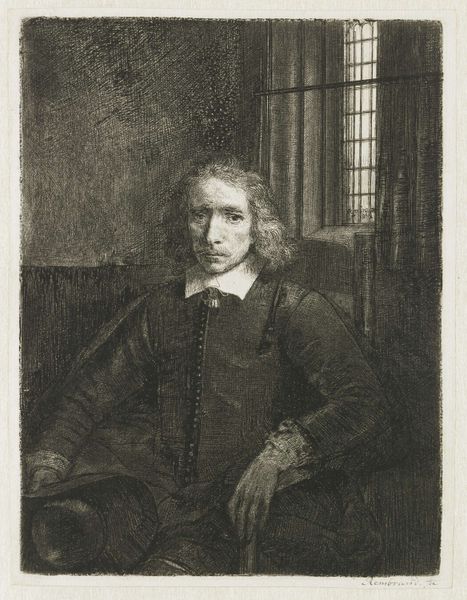
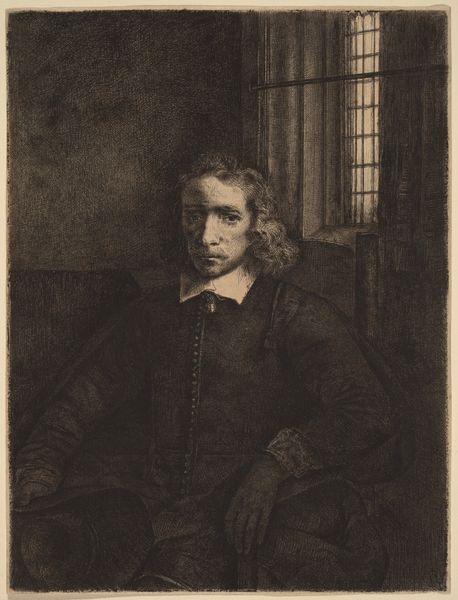
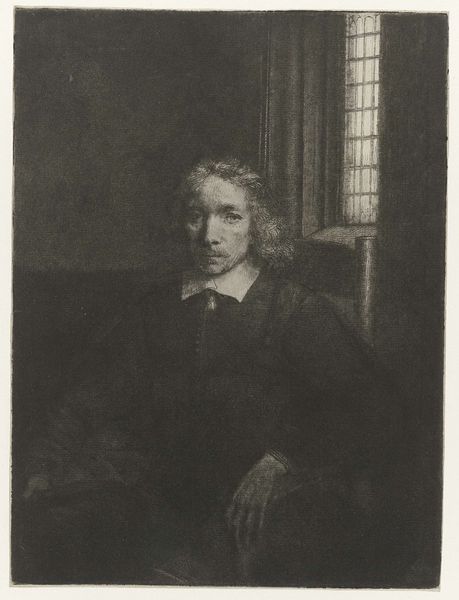
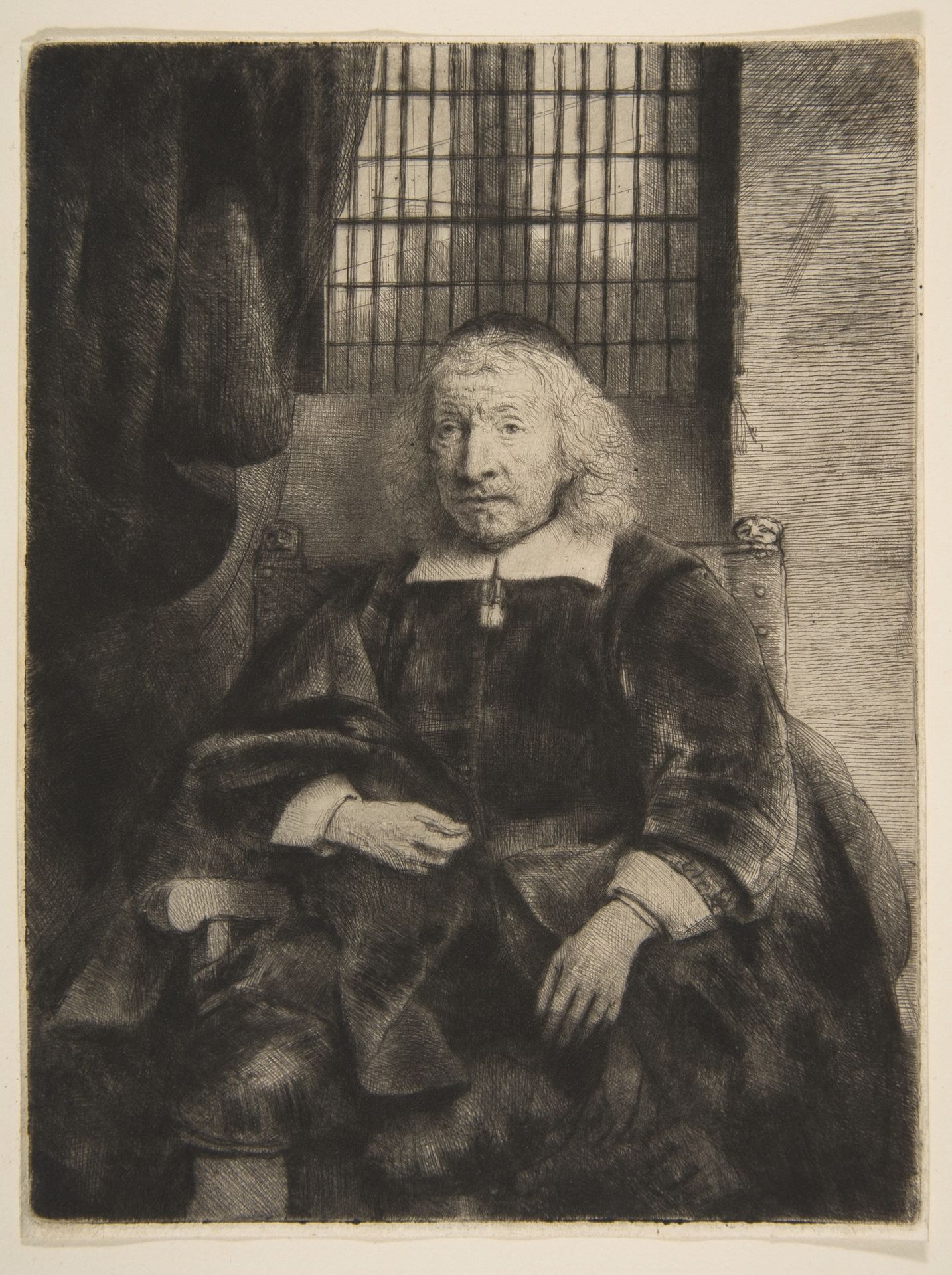
Thomas Haaringh (Old Haaringh)


Listen to curator's interpretation
Curatorial notes
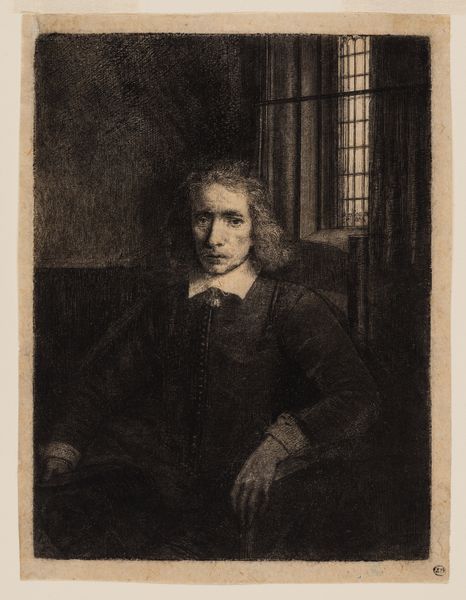
Editor: So, here we have Rembrandt van Rijn's "Thomas Haaringh (Old Haaringh)," an etching dating from around 1650 to 1660. There’s something almost melancholic about this portrait; the man's expression, the muted tones... it's quite affecting. How do you interpret this work? Curator: For me, it resonates powerfully with the societal structures of the Dutch Golden Age, a period marked by both unprecedented prosperity and stark social stratification. Look at how Rembrandt positions Haaringh – seated, yet the window behind him has bars; what freedoms does he possess and what might be restricted? Editor: That's a really interesting point. I hadn't considered the window as a kind of barrier. Does this have anything to do with Haaringh's profession? Curator: Precisely. We need to contextualize Haaringh’s role – a wealthy auctioneer but maybe complicit in maintaining certain systems and inequities through art. The subtle shading and Rembrandt’s focus on Haaringh’s aging face invite a deep reflection on the power dynamics inherent in collecting and selling art during that period. Consider who profits from this commerce. Editor: I see. So, you're saying that Rembrandt isn't just painting a portrait; he's offering a commentary on the ethics of wealth and art? Curator: Exactly! It provokes crucial questions about the art world’s gatekeepers – their roles and their social responsibility. Also, it makes me consider representation - whose images and voices are amplified and whose are relegated to the shadows. The very act of memorializing Haaringh underscores those disparities. Editor: Wow, that adds so many layers! I initially saw it as just a sad portrait, but now it seems charged with social and historical significance. Curator: And that’s the beauty of art history! It challenges us to see beyond the surface and engage with complex power structures embedded within the artwork. Editor: Thanks, this has really changed how I look at these older works. Curator: The exchange, in turn, underscores for me the importance of art history continually evolving, of responding to different contexts.