About this artwork
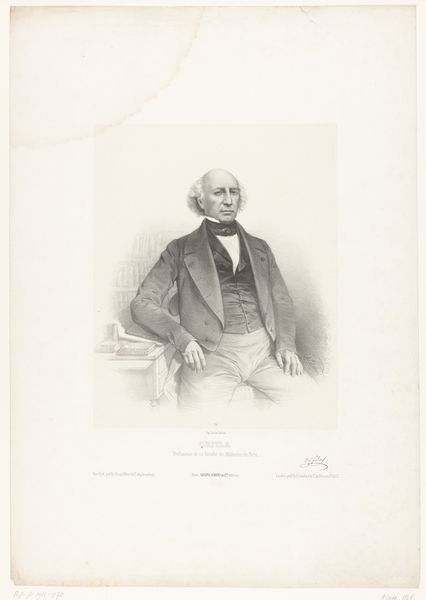
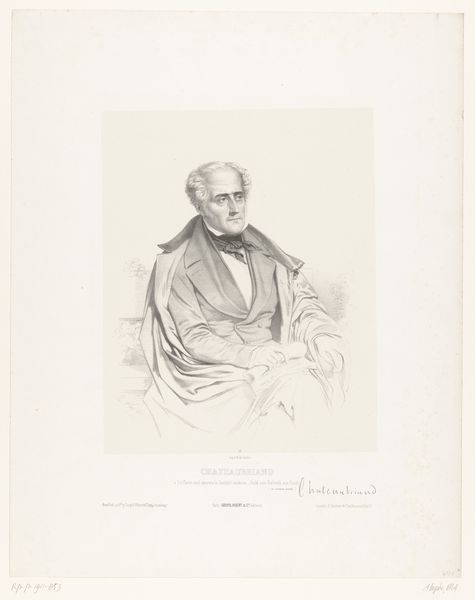
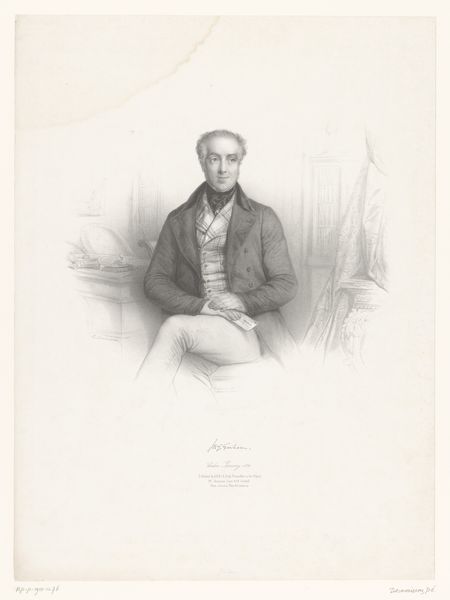
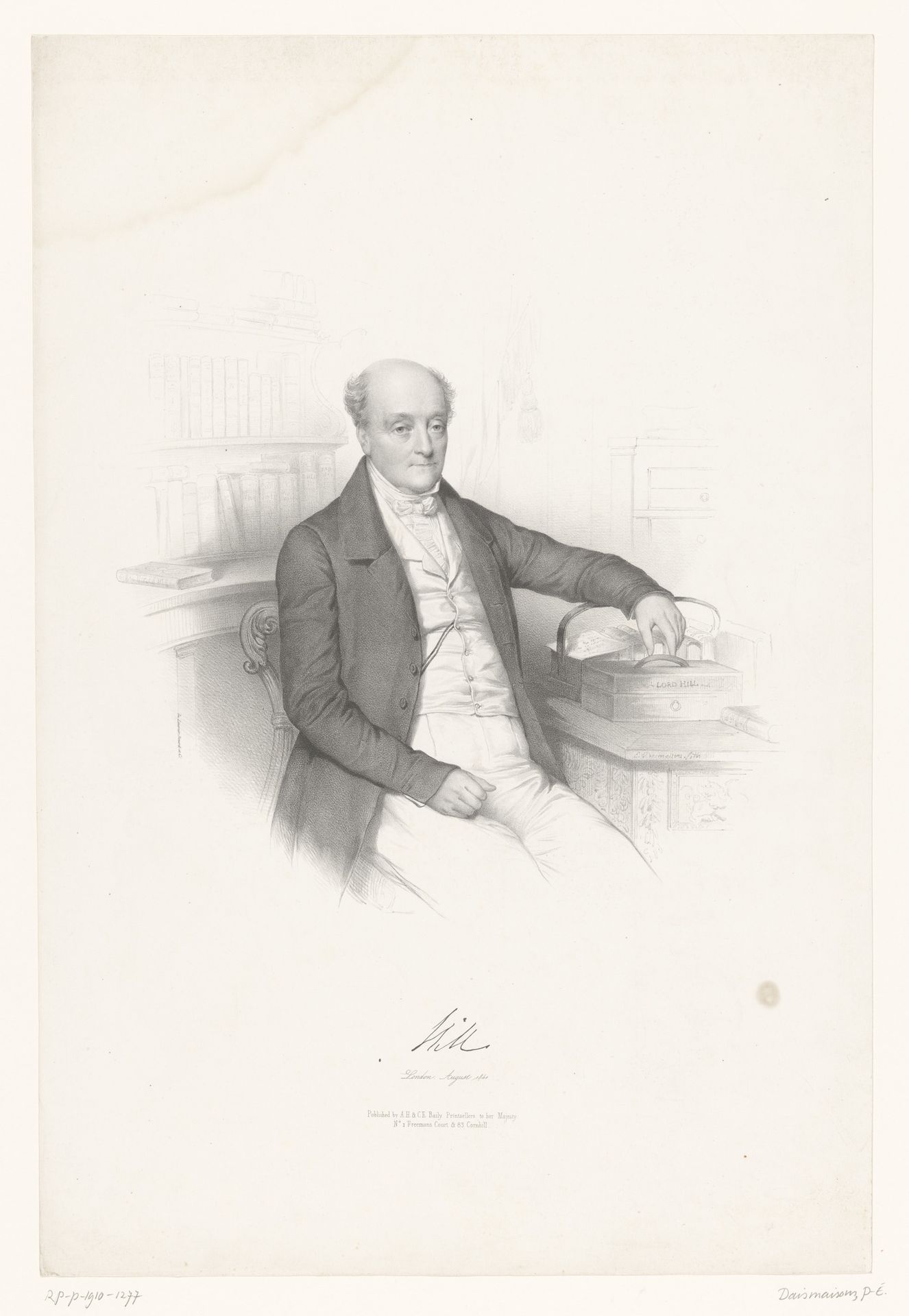
Émilien Desmaisons made this portrait of General Rowland Hill at an unknown date using lithography. The image signifies the importance of social standing and the institutional role of the military. Hill's posture exudes authority, while the setting—likely his private study, filled with books—speaks to his status and cultivated intellect. This portrait was created in a time of significant social change, a period when the military held a crucial role in maintaining British power and colonial interests. The attention to detail, the careful rendering of Hill's uniform, and the symbolic representation of his personal space all serve to reinforce his respected position within society. Was this image designed to celebrate the status quo, or did it offer a more nuanced perspective on the social hierarchy of the time? Historians often look to sources such as letters, diaries, newspapers, and institutional records, to enhance our understanding of the complex relationship between art, power, and social identity.

Artwork details
- Medium
- drawing, pencil
- Dimensions
- height 482 mm, width 327 mm
- Location
- Rijksmuseum
- Copyright
- Rijks Museum: Open Domain
Tags
Comments
Share your thoughts
About this artwork
Émilien Desmaisons made this portrait of General Rowland Hill at an unknown date using lithography. The image signifies the importance of social standing and the institutional role of the military. Hill's posture exudes authority, while the setting—likely his private study, filled with books—speaks to his status and cultivated intellect. This portrait was created in a time of significant social change, a period when the military held a crucial role in maintaining British power and colonial interests. The attention to detail, the careful rendering of Hill's uniform, and the symbolic representation of his personal space all serve to reinforce his respected position within society. Was this image designed to celebrate the status quo, or did it offer a more nuanced perspective on the social hierarchy of the time? Historians often look to sources such as letters, diaries, newspapers, and institutional records, to enhance our understanding of the complex relationship between art, power, and social identity.
Comments
Share your thoughts