paper, glass
clear focal point
circular oval feature
3d printed part
strong focal point
paper
glass
circular focus
framed image
white focal point
framed composition
france
small focal point
framed
Dimensions: 6.7 × 4.5 cm (2 5/8 × 1 3/4 in.)
Copyright: Public Domain
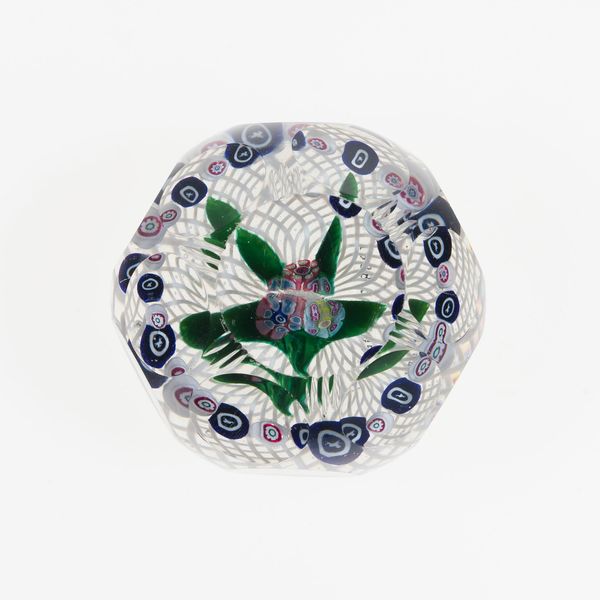
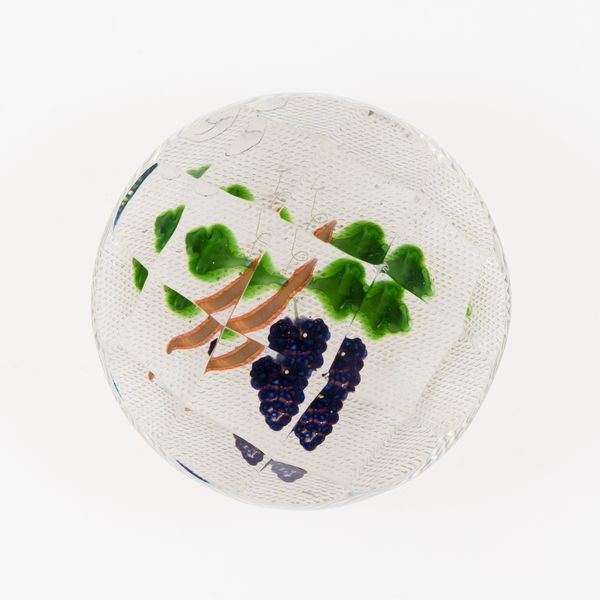
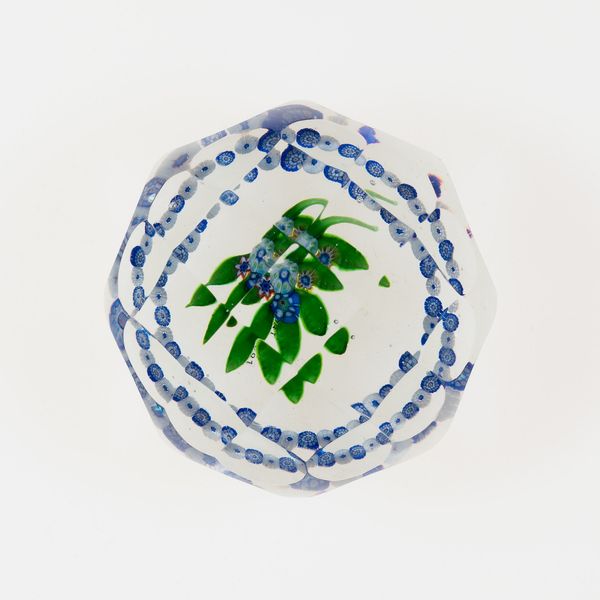
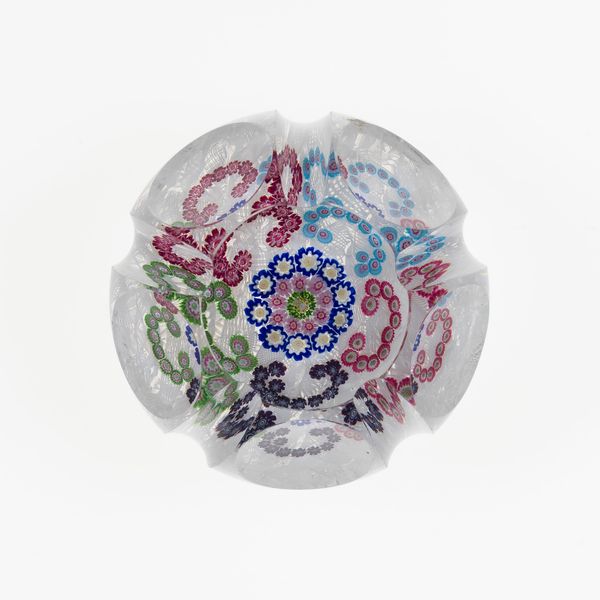
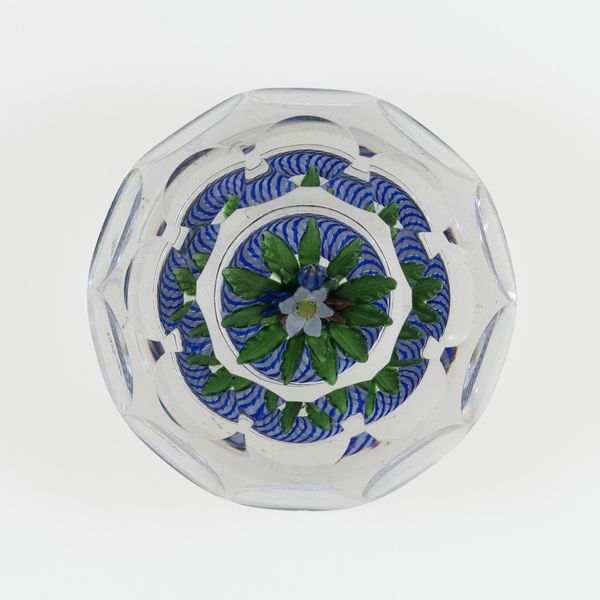
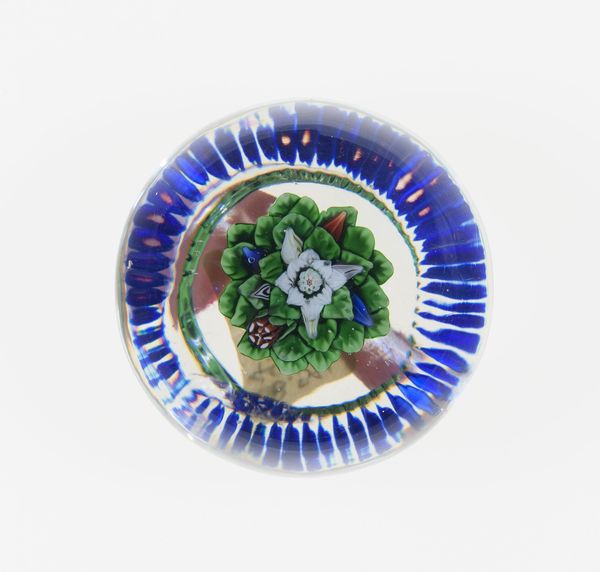
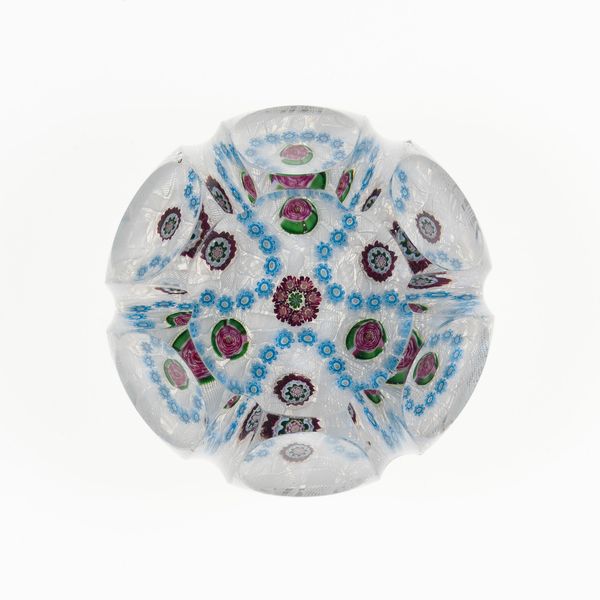
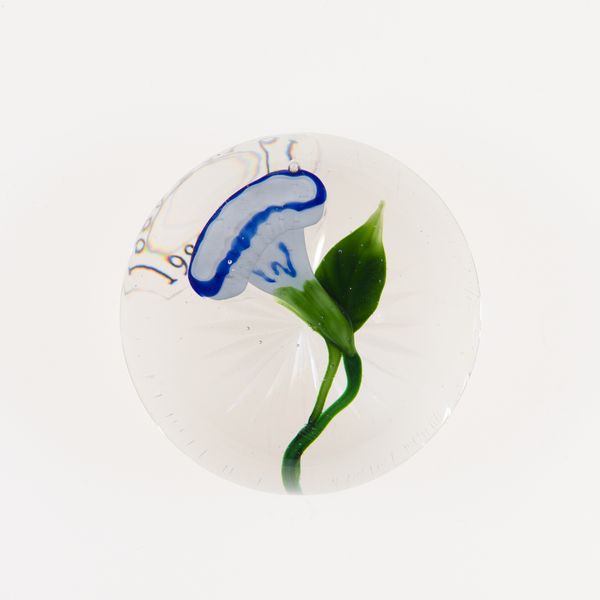
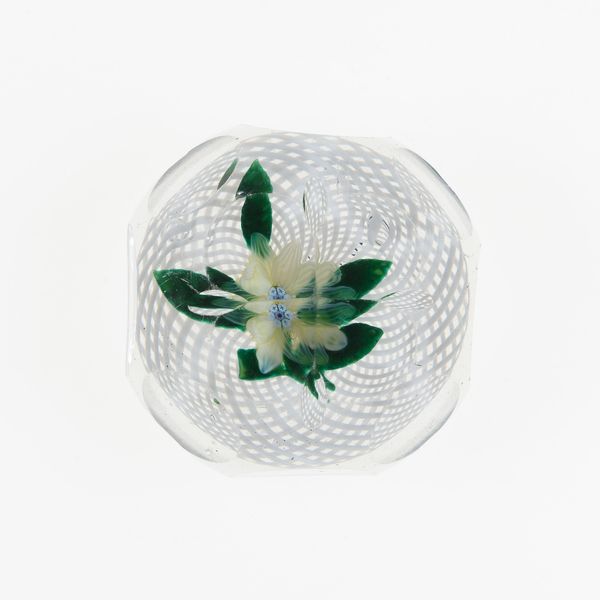
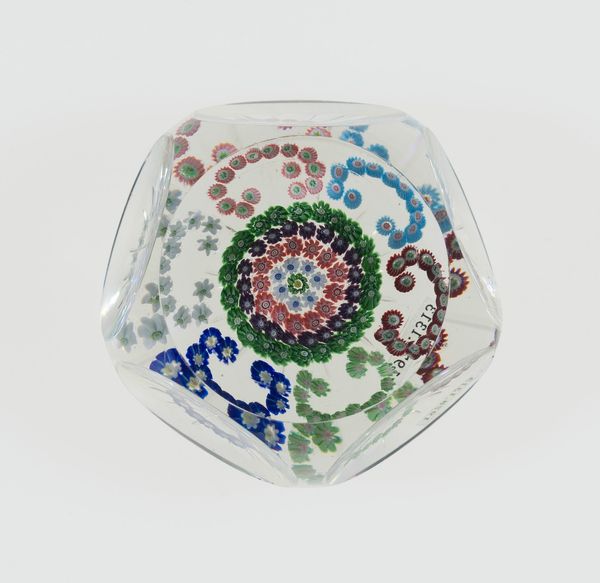
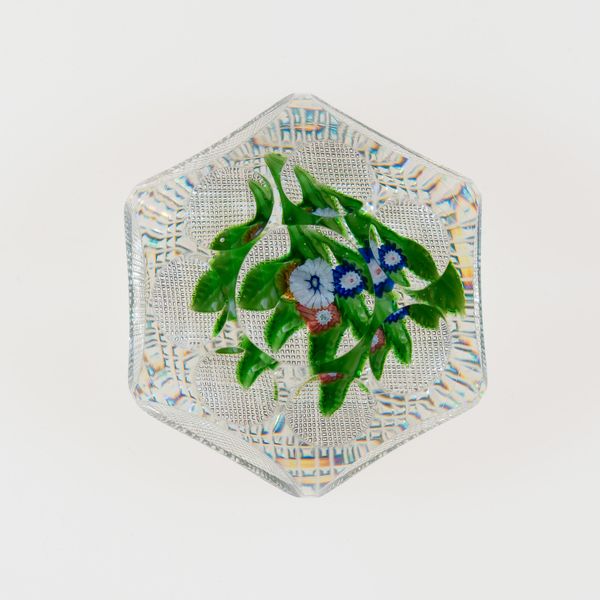
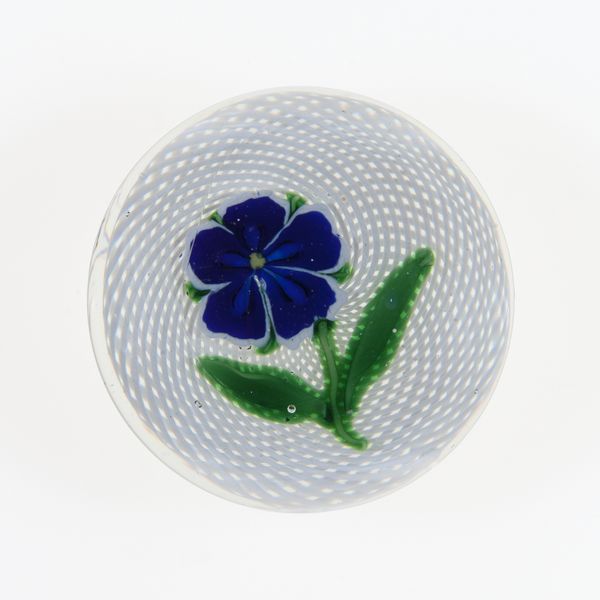
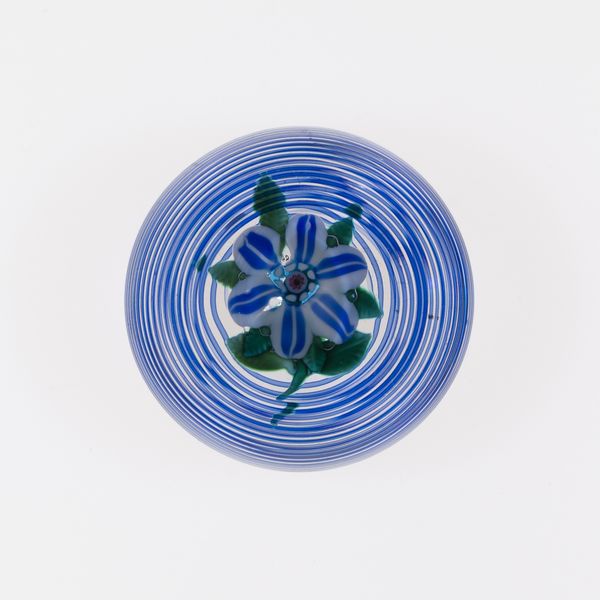
Editor: Here we have the glass paperweight "Handcooler" by Compagnie de Saint Louis, created sometime between 1845 and 1860. The detail inside the glass is really captivating! How do you interpret the construction of this object? Curator: Its structure immediately reveals its intent. Note how the glass itself acts as both frame and lens, magnifying and distorting the delicate flower and lettering trapped within. What is the effect of this dual role, do you think? Editor: I suppose the curvature of the glass gives it a jewel-like quality, really drawing my eye in. It also kind of obfuscates some of the lettering. Curator: Precisely. The formal tension arises from the clear containment and slight obfuscation of elements, doesn't it? It’s a play between revelation and concealment. The flower's vibrant color against the neutral ground further enhances this tension. How do the textures strike you? Editor: Well, there's the smoothness of the outer glass, obviously, but it also looks like the flower is somewhat textured or layered. I'm wondering what that does to the artwork as a whole. Curator: Consider how the materiality contradicts expectations: fragility preserved in seeming permanence. This subversion elevates the object beyond mere utility to a symbolic plane. Don’t you agree? Editor: It definitely adds another layer. I hadn’t thought of that tension between fragility and permanence before. Thanks! Curator: And thank you! It's rewarding to examine these complexities.
Comments
No comments
Be the first to comment and join the conversation on the ultimate creative platform.
 React
React Comment