
Curatorial notes
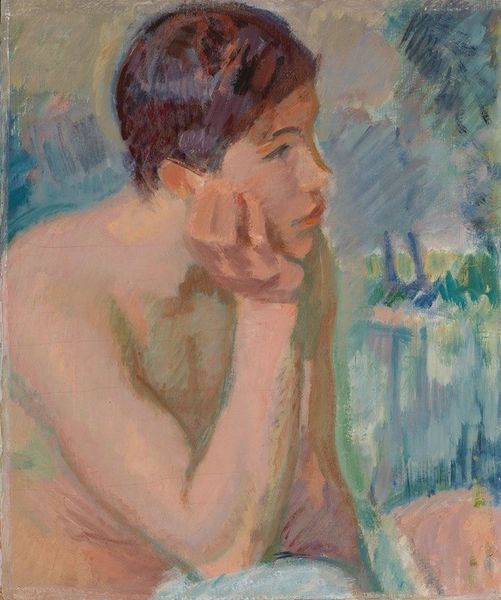
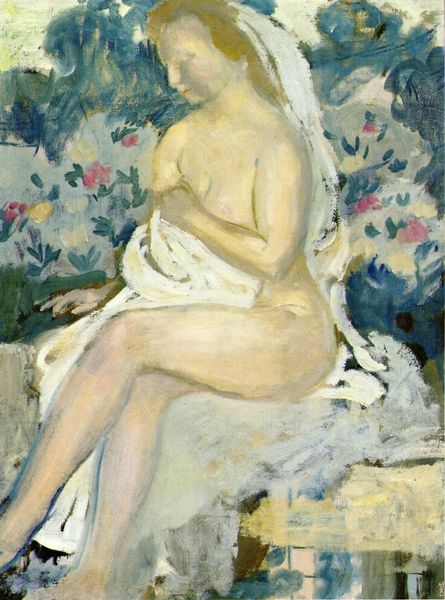
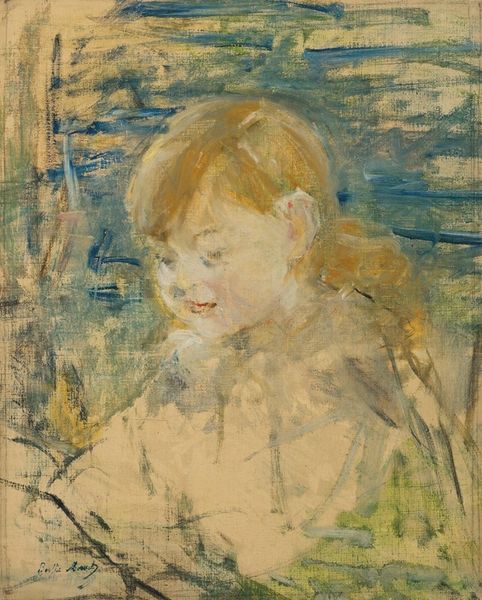
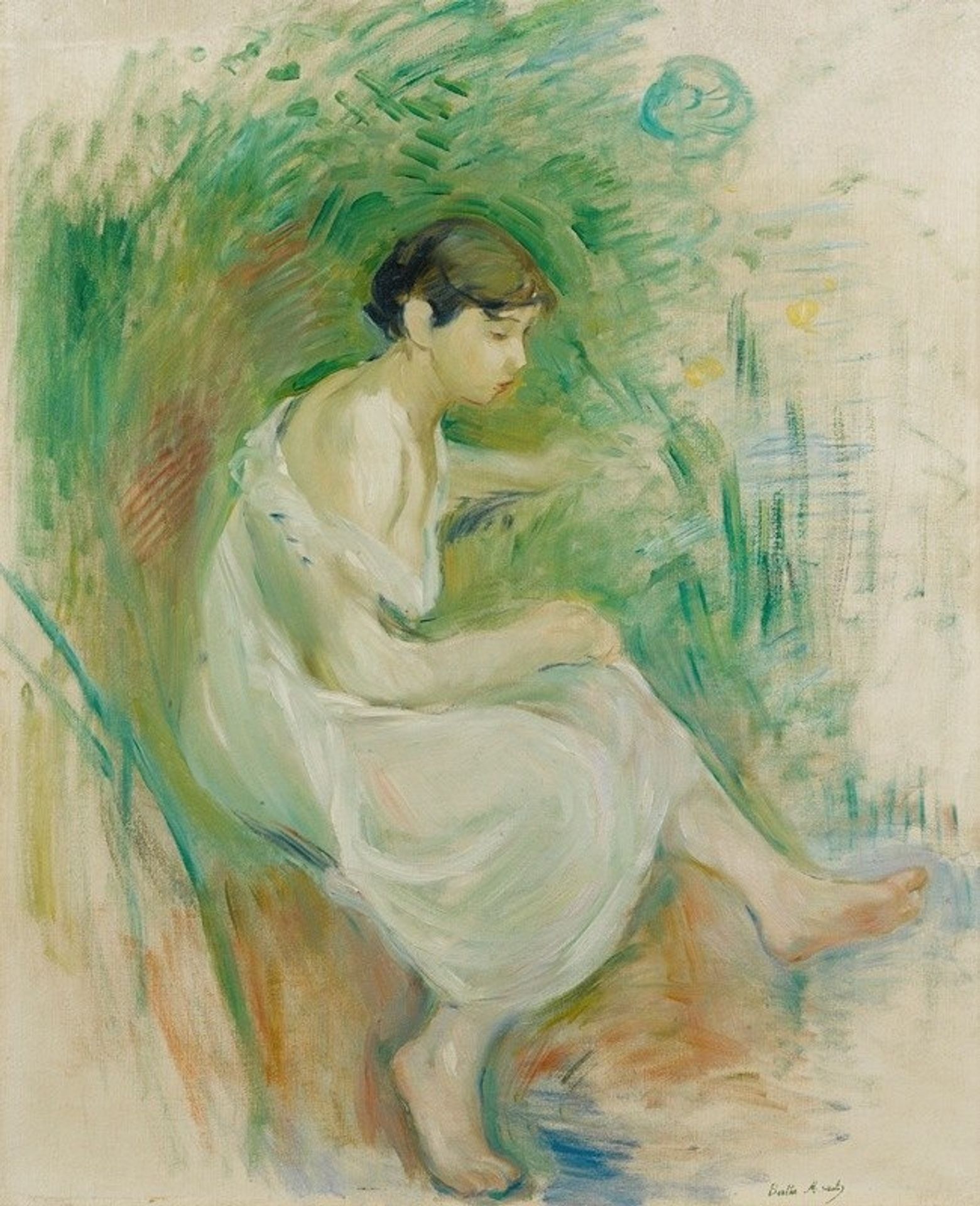
Editor: So, we’re looking at Berthe Morisot's "Baigneuse en Chemise," painted around 1894. It's oil on canvas, and I'm immediately struck by how soft and dreamy it feels, almost like a half-remembered impression. The brushstrokes are so loose. What captures your attention when you look at it? Curator: Oh, the dreamy quality is spot on! For me, it’s the vulnerability. Not just in the subject – this woman in her private moment – but in Morisot’s hand itself. The painting feels like a whisper, doesn’t it? Like she’s daring to reveal something intimate without fully exposing it. You see how the figure kind of dissolves into the landscape? Almost like she's part of nature itself... I wonder, do you find the way she portrays women unconventional for her time? Editor: Definitely! I mean, it’s not like the idealized female figures we often see. There’s something much more real and human about it. And the fact that she's both present and absent, solid and fading – it's pretty amazing. Curator: Exactly. Morisot wasn't interested in traditional portraiture. She captured a feeling, a mood, an essence. It’s less about the literal depiction and more about suggestion and intuition. Makes you wonder what she was feeling, right? Editor: It really does. I came into this thinking it was just a pretty painting, but now I see how much it's about Morisot's unique perspective. Thanks for opening my eyes! Curator: And thank you for noticing the dreaminess! It’s a good reminder that art can be both a mirror and a window - reflecting the artist's soul while inviting us to look at the world in new and beautiful ways.