About this artwork
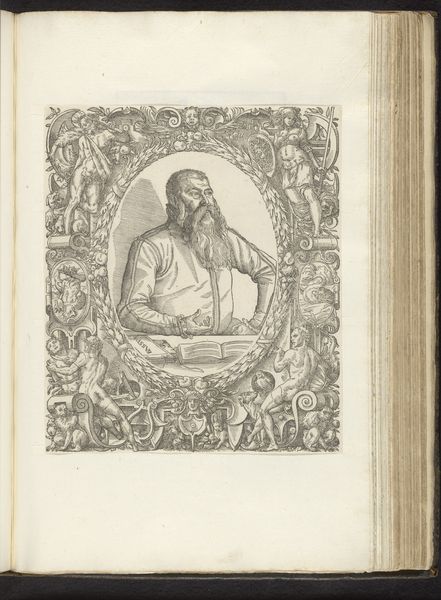
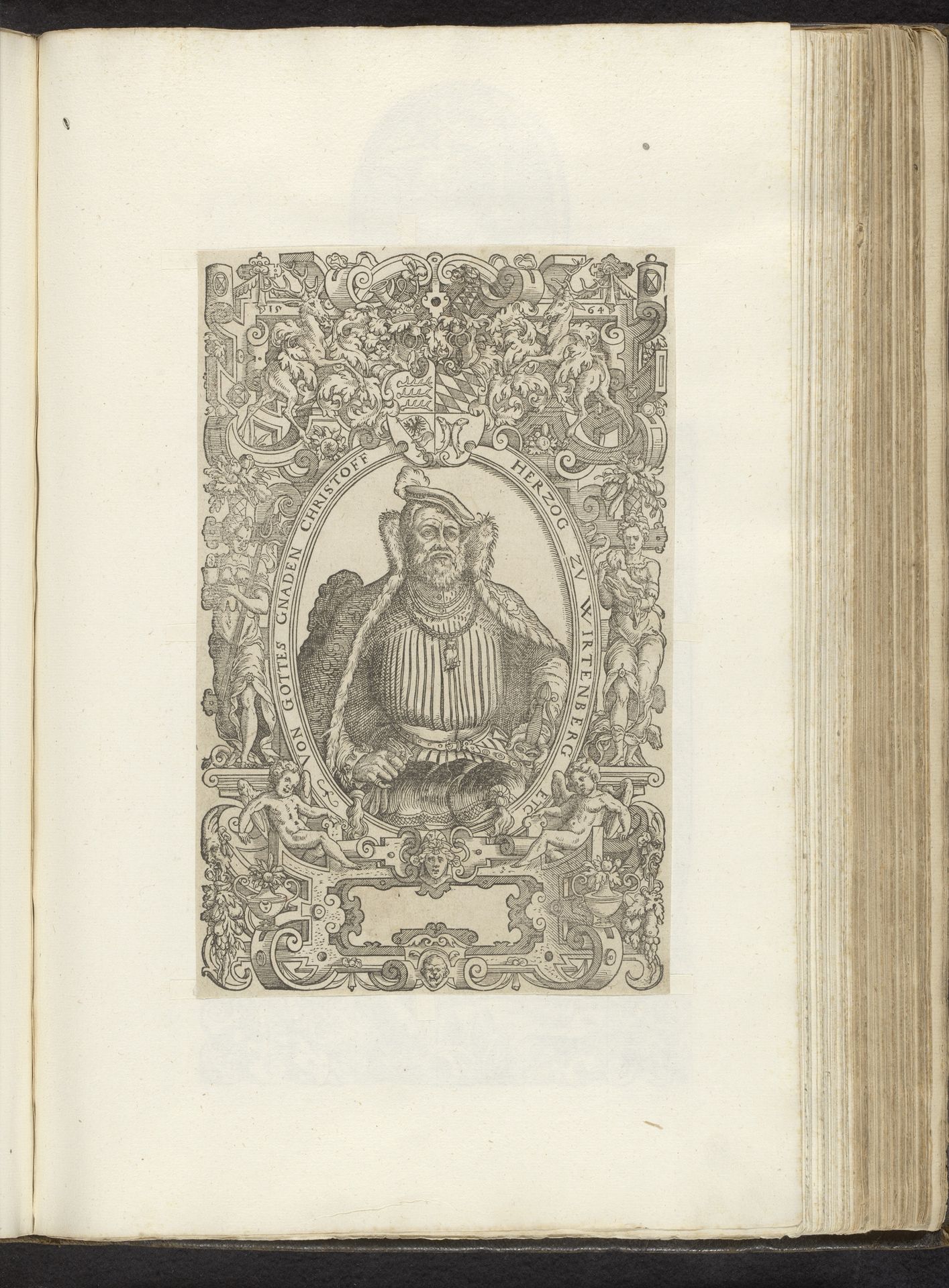
Curator: Looking at this exquisite page, we're observing Jost Amman's "Portret van Christoph von Württemberg," created in 1564. It's currently held in the Rijksmuseum. What springs to mind when you see this, Editor? Editor: It feels quite formal and somewhat austere, wouldn't you agree? The fine linework creates an intensity, especially around the face. It speaks of power, and perhaps a touch of melancholy? Curator: The portrayal of Christoph, Duke of Württemberg, here certainly speaks to established hierarchies. Consider the historical context: the 16th century was a period of Reformation, intense social change, and entrenched power structures. A portrait like this was meant to convey authority, legitimacy, and divine right. Note how the elaborate frame amplifies his position through visual cues, echoing traditions of royal display and projecting controlled narratives of leadership in the region. Editor: Absolutely, that frame is itself an intricate ecosystem of symbolic ornamentation. I see figures almost like caryatids, decorative motifs interwoven with foliage and heraldic symbols above the portrait itself. To me, the overall effect feels like the Duke is placed at the heart of a carefully constructed cosmos of power. A fascinating combination of religious symbolism and personal aggrandizement. Curator: And it’s important to look beyond the Duke himself. Who was Amman trying to reach? Patrons played a significant role in art production and disseminating a ruler's public image. It’s an important intersection when looking at identity and power. Editor: Yes, seeing it in this context brings into sharper focus not just the visual language, but its intended message—the propagation of dynastic prestige through carefully chosen and coded imagery. Ultimately, this portrait freezes a fleeting moment and expands into this symbolic realm. I really enjoy the glimpse into a meticulously constructed historical image. Curator: I agree, observing a work like this reminds us to decode how people constructed, projected, and solidified their identities through art, as well as the intersectional social structures at play in commissioning the art. It certainly grants us an enriched appreciation.

Artwork details
- Dimensions
- height 259 mm, width 155 mm
- Location
- Rijksmuseum
- Copyright
- Rijks Museum: Open Domain
Tags
Comments
Share your thoughts
About this artwork
Curator: Looking at this exquisite page, we're observing Jost Amman's "Portret van Christoph von Württemberg," created in 1564. It's currently held in the Rijksmuseum. What springs to mind when you see this, Editor? Editor: It feels quite formal and somewhat austere, wouldn't you agree? The fine linework creates an intensity, especially around the face. It speaks of power, and perhaps a touch of melancholy? Curator: The portrayal of Christoph, Duke of Württemberg, here certainly speaks to established hierarchies. Consider the historical context: the 16th century was a period of Reformation, intense social change, and entrenched power structures. A portrait like this was meant to convey authority, legitimacy, and divine right. Note how the elaborate frame amplifies his position through visual cues, echoing traditions of royal display and projecting controlled narratives of leadership in the region. Editor: Absolutely, that frame is itself an intricate ecosystem of symbolic ornamentation. I see figures almost like caryatids, decorative motifs interwoven with foliage and heraldic symbols above the portrait itself. To me, the overall effect feels like the Duke is placed at the heart of a carefully constructed cosmos of power. A fascinating combination of religious symbolism and personal aggrandizement. Curator: And it’s important to look beyond the Duke himself. Who was Amman trying to reach? Patrons played a significant role in art production and disseminating a ruler's public image. It’s an important intersection when looking at identity and power. Editor: Yes, seeing it in this context brings into sharper focus not just the visual language, but its intended message—the propagation of dynastic prestige through carefully chosen and coded imagery. Ultimately, this portrait freezes a fleeting moment and expands into this symbolic realm. I really enjoy the glimpse into a meticulously constructed historical image. Curator: I agree, observing a work like this reminds us to decode how people constructed, projected, and solidified their identities through art, as well as the intersectional social structures at play in commissioning the art. It certainly grants us an enriched appreciation.
Comments
Share your thoughts