About this artwork
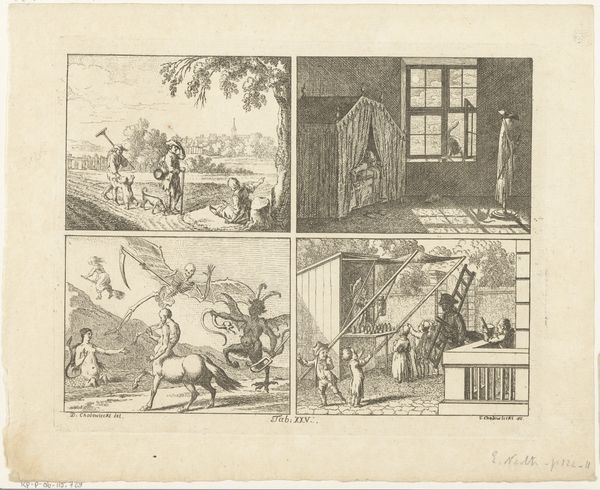
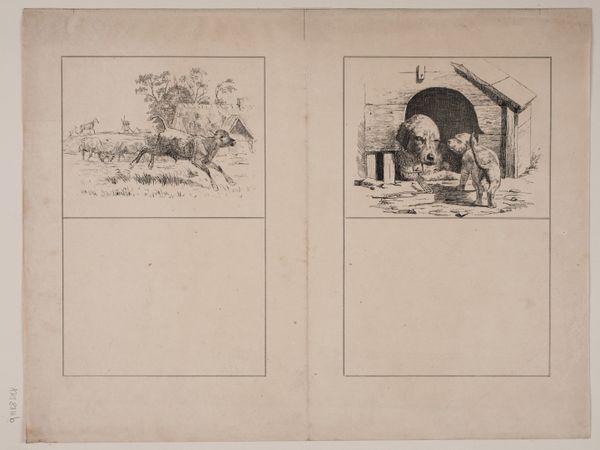
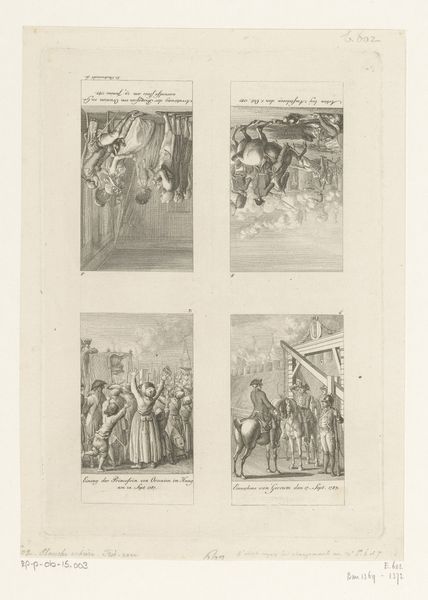
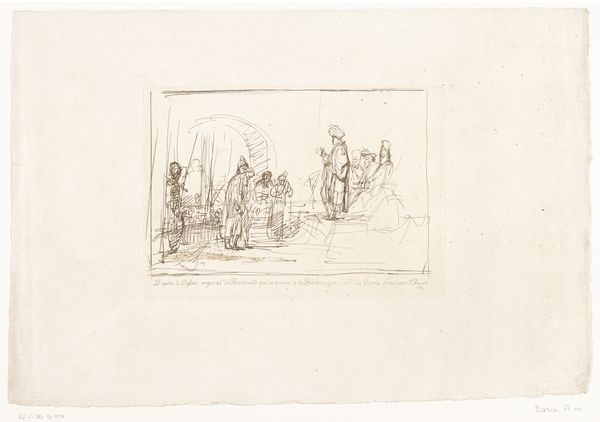
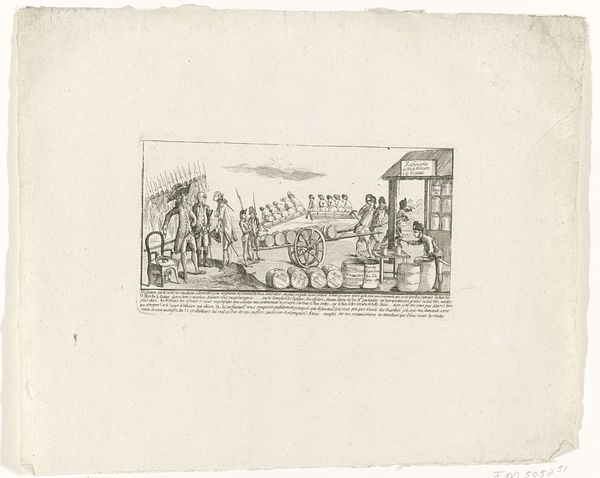
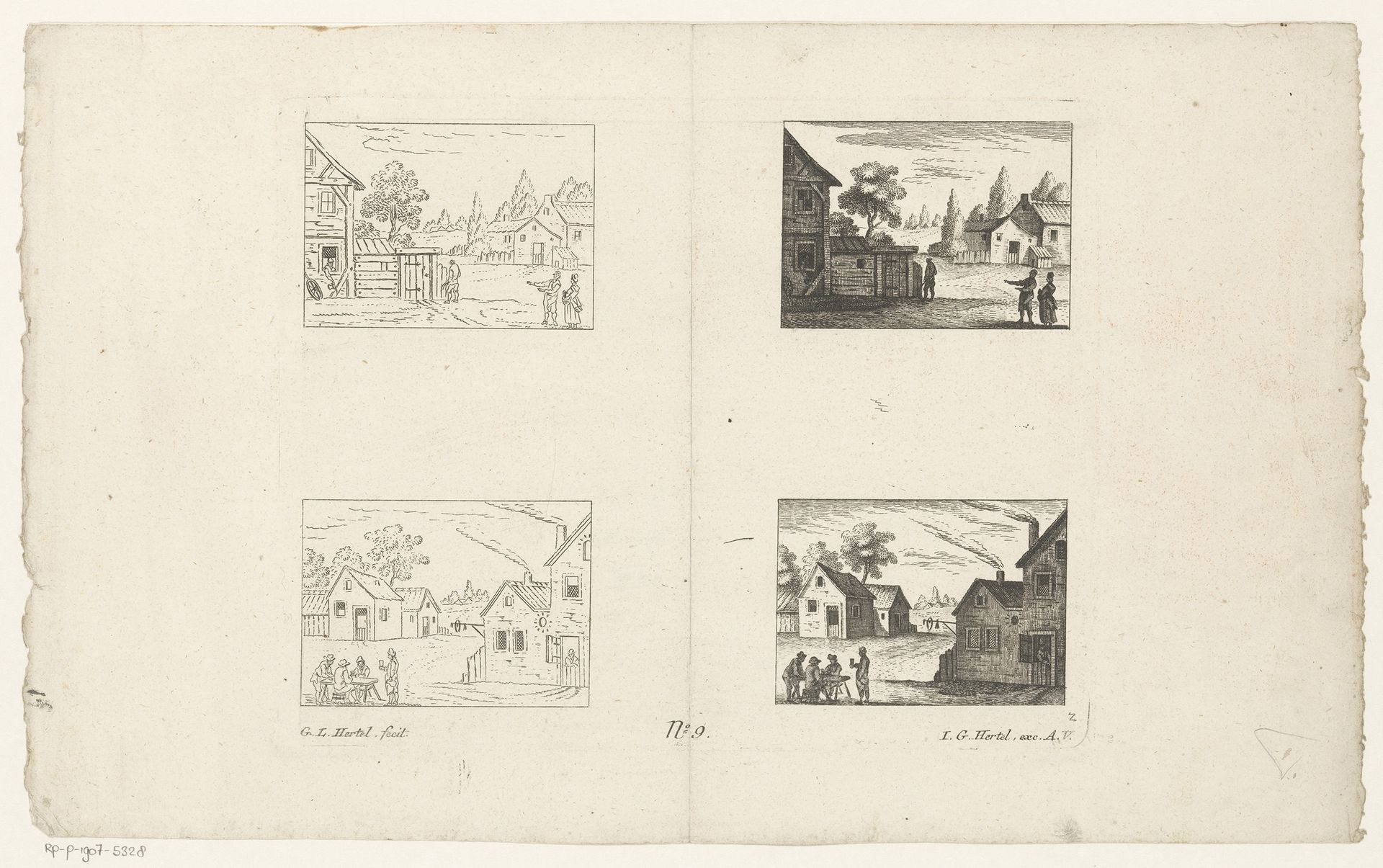
This undated print by Georg Leopold Hertel, titled "Etsproces verduidelijkt in vier landschappen," uses etching to depict four distinct landscapes. The composition divides the paper into quadrants, each framing a rural scene with a house and figures. The formal structure of the artwork is organized around the contrast between line and space. Hertel employs dense, closely-knit lines to render the architecture and figures, while leaving the sky and open areas relatively blank. This emphasizes the interplay of dark and light, creating depth and volume within each miniature landscape. The sequential arrangement invites a structuralist reading. We are drawn to consider how each scene might relate to the others, possibly illustrating steps in a narrative or stages in a process. The figures, though small, are crucial; their placement and interaction within each scene suggest an underlying story, hinting at themes of labor, community, or perhaps even the passage of time. This piece challenges our perception of space, compressing expansive landscapes into intimate vignettes.
Etsproces verduidelijkt in vier landschappen
1750 - 1778

Georg Leopold Hertel
1740 - 1778Location
RijksmuseumArtwork details
- Dimensions
- height 198 mm, width 250 mm
- Location
- Rijksmuseum
- Copyright
- Rijks Museum: Open Domain
Comments
Share your thoughts
About this artwork
This undated print by Georg Leopold Hertel, titled "Etsproces verduidelijkt in vier landschappen," uses etching to depict four distinct landscapes. The composition divides the paper into quadrants, each framing a rural scene with a house and figures. The formal structure of the artwork is organized around the contrast between line and space. Hertel employs dense, closely-knit lines to render the architecture and figures, while leaving the sky and open areas relatively blank. This emphasizes the interplay of dark and light, creating depth and volume within each miniature landscape. The sequential arrangement invites a structuralist reading. We are drawn to consider how each scene might relate to the others, possibly illustrating steps in a narrative or stages in a process. The figures, though small, are crucial; their placement and interaction within each scene suggest an underlying story, hinting at themes of labor, community, or perhaps even the passage of time. This piece challenges our perception of space, compressing expansive landscapes into intimate vignettes.
Comments
Share your thoughts