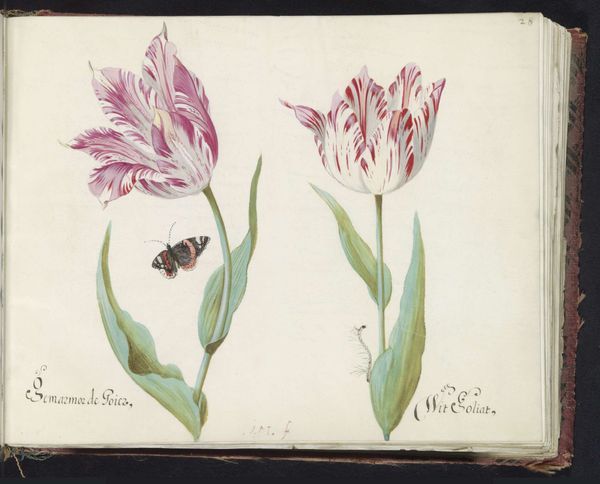
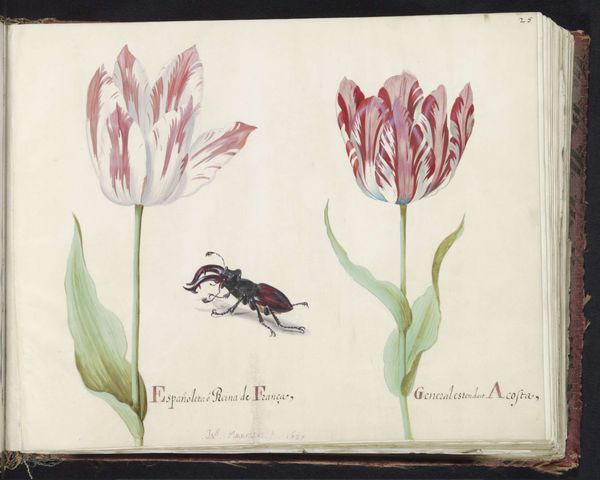
painting, watercolor
#
painting
#
11_renaissance
#
watercolor
#
coloured pencil
#
botanical art
#
watercolor
Dimensions: height 265 mm, width 335 mm
Copyright: Rijks Museum: Open Domain
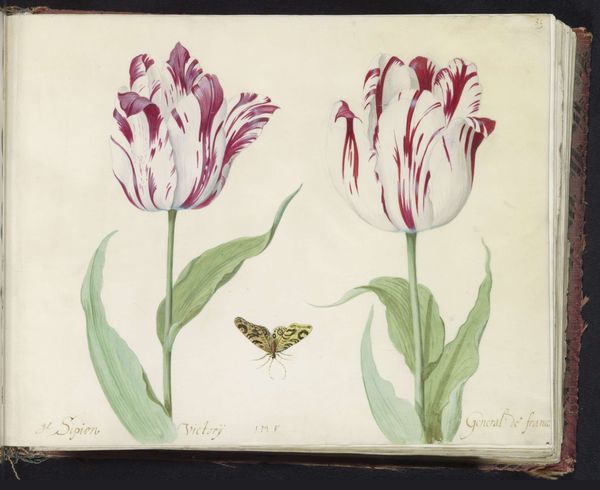
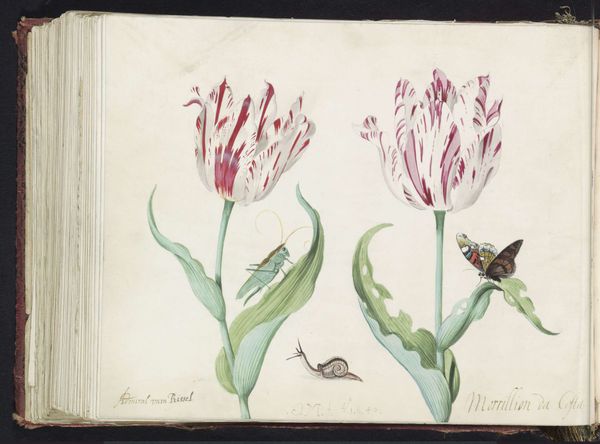
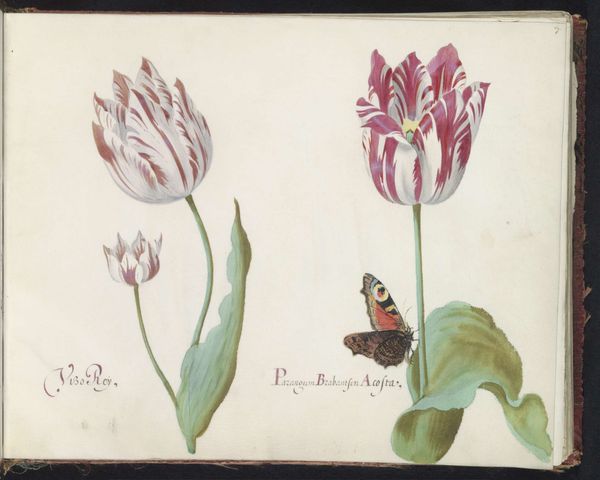
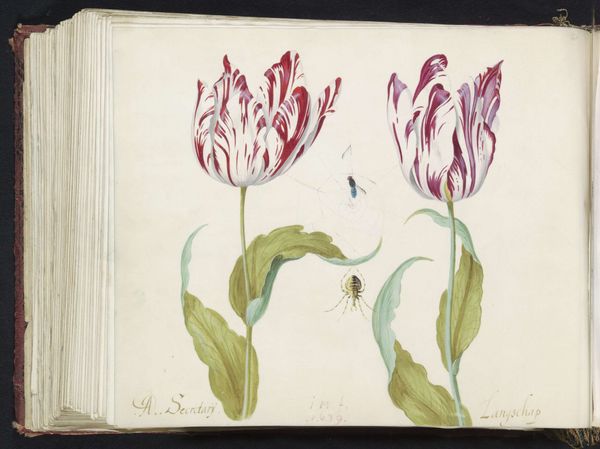
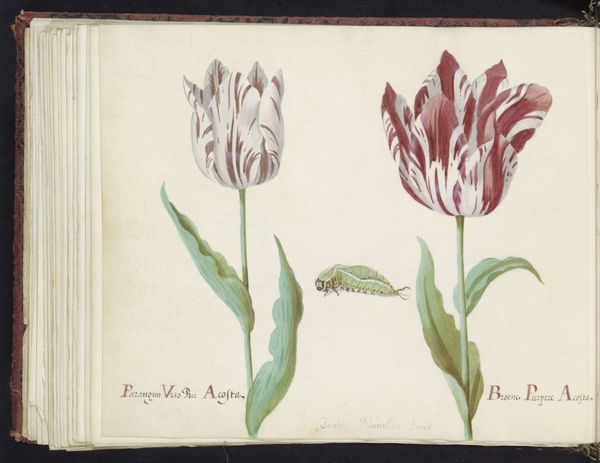
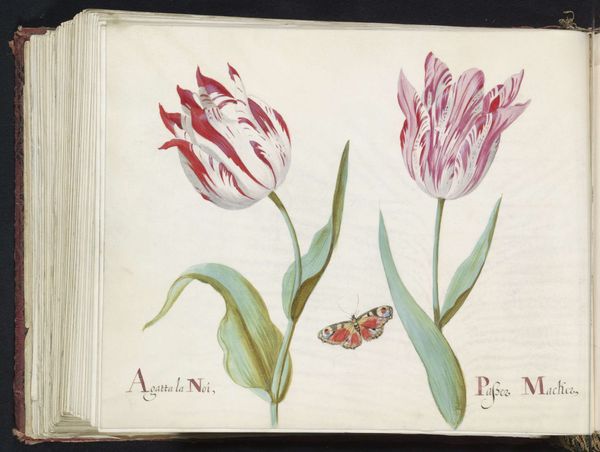
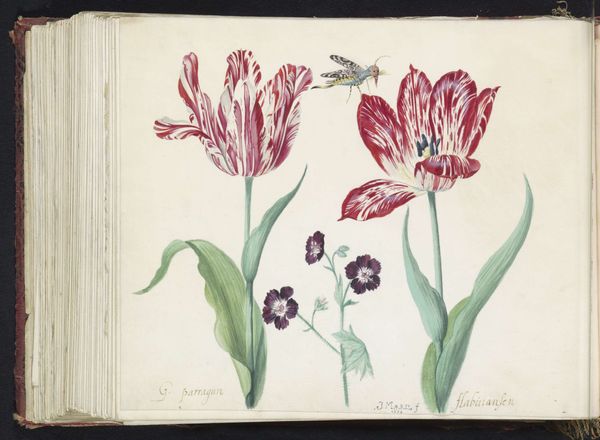
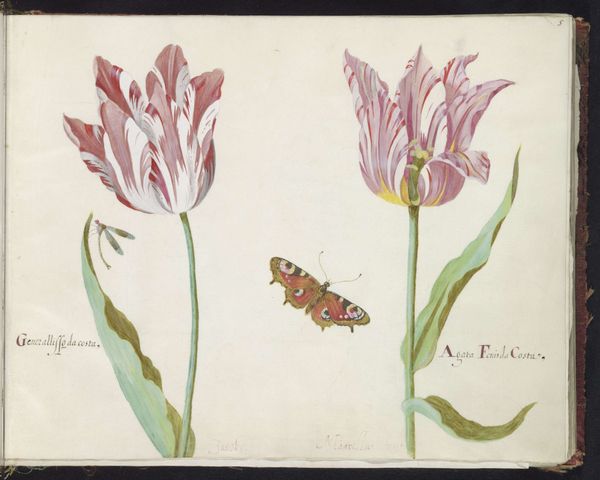
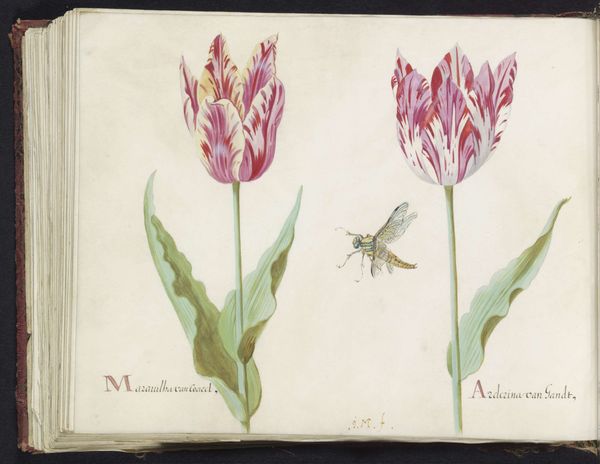
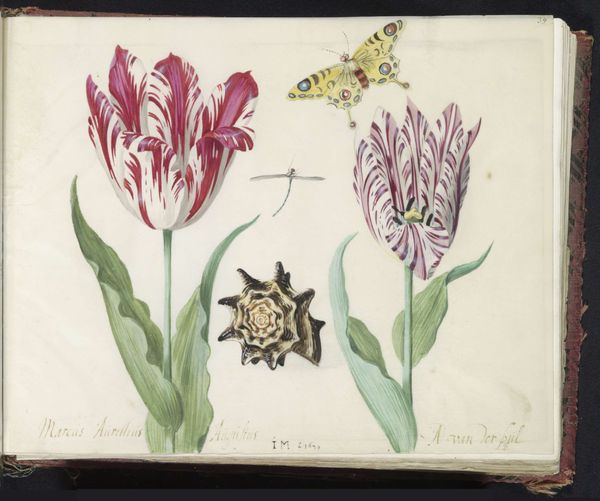
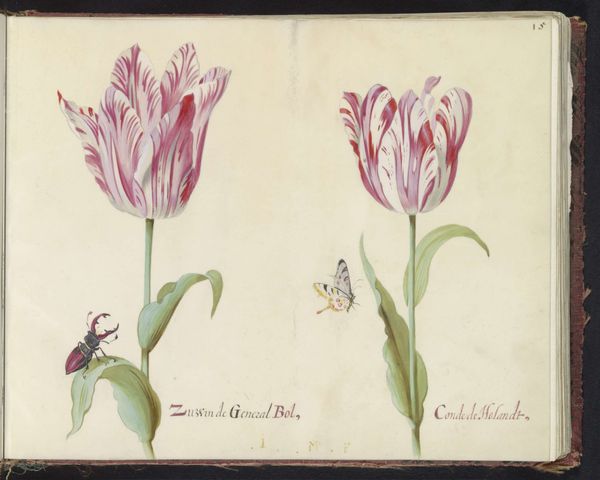
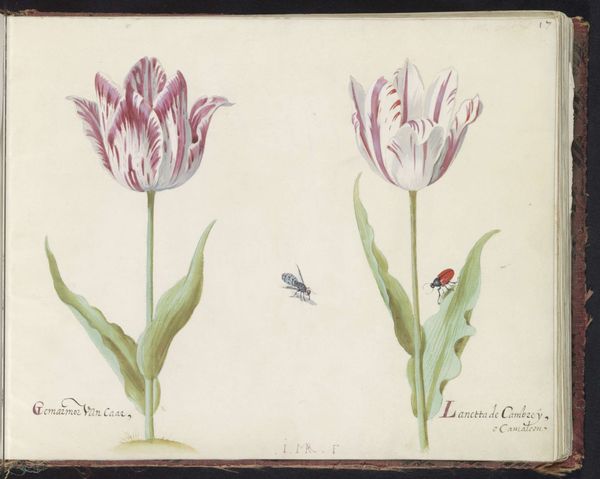
Editor: Here we have "Two Tulips with Small Butterfly," a watercolor and possibly colored pencil drawing by Jacob Marrel from 1637. The tulips have these incredible flame-like patterns of red and white. They look almost…delicate, like they might just blow away. What do you see in this piece? Curator: Beyond the simple beauty, I see a potent reflection of 17th-century Dutch society and its obsession with tulips. It’s easy to view this botanical study through the lens of "Tulip Mania," the speculative bubble that saw single bulbs trading for exorbitant prices. These aren’t just flowers; they represent desire, status, and the potential, but ultimately hollow, promises of capitalism. Notice the butterfly: What does its presence tell us? Editor: Well, butterflies are often symbols of transformation… Curator: Exactly! The butterfly could represent the fleeting nature of beauty and wealth – a commentary on the transient nature of the Tulip Mania itself. Consider also how class and accessibility play into this. Who could afford such artworks or these prized bulbs? Editor: I never thought about the social commentary. So, this isn’t just botanical illustration; it’s a mirror reflecting society's values and perhaps, its follies. Curator: Precisely. Marrel gives us a snapshot of a society grappling with new forms of economic and aesthetic obsession. These vibrant flowers are visual evidence of cultural attitudes toward the natural world. How can contemporary viewers use this information? Editor: It is interesting to me how historic obsession with specific plants mirror current fixations like, say, the renewed interests around house plants, and what those specific aesthetics represent for those involved with collecting. I’ll certainly see still lifes in a new light from now on. Curator: I'm glad to offer new lenses for understanding these objects!
Comments
No comments
Be the first to comment and join the conversation on the ultimate creative platform.
 Collect
 React
React Comment
More like this