c. 1820 - 1859
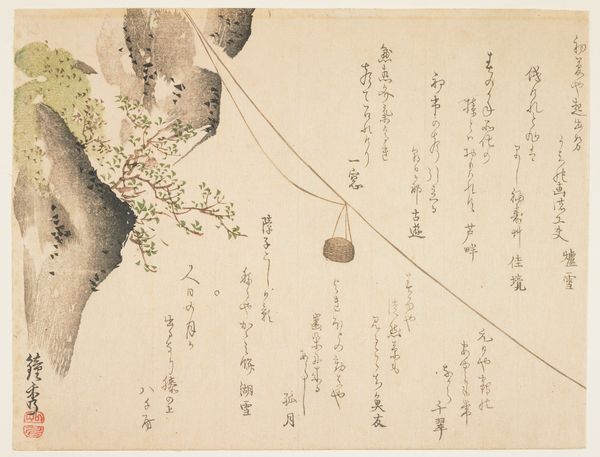
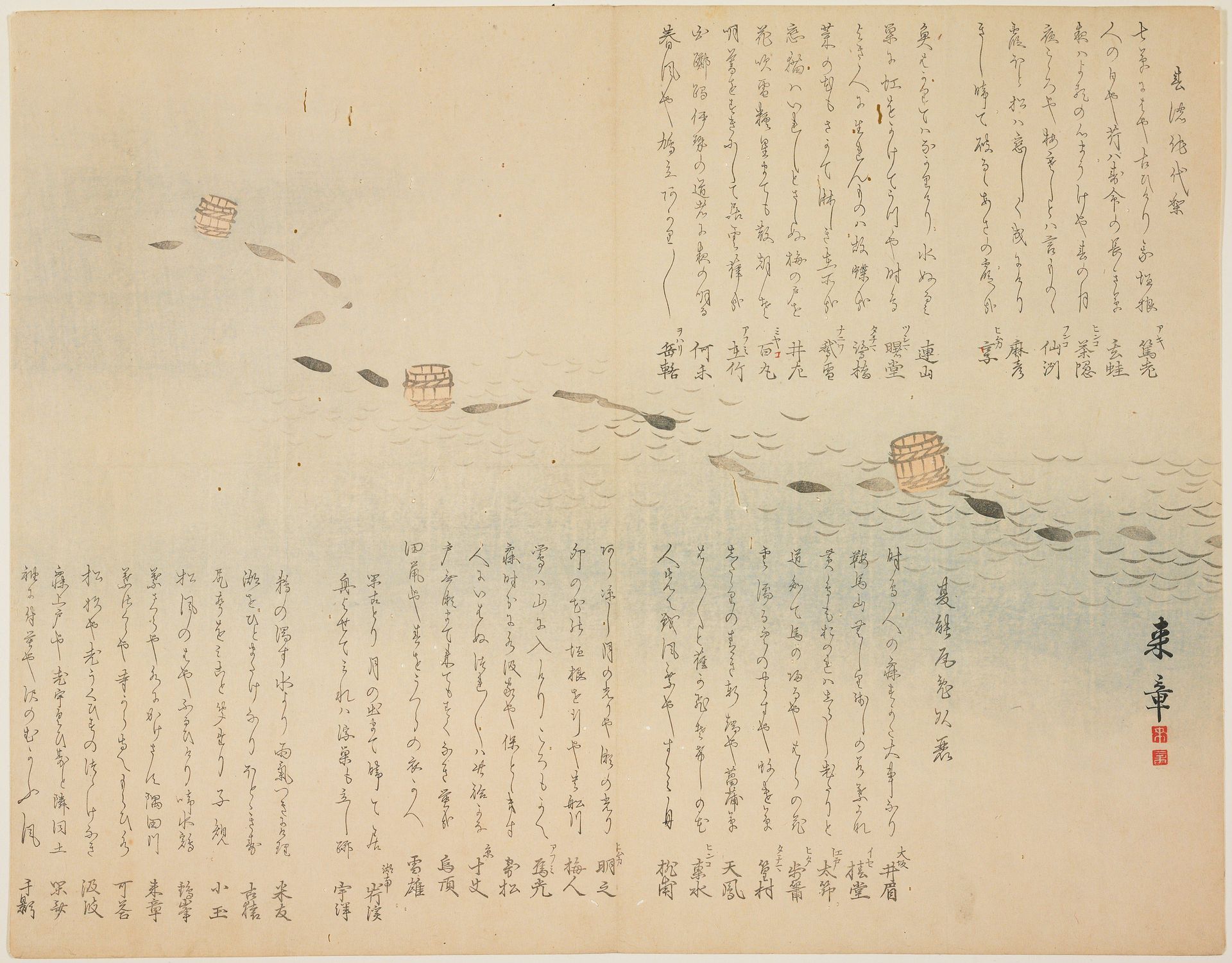
Buckets and leaves floating


Listen to curator's interpretation
Curatorial notes
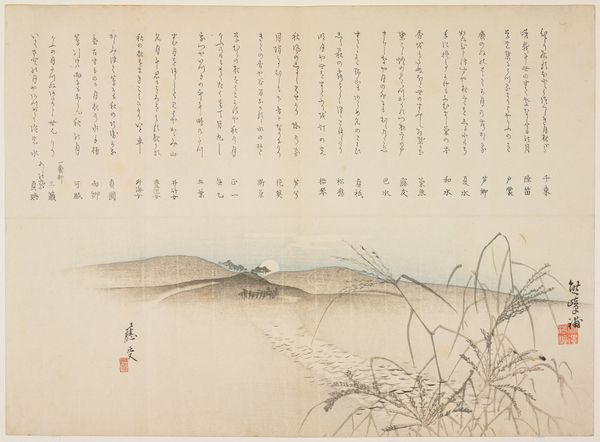
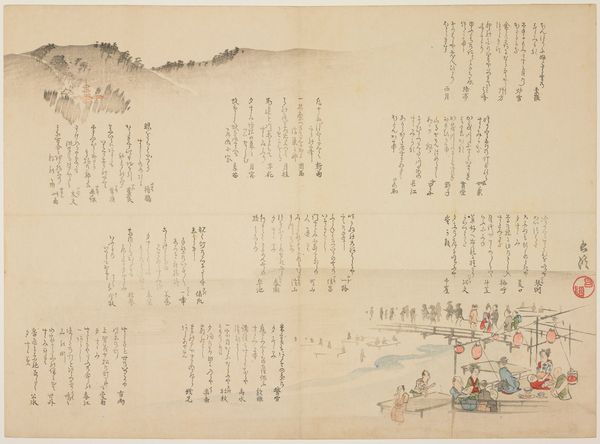
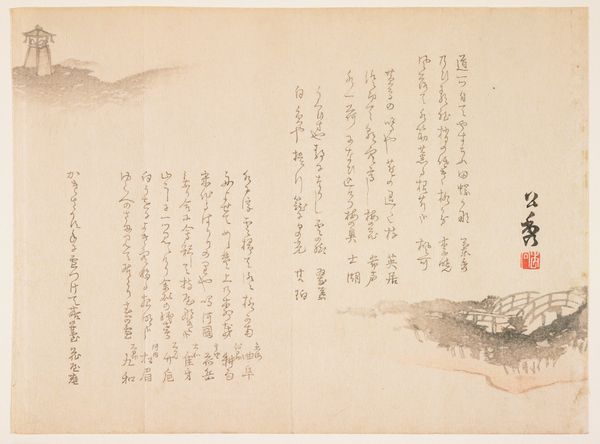
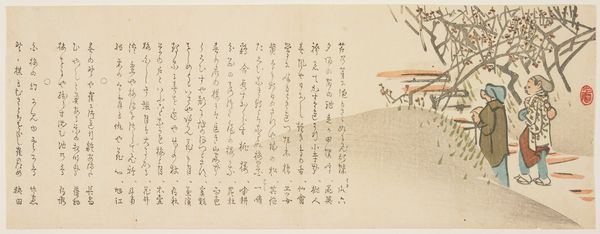
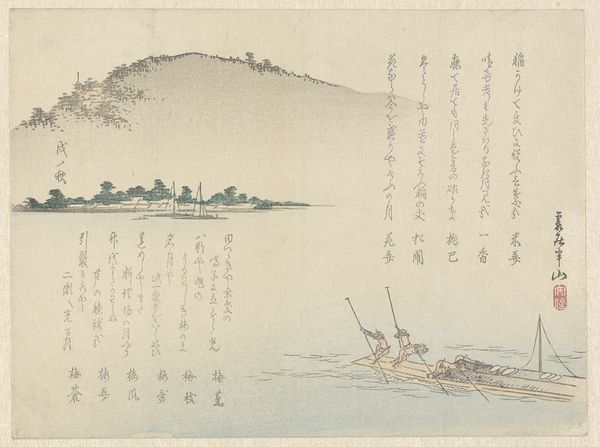
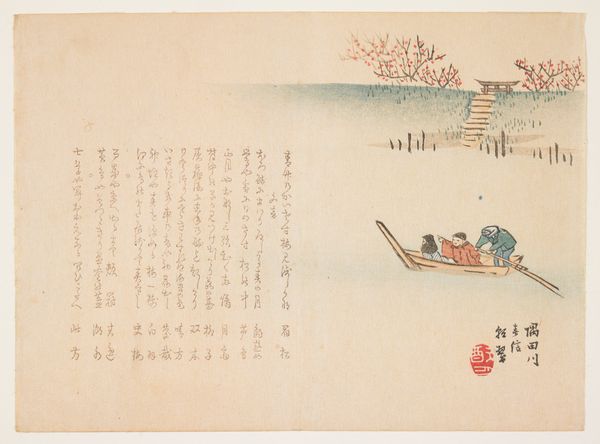
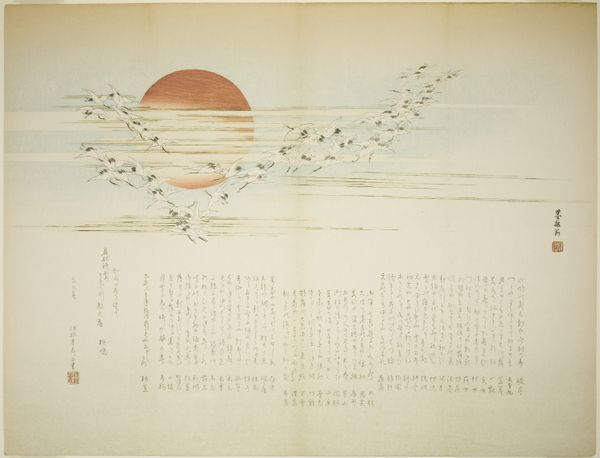
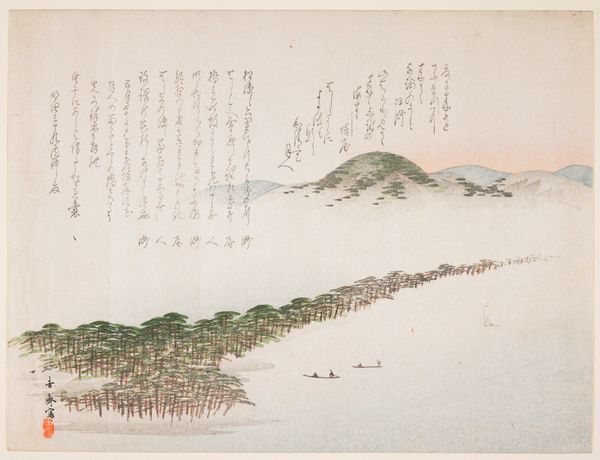
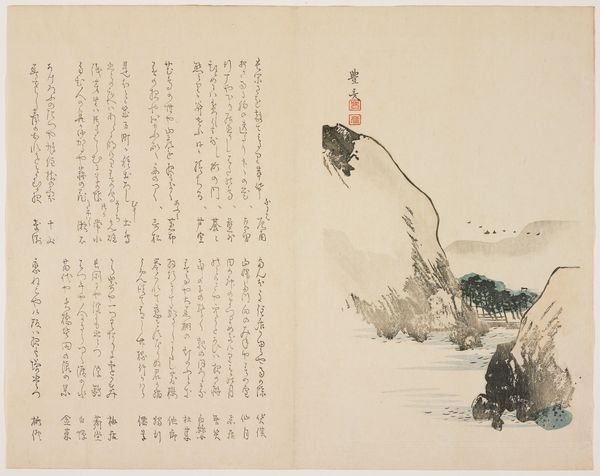
Curator: Let’s delve into this print, "Buckets and leaves floating," dating back to the first half of the 19th century by Nakajima Raisho. The delicate watercolor and ink work create a somewhat ethereal scene, wouldn't you agree? Editor: It does have a very dreamlike quality! The buckets floating on water alongside these almost scattered leaf-like shapes… What's your take on this, looking at it with your expertise? Curator: For me, the artwork invokes notions of transience and precariousness. Think about the historical context of the Ukiyo-e tradition, these “pictures of the floating world”. This era witnessed social hierarchies and rigid structures, yet art provided a space to question conventions. Does this river then become a metaphor for societal flux? How might the placement of text in this visual landscape inform that metaphor? Editor: I see what you mean. The buckets do seem vulnerable adrift in water. Considering it within the “floating world” idea adds another layer – as though it represents fragile existence itself. Curator: Precisely! We can view these floating objects, alongside the hand-drawn text, not as mere decorations, but as integral elements weaving together the artistic commentary. How might those elements be speaking about resistance and longing during that period? Editor: So, it's not just a pretty picture, it’s a commentary about identity, resilience, and society? Curator: Exactly! It asks us to contemplate those ideas in relation to gender, class, and cultural norms embedded in that period. Editor: That’s really broadened my view. I’ll definitely look at similar pieces with a different, more critical lens now. Curator: Fantastic. I hope that prompts others to consider this artwork beyond its visual simplicity, allowing them to question assumptions around art history and social dynamics.