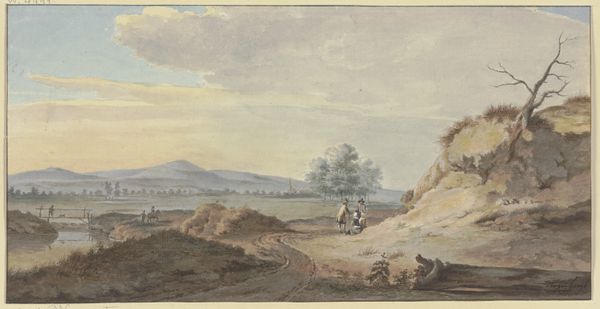
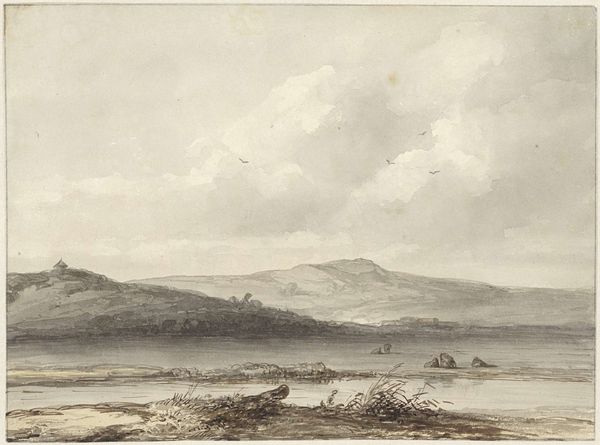
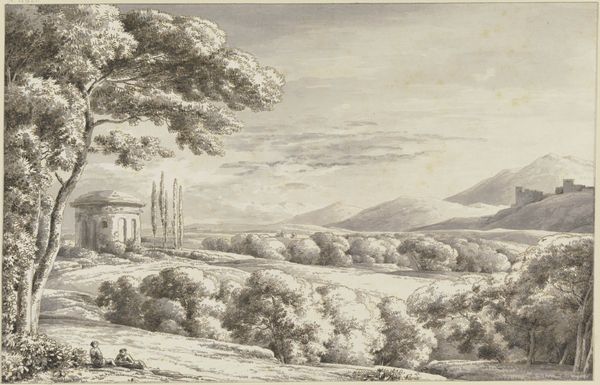
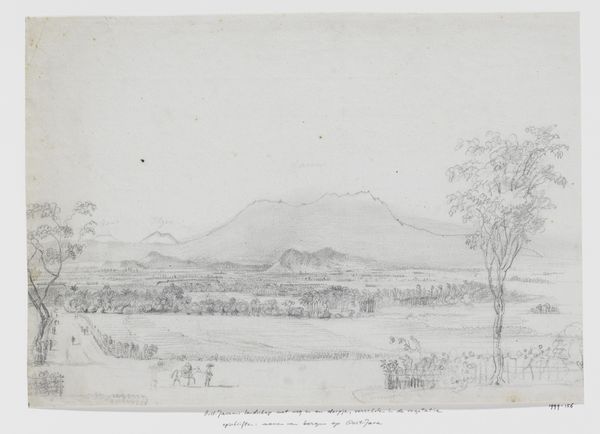
Dimensions: support: 232 x 475 mm
Copyright: CC-BY-NC-ND 4.0 DEED, Photo: Tate
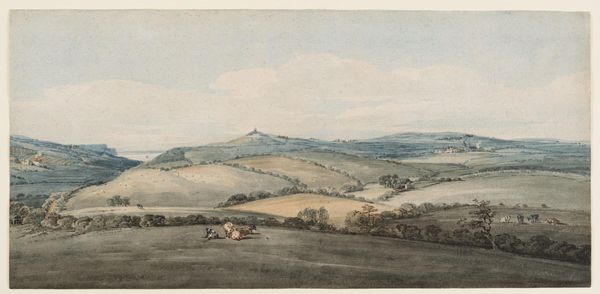
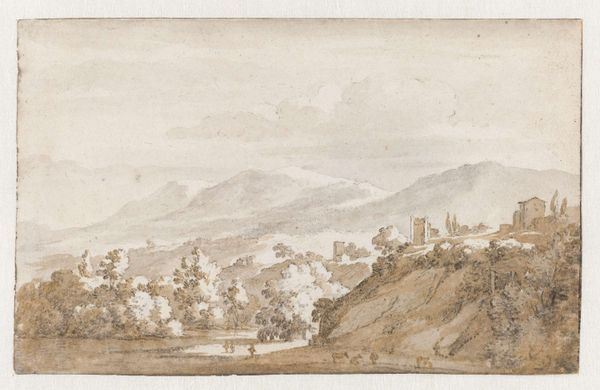
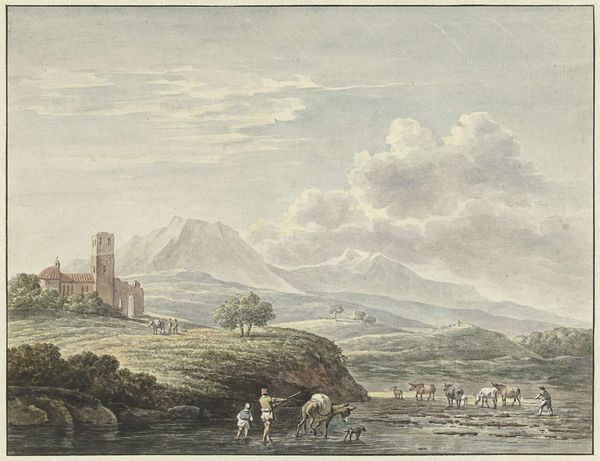
Curator: Francis Towne’s watercolor, “In the Campagna, Rome, Looking towards the Sabine Mountains,” presents a sweeping view of the Roman countryside. It's held in the Tate Collections. Editor: The colour palette certainly evokes a sense of faded grandeur, with the subtle browns and greys. It feels like a nostalgic gaze back at a bygone era. Curator: The Campagna held significant cultural weight for visiting artists of the time. It was both picturesque and a reminder of the Roman Empire’s decline, a theme reflected in art and literature. Editor: Yes, the ruined structures speak volumes. The archway is almost a portal. It's framed by robust nature, hinting at nature's inevitable reclamation of human achievements. Curator: Towne’s style was distinct. His use of outline and flat washes of colour created a sense of order. It was quite different from the romantic landscapes gaining popularity. Editor: And yet, even with its structured nature, it resonates with a feeling of timelessness and the cyclical nature of civilization. Curator: A very poignant reflection on time and the enduring landscape. Editor: Indeed, it prompts thoughts on the intersection of past, present, and future.
Comments

tate 12 months ago
⋮
http://www.tate.org.uk/art/artworks/towne-in-the-campagna-rome-looking-towards-the-sabine-mountains-t08266


Join the conversation
Join millions of artists and users on Artera today and experience the ultimate creative platform.
tate 12 months ago
⋮
This watercolour is based on a coloured sketch of the same view, now in the British Museum. The sketch is inscribed ‘No.5 2 Miles from Rome going out at the Porta Pia from 10 o Clock till 1 o clock’, and dated 26 October 1780. The countryside to the north-east of Rome was popular during this period with artists keen to escape the bustle of city life. Known as the Roman Campagna, it was also a favourite sketching ground of the celebrated seventeenth-century painter Claude Lorrain. Gallery label, April 2007
 Collect
More like this