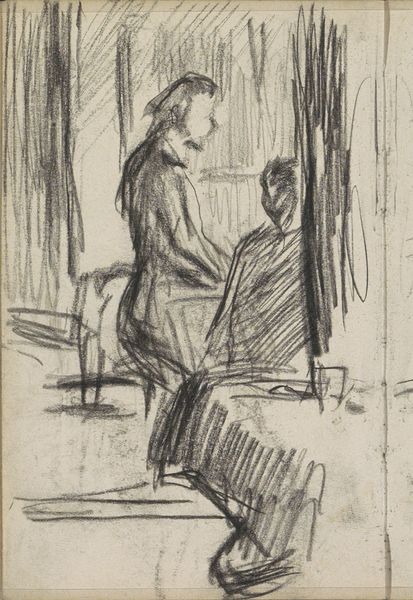
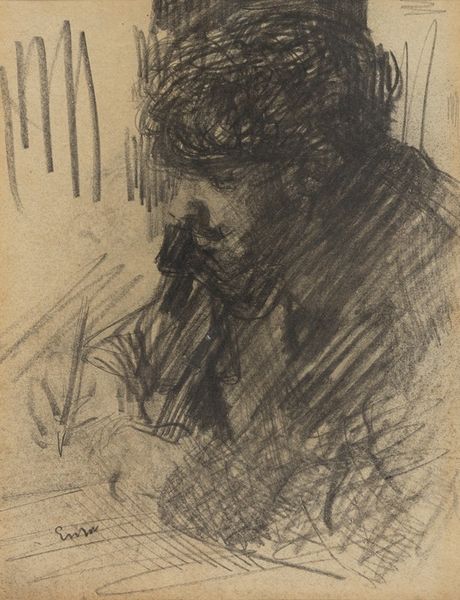
drawing, print, ink
drawing
cubism
ink
Copyright: National Gallery of Art: CC0 1.0
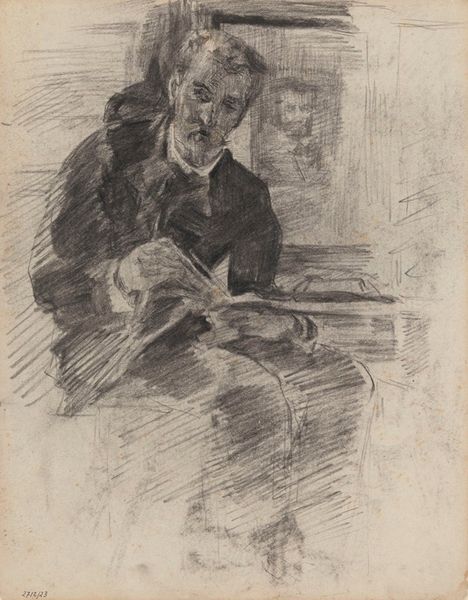
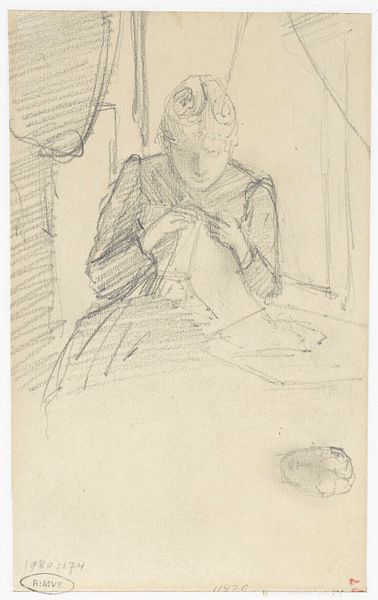
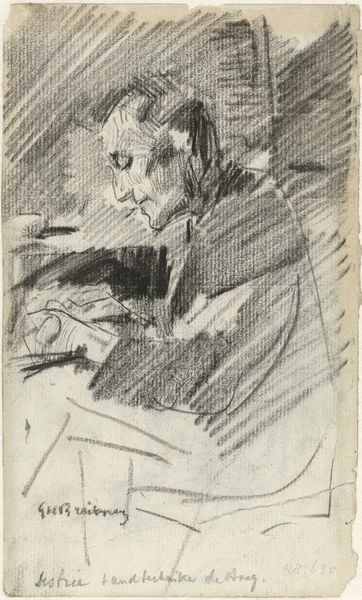
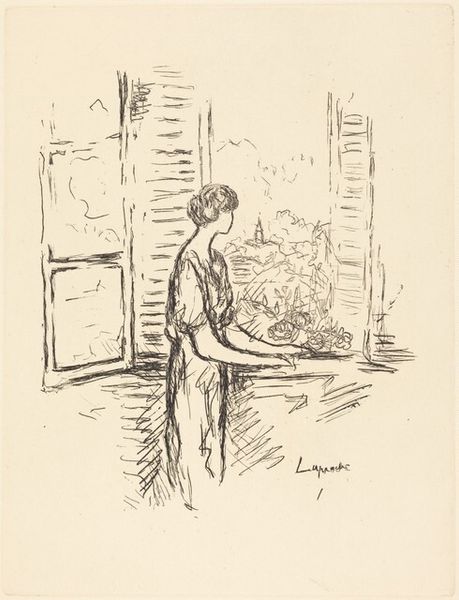
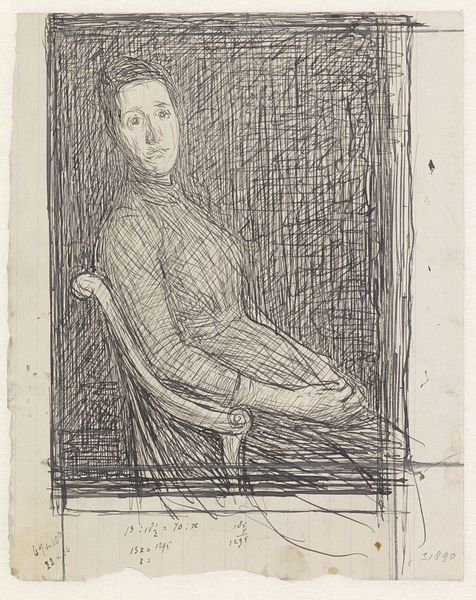
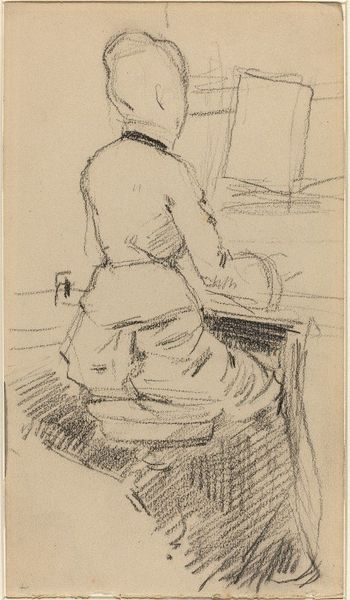
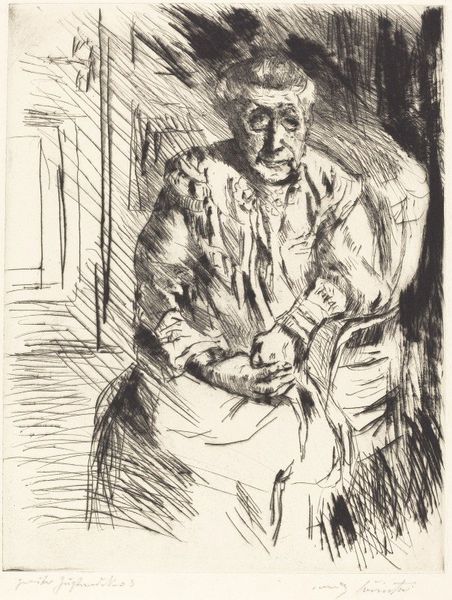
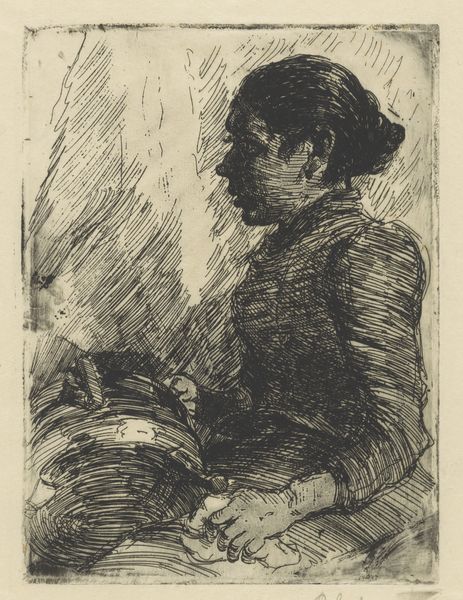
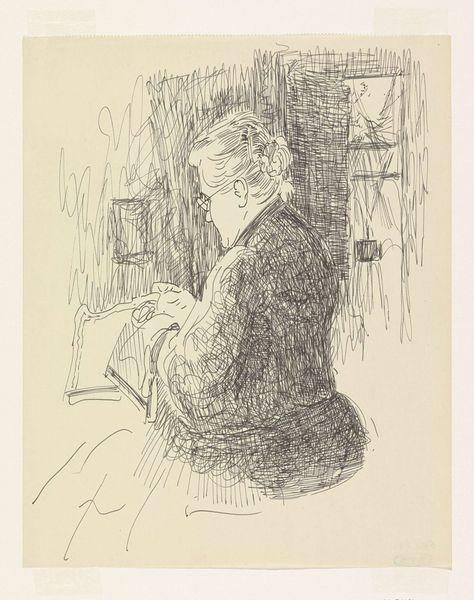
Editor: Jacques Villon's "Interior" from 1943, done in ink, feels like a glimpse into a very private, almost somber space. The sharp lines create a kind of fractured reality. What can you tell me about this piece? Curator: The "Interior," as a Cubist print from 1943, sits within a very specific cultural context: World War II. Abstraction allowed artists to address the disruption and unease of that time without directly depicting it. Notice how the space is both there and not there, defined by these anxious crosshatched lines. Does that abstraction lend itself to universality? Editor: It does. I was also wondering if you think that abstraction makes the mood feel less defined, more open for interpretation? Curator: Precisely. While Villon’s pre-war work often celebrated modern life, post-war we see a return to interior scenes, perhaps signifying a turn inwards as a response to war. Are there suggestions of hope, maybe rebirth of family values? Editor: That’s insightful. I didn’t initially pick up on the historical weight or a hopeful tone given the monochrome. So you’re saying Cubism during wartime could be both an escape from reality and a tool for processing it? Curator: Exactly! And in Villon's case, perhaps a little refuge from the atrocities surrounding. It makes me appreciate this fractured interior on a much deeper level. Editor: I agree. Thinking about its place in history makes this work so much richer!
Comments
No comments
Be the first to comment and join the conversation on the ultimate creative platform.
 React
React Comment