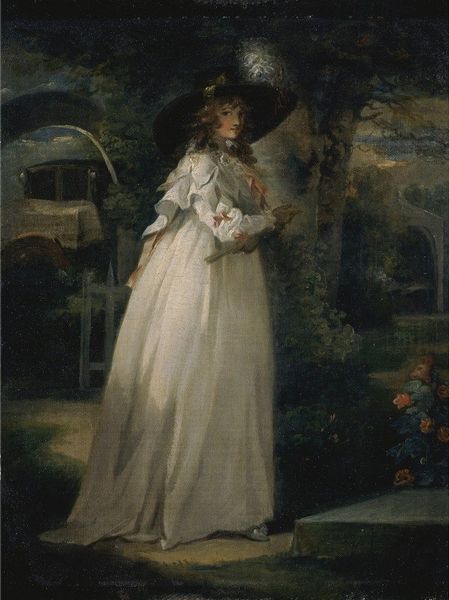
c. 1792
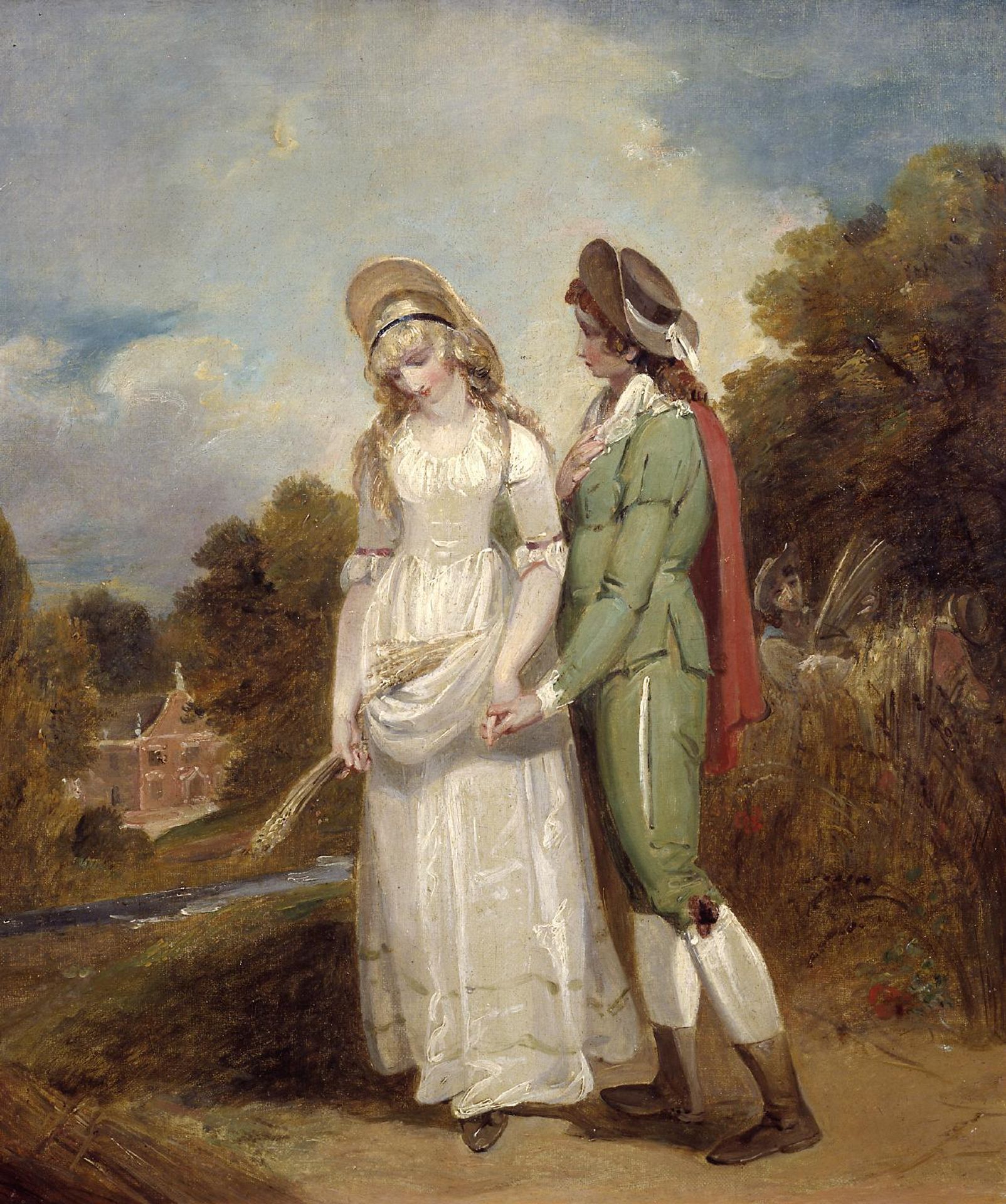
Palemon and Lavinia


Listen to curator's interpretation
Curatorial notes
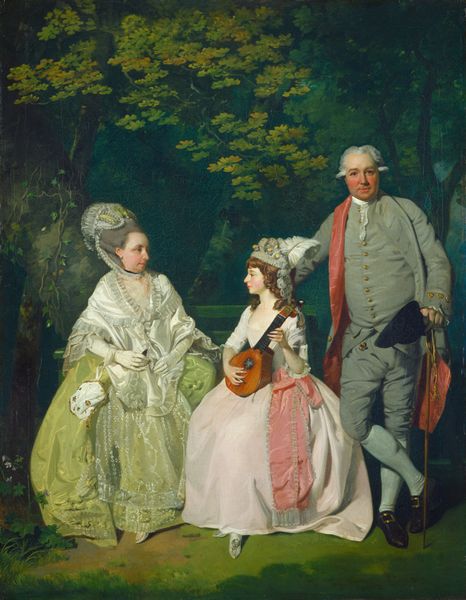
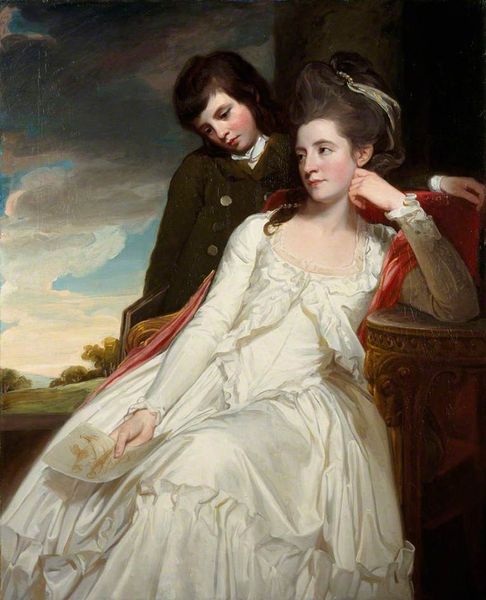
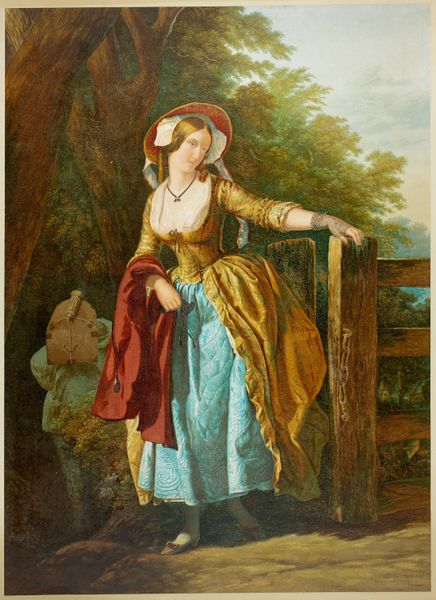
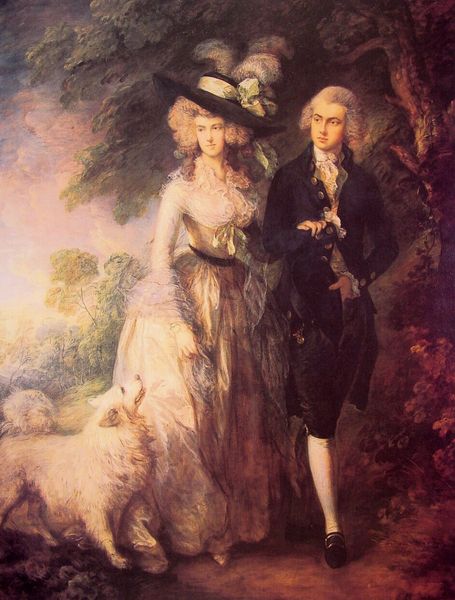
Editor: This is Henry Singleton's "Palemon and Lavinia," a lovely oil on canvas held at the Tate. The figures seem so delicately rendered. I’m curious, what does the making of this piece suggest to you? Curator: It's interesting to consider Singleton's choices in materials and how they reflect the social context of art production at the time. Oil paint allowed for layering and blending, a technique that could elevate a painting to something of high value, which also reflects the sitter’s social standing. Editor: So, the material itself contributes to the perception of value? Curator: Precisely. And consider the labor involved – the grinding of pigments, the preparation of the canvas, the hours of skilled work. All these elements emphasize the commodity status of the artwork itself. Editor: That’s a fascinating way to look at it. I never really considered the economic aspects so deeply. Curator: Thinking about art through its materiality can open up new perspectives. We begin to see art not just as an aesthetic object, but also as a product of labor and social forces.