painting, watercolor
#
portrait
#
painting
#
fantasy-art
#
figuration
#
watercolor
Copyright: This file is licensed under the Creative Commons Attribution 3.0 Unported license.
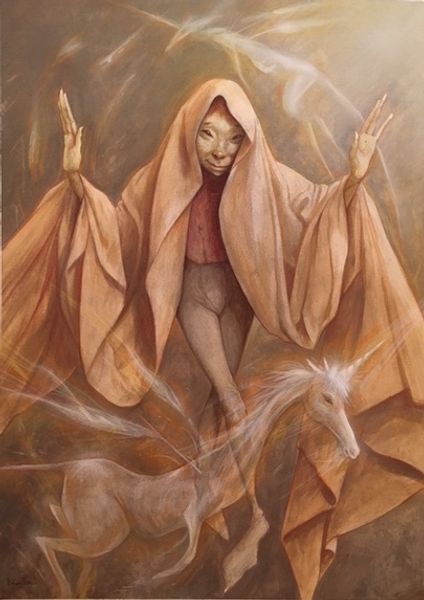
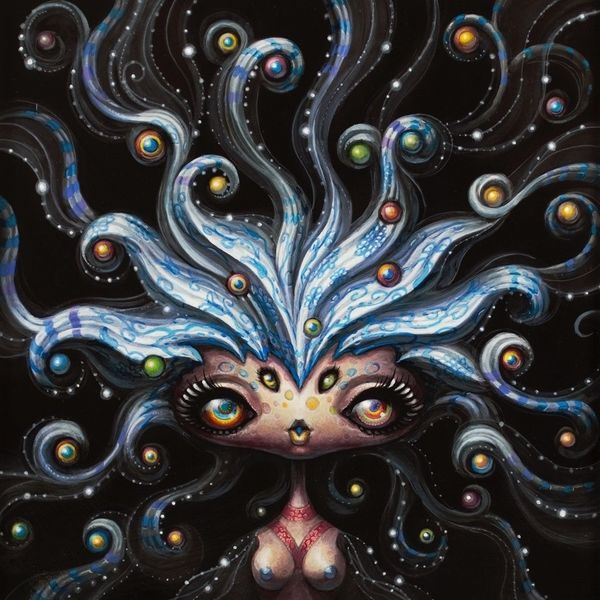
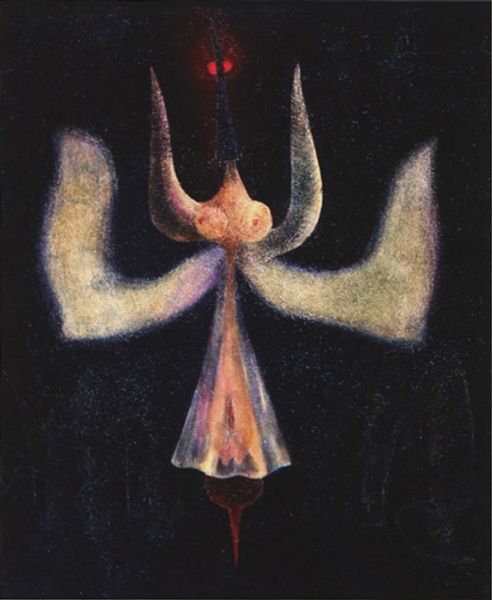
Editor: So, here we have Brian Froud's watercolor painting "Hear, Here". The figure is so delicate, yet mischievous-looking! I am drawn to those extended fingers; what story are they trying to tell? How do you interpret this work? Curator: Immediately, I see the echoes of traditional fairy lore, where beings of the Otherworld often possess a dual nature: alluring, yet also potentially perilous. Froud is a master at embodying this liminal space. Notice how the wispy hair seems to both crown and threaten to obscure the figure's face, blending seamlessly with the ambiguous dark background. Editor: I see what you mean! It's like it’s emerging from or fading back into the shadows. Does that have a particular symbolic significance? Curator: Indeed! Consider the archetypal symbol of the shadow in Jungian psychology. The unconscious aspects of our selves. These fairy figures were often seen to be a projection of human emotions and fears that resided outside ourselves. What messages linger when such elemental forces of nature interact with humanity? Do we dare accept its extended hand? Editor: Fascinating! And the title, "Hear, Here"— it almost feels like an invitation. Or a warning? Curator: Precisely. That tension is central. The placement of those splayed fingers, a signal, calling attention, creating space for dialogue – a delicate balancing act. Is it a call for help or to notice its presence? Such a painting is a memory bank; they represent an invisible network across cultures. Froud has tapped into that energy source. Editor: That's such a rich way to understand this piece. I wouldn’t have considered the Jungian implications without your insights! Curator: These age-old visual dialects speak even when languages divide us. Understanding them unites us and helps unlock cultural and personal understandings.
Comments
No comments
Be the first to comment and join the conversation on the ultimate creative platform.
 Collect
 React
React Comment
More like this