1341
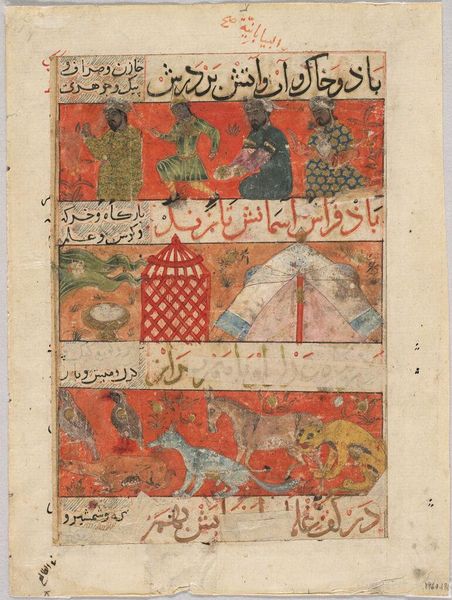
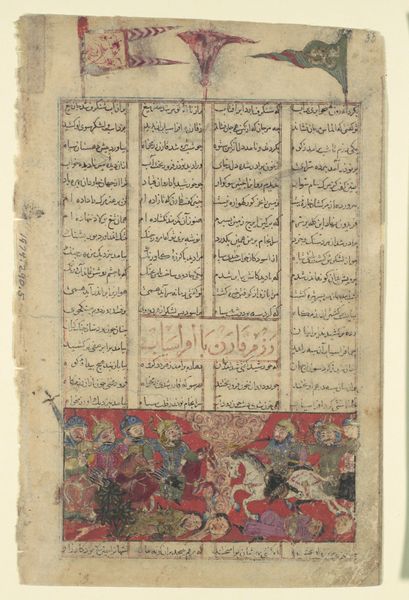
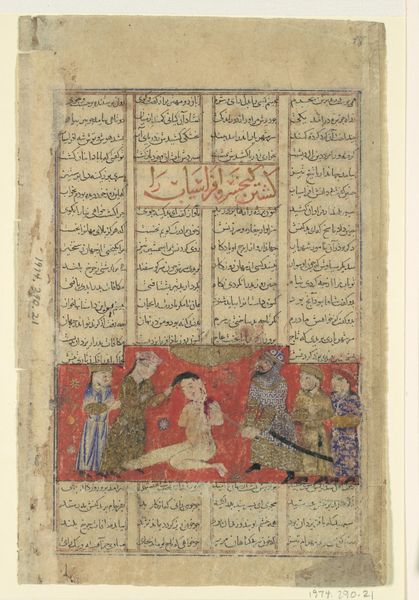
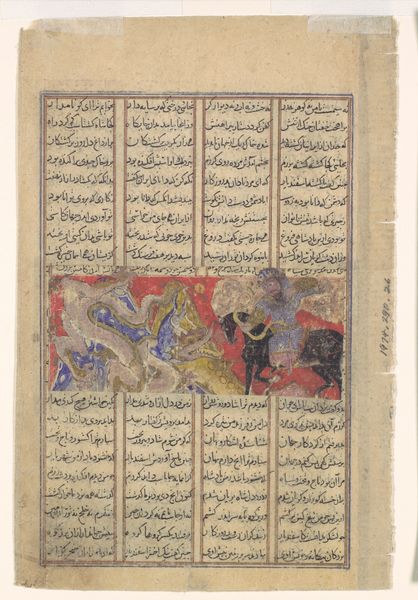
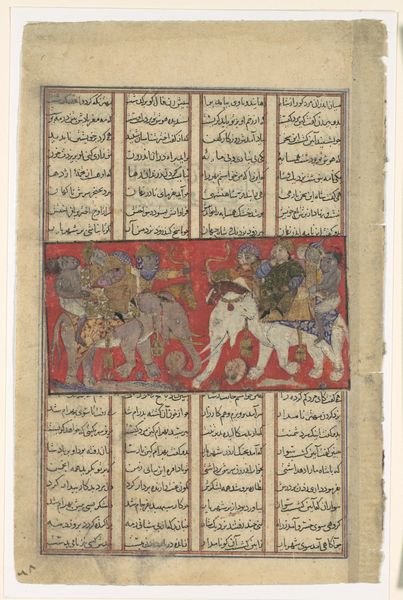
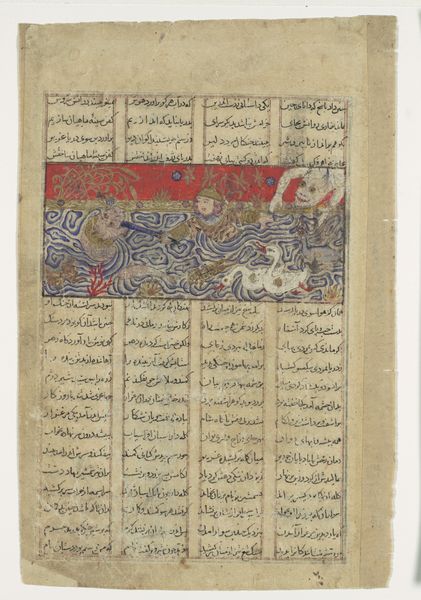
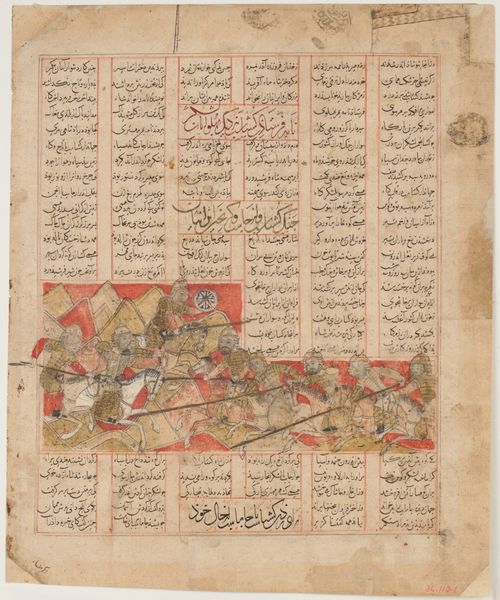
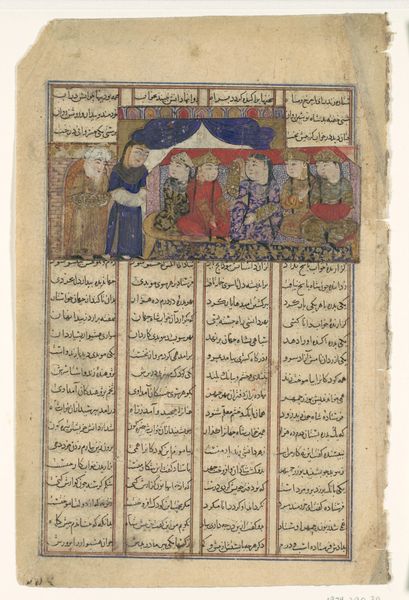
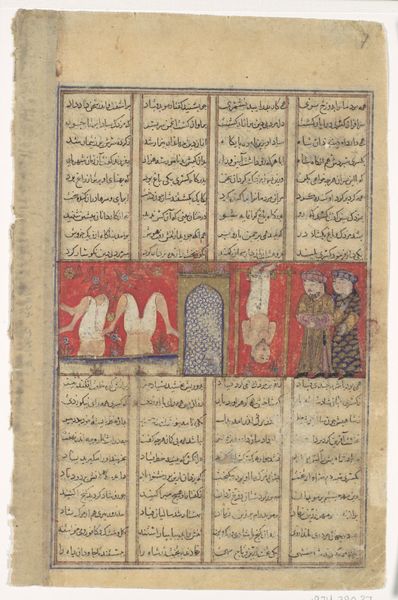
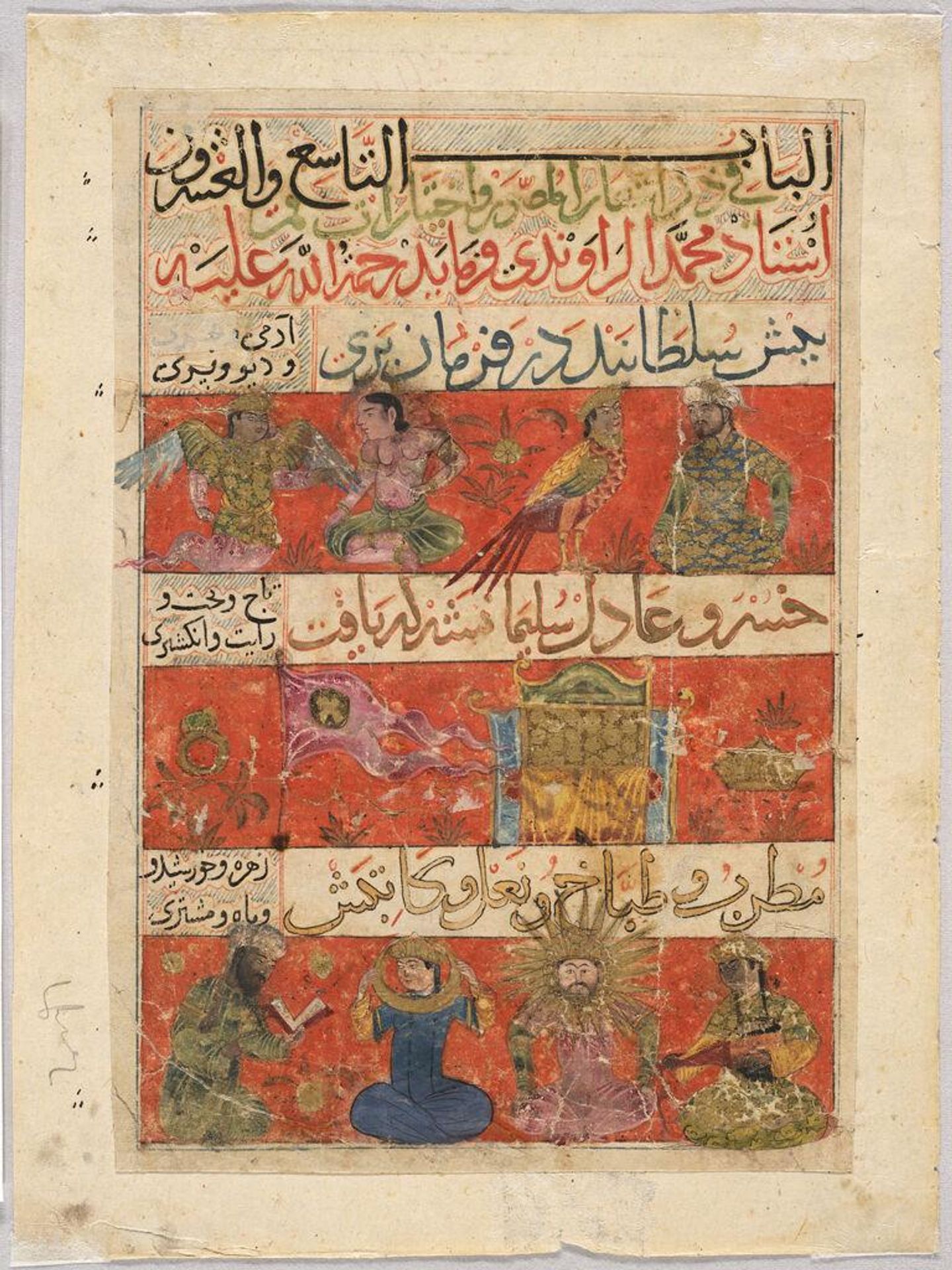
Illustrated folio from a manuscript of Mu'nis al-ahrar fi daqa 'iq al-ash'ar (The Free Men's Companion to the Subtleties of Poems) by Muhammad ibn Badr al-Din Jajarmi: Human, harpy, demon and fairy; Crown, throne, standard and signet ring; Minstrel (Venus), cook (sun), horseshoe (moon), and scribe (Jupiter)
Author: Muhammad ibn Badr Jajarmi
@authormuhammadibnbadrjajarmi
Harvard Art Museums
Harvard Art MuseumsListen to curator's interpretation
Curatorial notes
Editor: This Illustrated folio from "The Free Men's Companion to the Subtleties of Poems" presents a grid of figures and symbols. It feels like a page of secrets. What stories do you see in this artwork? Curator: This folio showcases the fascinating intersection of art, literature, and cosmology in Islamic culture. Texts like this weren't just read; they were experienced. Consider how such vibrant imagery would shape the understanding and memorization of poetry. Who do you think would have viewed this folio? Editor: Perhaps scholars or those connected to the court? Curator: Precisely. The presence of royal symbols suggests a connection to power, while the detailed imagery indicates a cultivated audience. These folios functioned as visual tools in the public sphere of poetry and cultural life. Editor: I hadn't thought about the artwork's role within society. Curator: Understanding art's cultural function is key. It encourages us to look beyond aesthetics and see the artwork as an active participant in its time.