About this artwork
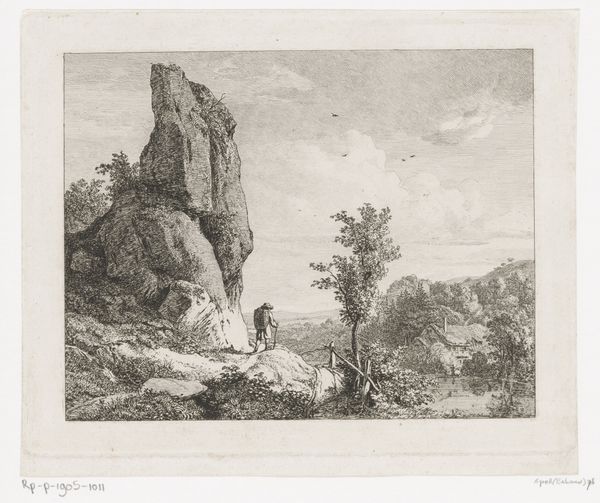
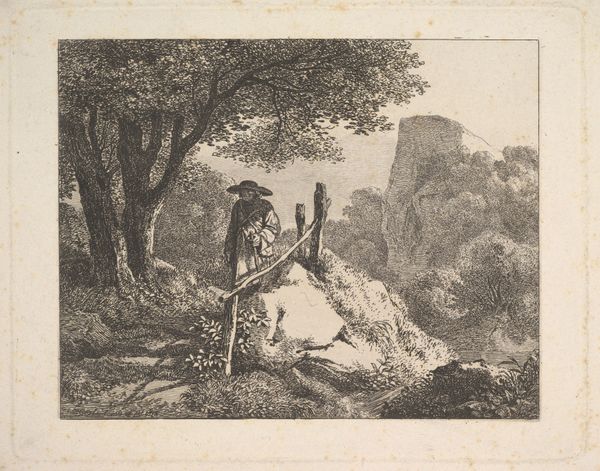
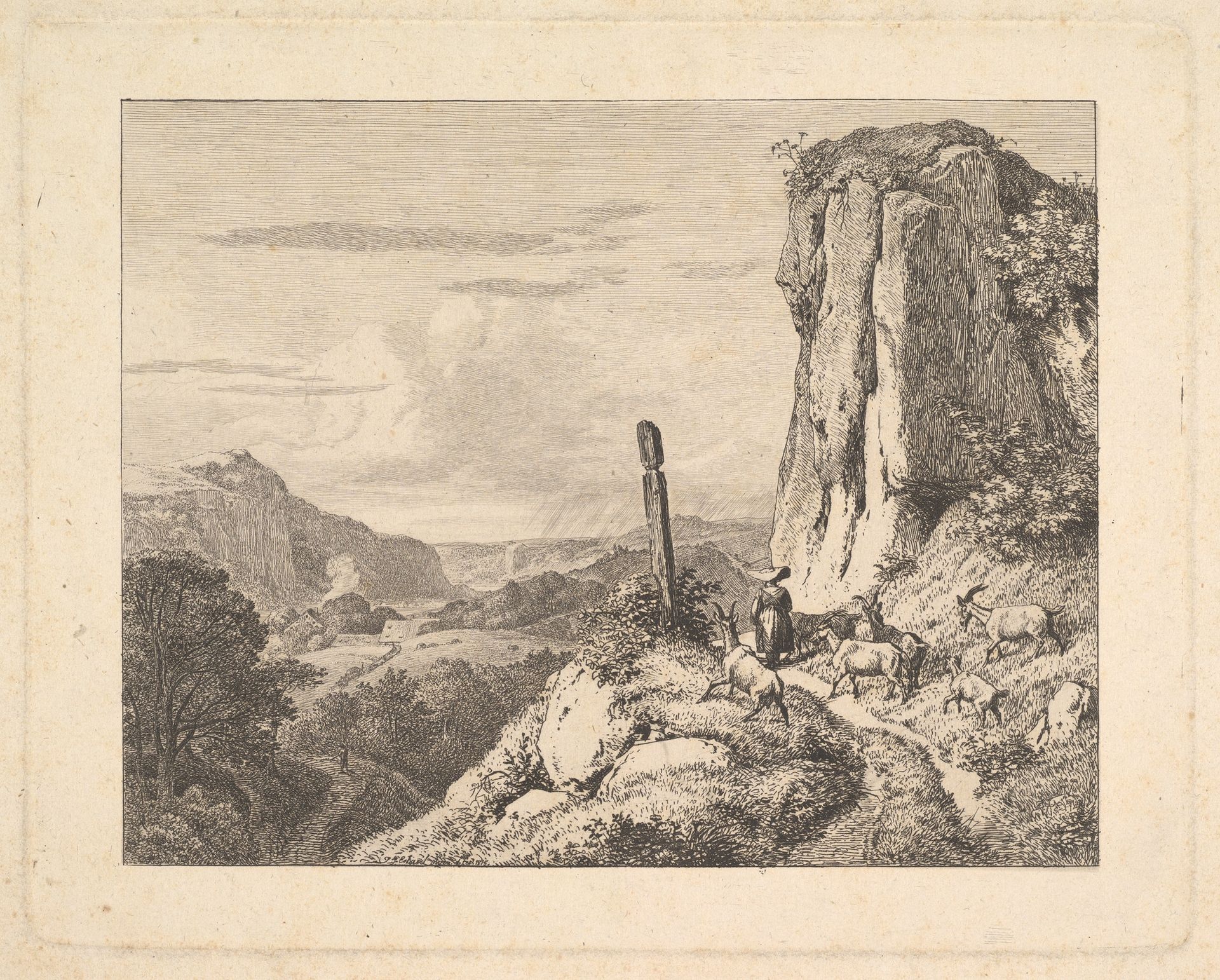
Johann Christoph Erhard created this print, "Young Woman with Six Goats," in the early 19th century. The image is idyllic, but what can it tell us about the relationship between social classes and the artistic institutions of the time? This German scene presents a young woman, presumably a peasant, in harmony with nature. Note how the landscape is not merely a backdrop, but an active element, almost a character itself. The sublime rock formation, the meandering path, and the distant mountains all contribute to a sense of romantic nationalism popular at the time. This aesthetic movement emphasized the beauty and purity of rural life, sometimes idealizing it in contrast to the perceived corruption of urban centers. Erhard’s print reflects a growing interest in folk culture that characterized the period. Scholars of art history and social history can consult period documents, popular literature, and institutional records to understand how artists like Erhard contributed to constructing national identity and social ideals.
Young Woman with Six Goats
1815

Johann Christoph Erhard
1795 - 1822
The Metropolitan Museum of Art
Metropolitan Museum of Art, New York, NYArtwork details
- Medium
- drawing, print
- Dimensions
- plate: 6 1/8 x 7 5/8 in. sheet: 6 11/16 x 8 1/8 in.
- Location
- Metropolitan Museum of Art, New York, NY
- Copyright
- Public Domain
Tags
Comments
Share your thoughts
About this artwork
Johann Christoph Erhard created this print, "Young Woman with Six Goats," in the early 19th century. The image is idyllic, but what can it tell us about the relationship between social classes and the artistic institutions of the time? This German scene presents a young woman, presumably a peasant, in harmony with nature. Note how the landscape is not merely a backdrop, but an active element, almost a character itself. The sublime rock formation, the meandering path, and the distant mountains all contribute to a sense of romantic nationalism popular at the time. This aesthetic movement emphasized the beauty and purity of rural life, sometimes idealizing it in contrast to the perceived corruption of urban centers. Erhard’s print reflects a growing interest in folk culture that characterized the period. Scholars of art history and social history can consult period documents, popular literature, and institutional records to understand how artists like Erhard contributed to constructing national identity and social ideals.
Comments
Share your thoughts