


Curatorial notes
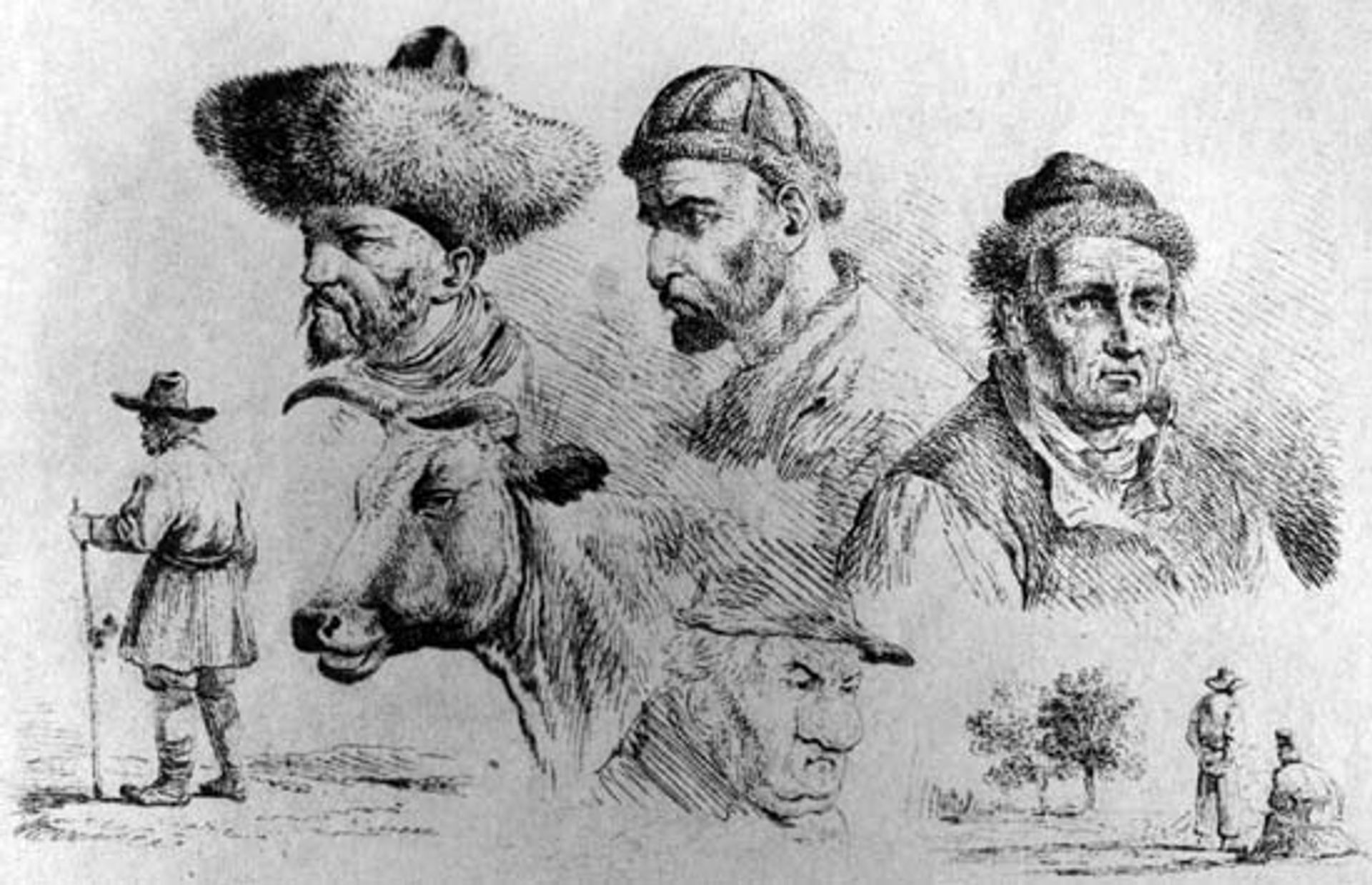
Curator: Here we have a drawing attributed to Orlovsky Alexander Osipovich, it is simply entitled Orlovsky Alexander Osipovich. It’s quite arresting, isn’t it? Editor: Indeed! There is an almost dreamlike quality to the overlapping figures and varying scales, despite the realism achieved through the use of pencil and charcoal. The faces certainly seize my attention immediately. Curator: Note how the artist achieves such detail and depth, and consider how materials available during his lifetime impacted this work. There’s an interesting texture inherent in both the rough paper stock and the blending of graphite with charcoal, wouldn’t you say? Editor: Yes, but beyond that consideration is the implied narrative. These seem to be depictions of figures from various social strata: from peasantry to the intelligentsia perhaps, unified through their being captured with relatively inexpensive material means, like drawing pencils and paper. Curator: Precisely. Think about how readily these materials translated vision into form, granting widespread access to artistic practice! Let's delve further into Orlovsky's approach, what semiotic meanings can you glean from the figures represented here? The symbolism implicit is interesting to me. Editor: The image of the ox suggests labour, burden-bearing; meanwhile the figure in the fur hat speaks to a kind of affluence, warmth, in direct relation to his immediate surrounding reality and geographic position. How were such images received within their historical socio-political environment? Curator: Well, without an exact date, it is hard to be too precise; however, by employing prevalent realism styles we may surmise there was a social intent to reveal life through accurate depictions of known figures in a shared land. Consider the social messaging! Editor: Interesting! It feels rather poignant, considering the circumstances. Thanks for bringing new context to it, and revealing this layered work of visual culture! Curator: It was my pleasure, hopefully we’ve piqued the curiosity of our audience!