About this artwork
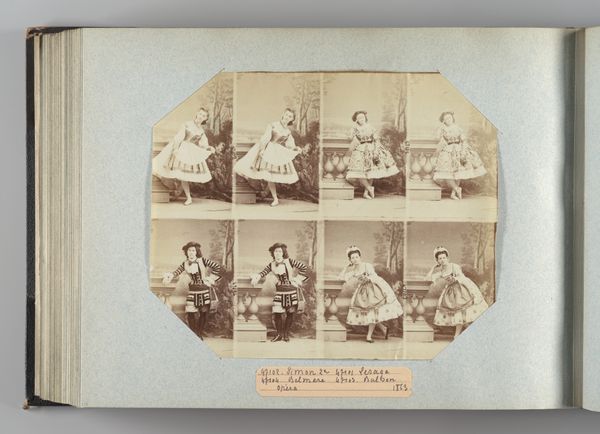
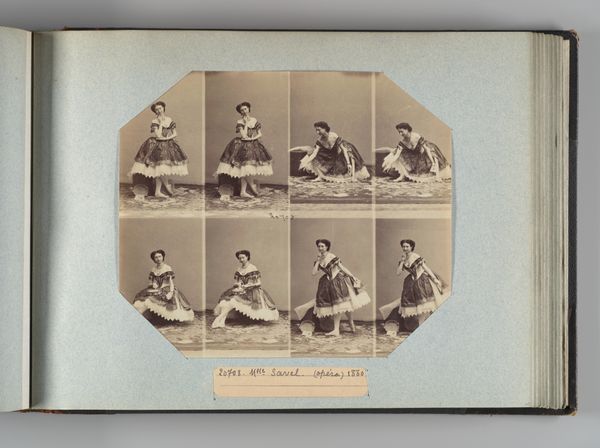
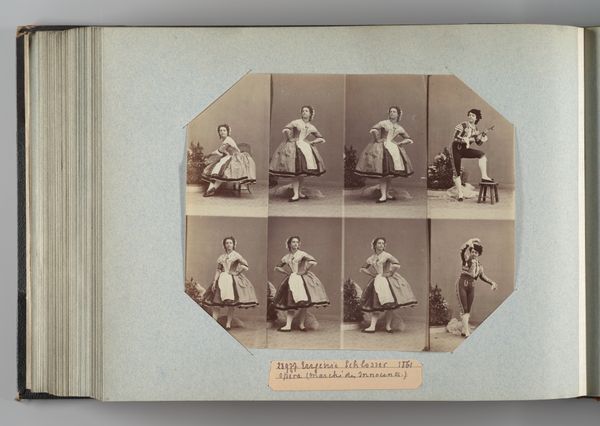
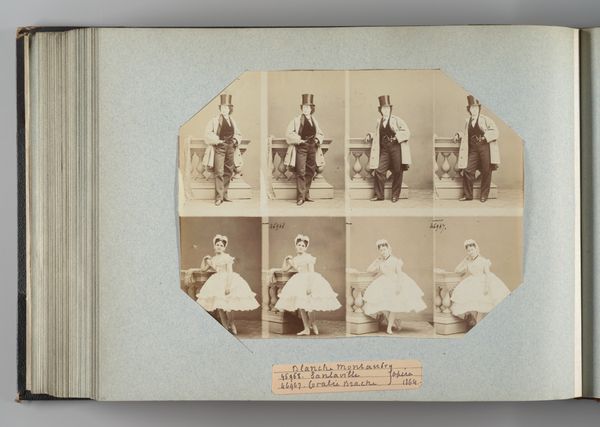
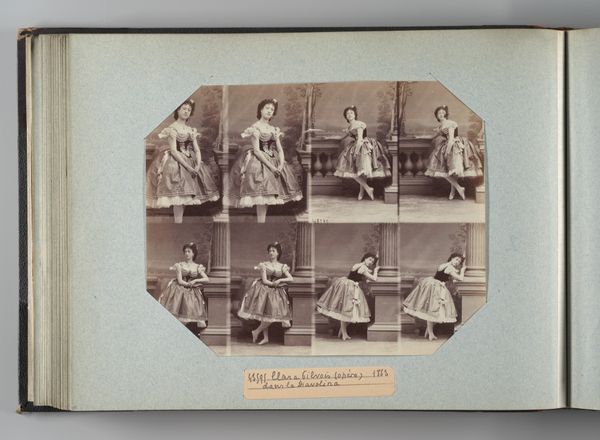
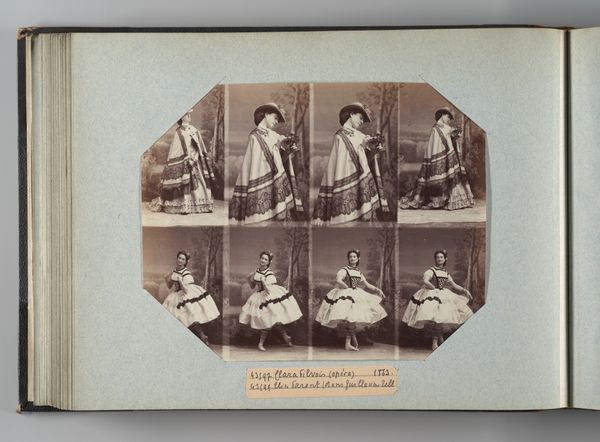
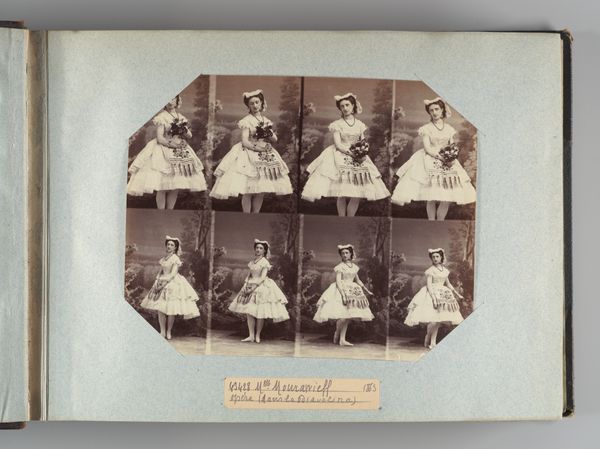
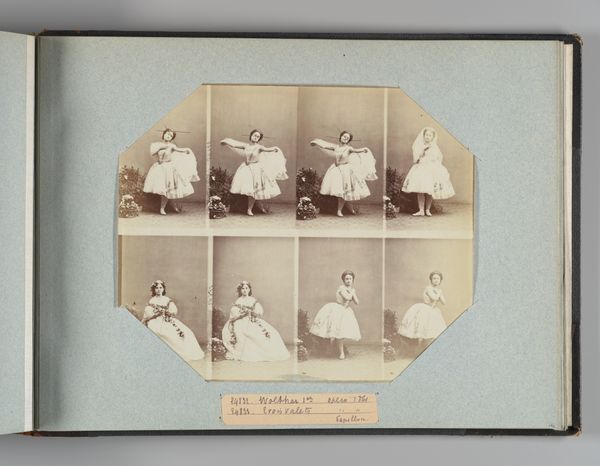
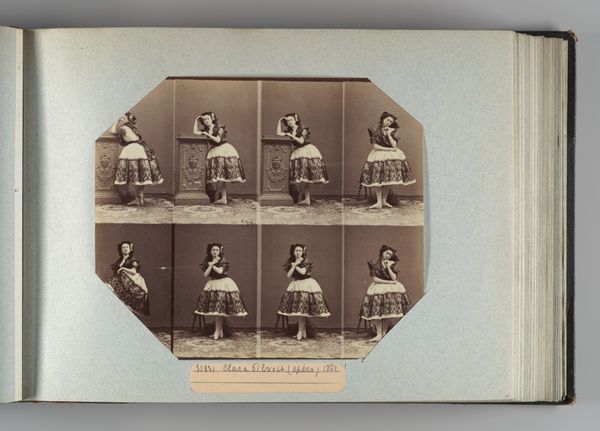
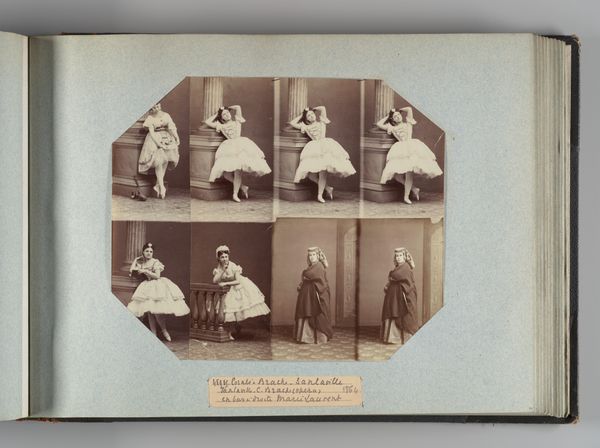
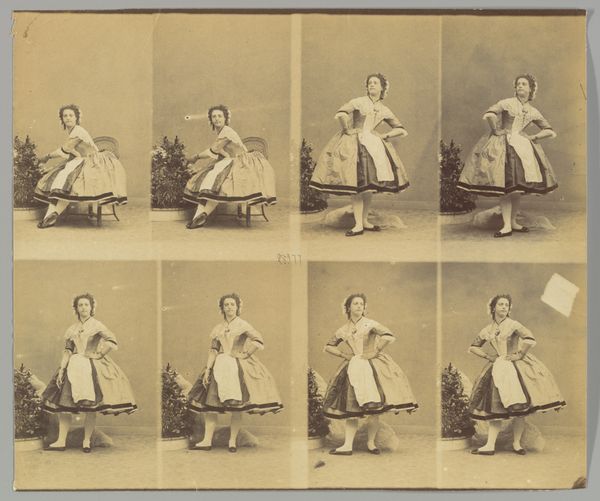
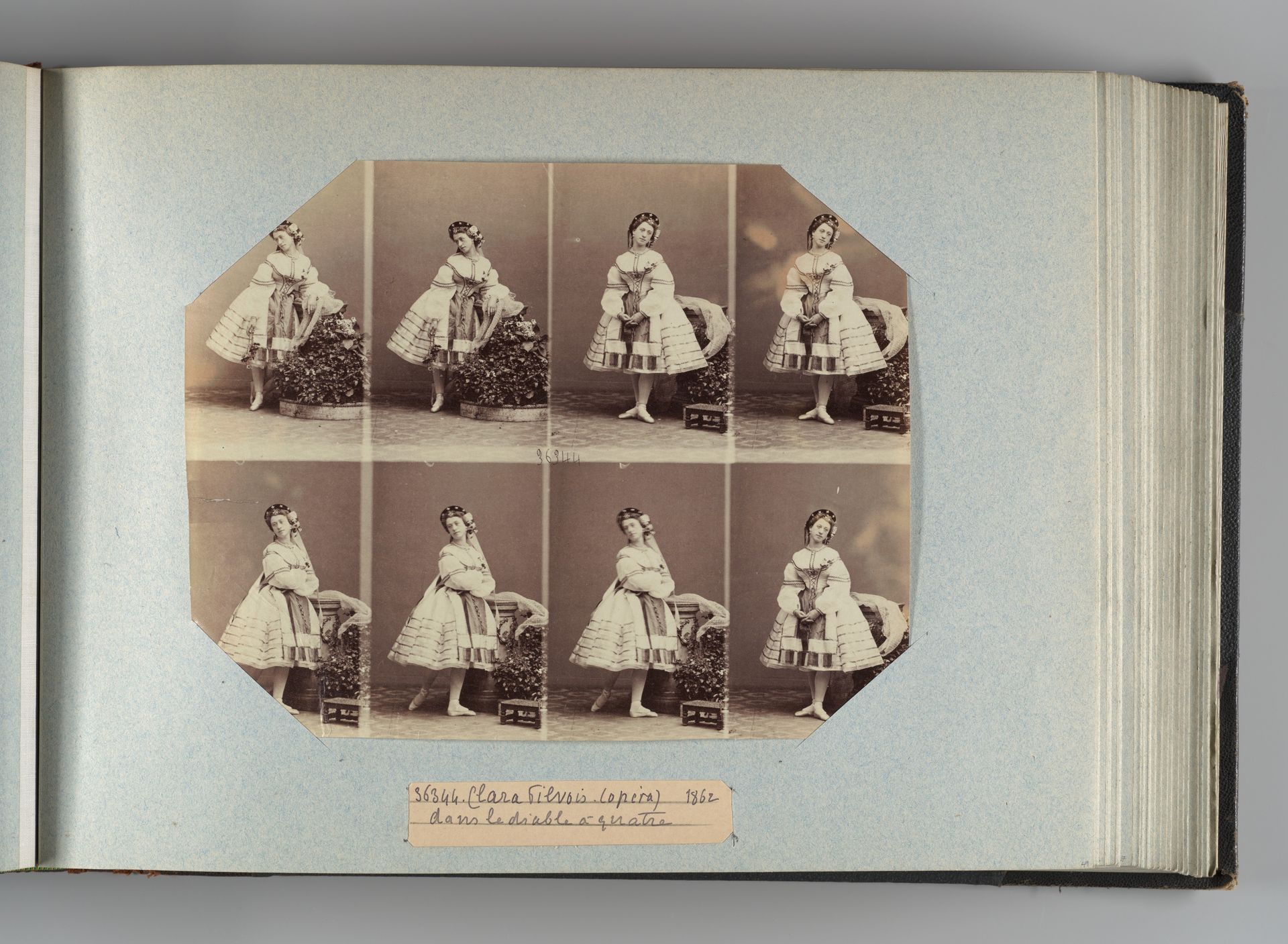
André-Adolphe-Eugène Disdéri created this photograph of Clara Pilvois in the ballet ‘Le Diable à Quatre’. It’s arranged as a series of eight cartes-de-visite that capture the dancer in different poses. Disdéri’s work is interesting for its use of seriality and repetition. The composition divides the image into a grid, each section containing a variation of the same subject. This anticipates later serial works by artists such as Andy Warhol. The albumen print technique gives a sepia tone, flattening the image and emphasizing its graphic qualities. The choice to present multiple views reflects a desire to capture a more complete representation of the subject. This also resonates with emerging ideas about identity and representation in the 19th century. Disdéri’s structured approach is not just aesthetic but also a precursor to the deconstruction of traditional portraiture, inviting us to consider how identity can be fragmented and reassembled.
Clara Pilvois dans le Diable à quatre
1862

André-Adolphe-Eugène Disdéri
1819 - 1889
The Metropolitan Museum of Art
Metropolitan Museum of Art, New York, NYArtwork details
- Dimensions
- Image: 7 3/8 × 9 1/4 in. (18.8 × 23.5 cm) Album page: 10 3/8 × 13 3/4 in. (26.3 × 35 cm)
- Location
- Metropolitan Museum of Art, New York, NY
- Copyright
- Public Domain
Comments
Share your thoughts
About this artwork
André-Adolphe-Eugène Disdéri created this photograph of Clara Pilvois in the ballet ‘Le Diable à Quatre’. It’s arranged as a series of eight cartes-de-visite that capture the dancer in different poses. Disdéri’s work is interesting for its use of seriality and repetition. The composition divides the image into a grid, each section containing a variation of the same subject. This anticipates later serial works by artists such as Andy Warhol. The albumen print technique gives a sepia tone, flattening the image and emphasizing its graphic qualities. The choice to present multiple views reflects a desire to capture a more complete representation of the subject. This also resonates with emerging ideas about identity and representation in the 19th century. Disdéri’s structured approach is not just aesthetic but also a precursor to the deconstruction of traditional portraiture, inviting us to consider how identity can be fragmented and reassembled.
Comments
Share your thoughts