1853
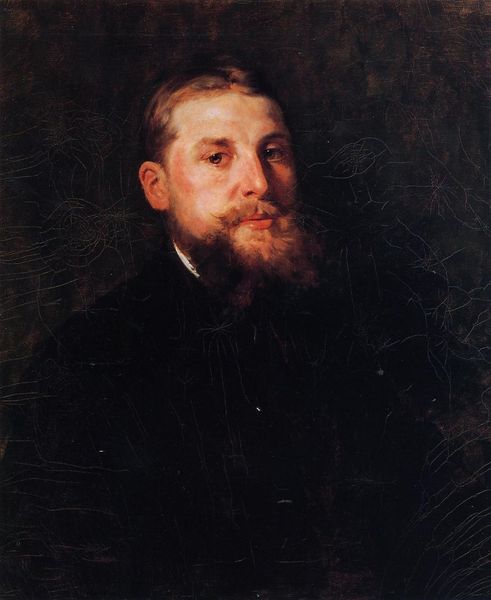
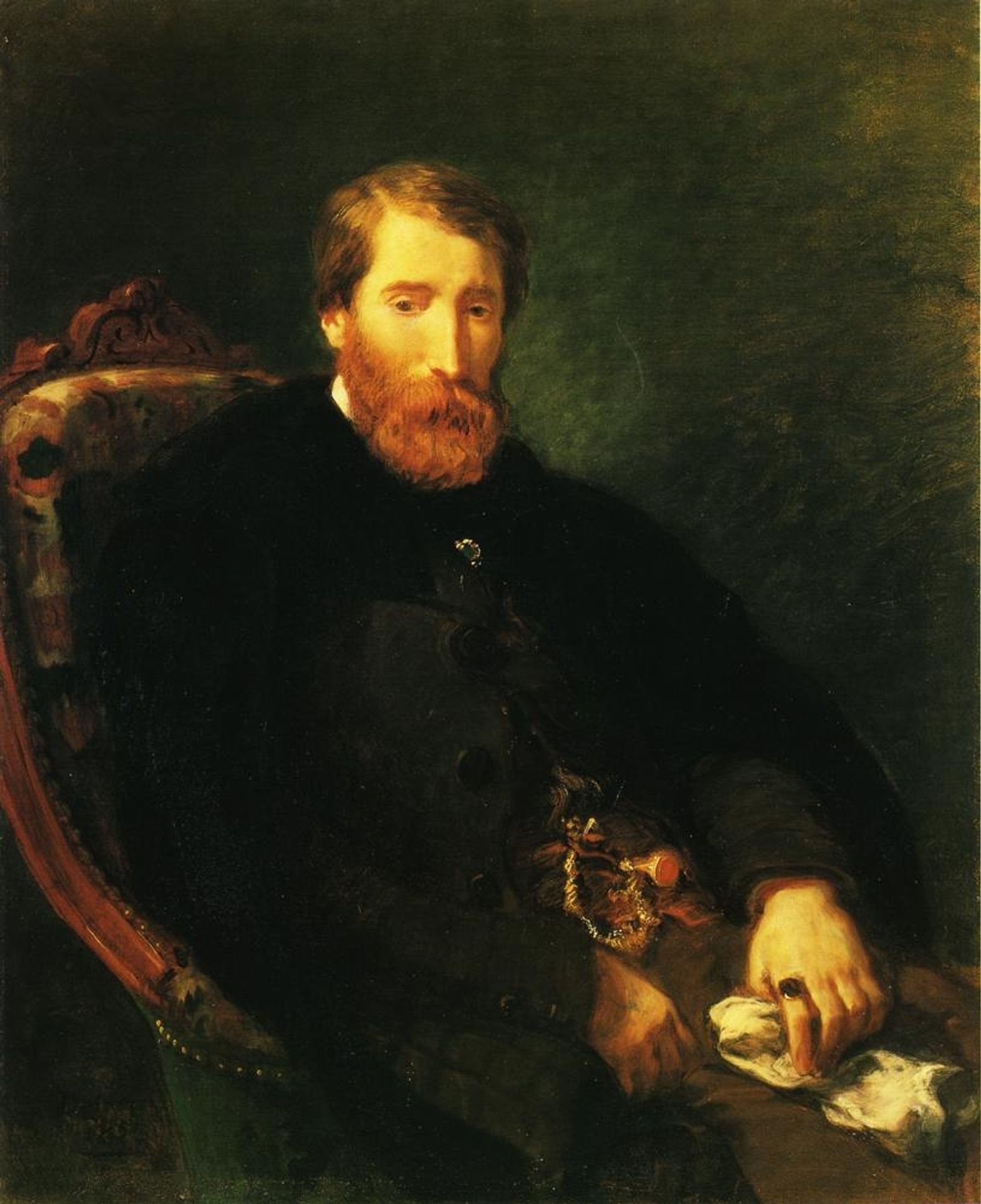
Portrait of Alfred Bruyas

Eugène Delacroix
1798 - 1863Location
Musée Fabre, Montpellier, FranceListen to curator's interpretation
Curatorial notes
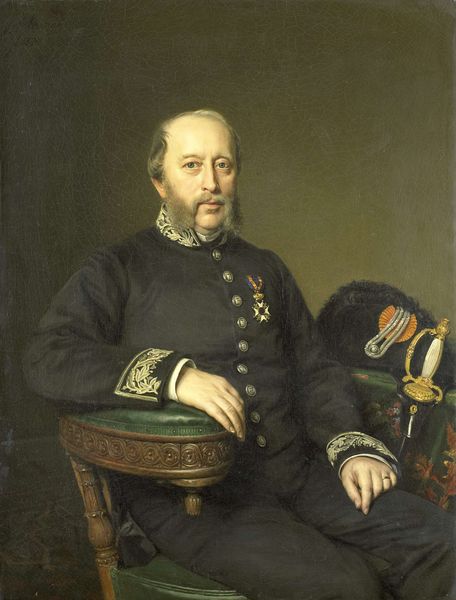
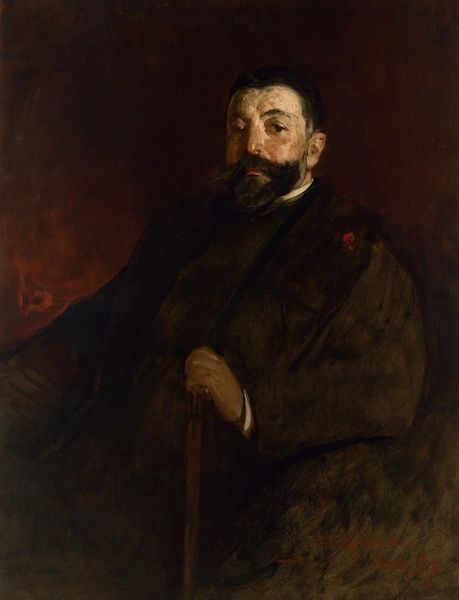
Curator: Eugène Delacroix painted this striking "Portrait of Alfred Bruyas" in 1853, a piece now housed at the Musée Fabre in Montpellier, France. Editor: The somber mood immediately strikes me. The figure emerges from such a dark, indistinct background, creating an intense visual focus. Curator: It is certainly evocative, and that shadowy background isn't just stylistic. Alfred Bruyas was a significant art collector and patron of the arts. Delacroix was very intentional in positioning him; it reflects his progressive views on the social function of art. The setting and his elegant attire suggests status, but also speaks to broader social currents. Editor: The play of light on his face and beard, achieved with delicate oil-paint strokes, contrasts with the relative lack of detail elsewhere, giving it that characteristic romantic feeling. It's a masterful study in contrast, almost theatrical. Curator: Yes, the meticulous detail afforded to the figure against the vagueness behind certainly reinforces the social position of the sitter. Considering Delacroix’s socio-political awareness and the patronage relationship, what statement do you think the artist is making about power structures here? And how does that intersect with the Romantic ideals present in the portrait? Editor: That's a great reading! But I am most compelled by the details in his clothing, in the drape of the coat across the chair, in the almost mirror sheen of his large signet ring… Curator: Delacroix captured the sitter, and indeed an era. It allows us to question social standing. Editor: Agreed. It certainly does give food for thought even as the dark shades still fill the space.