19th-20th century
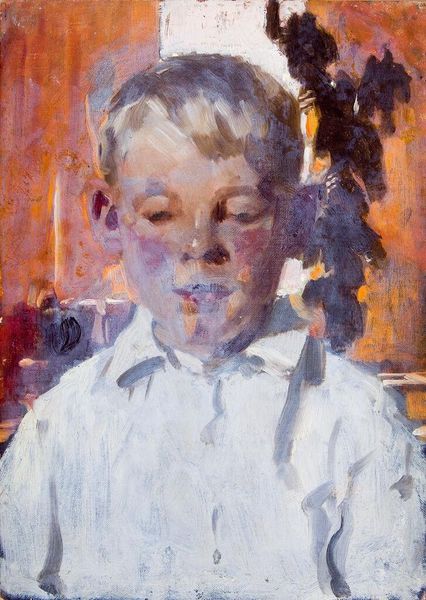
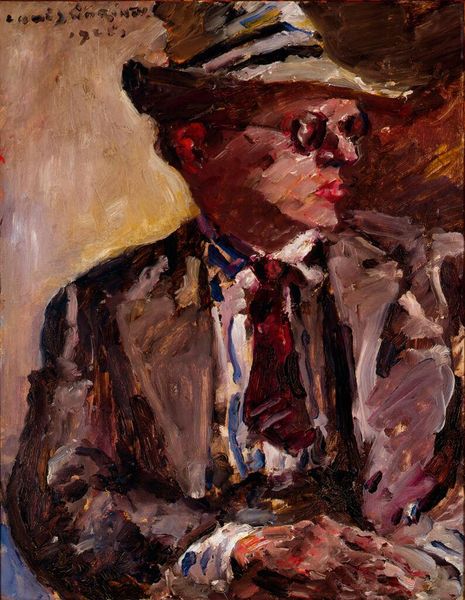
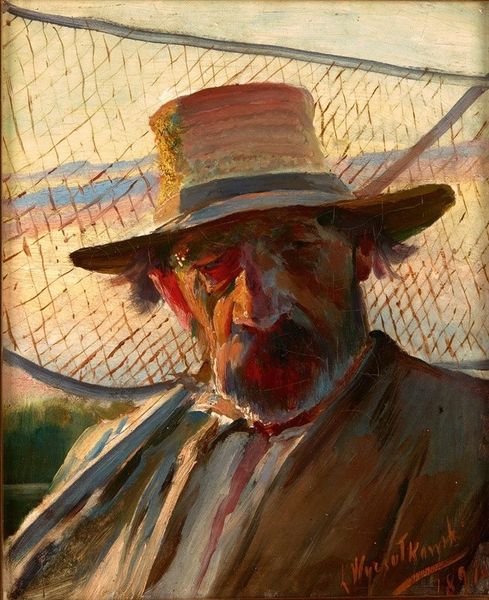
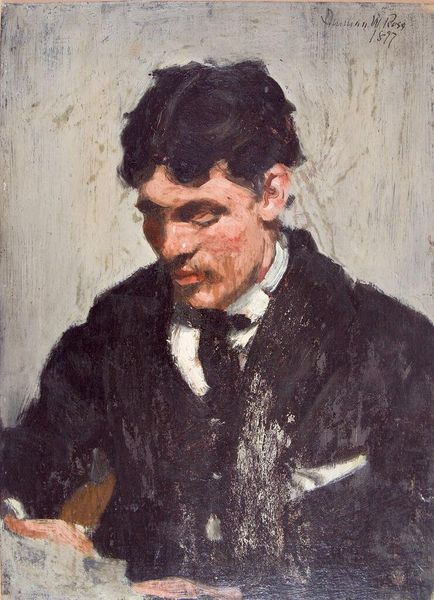
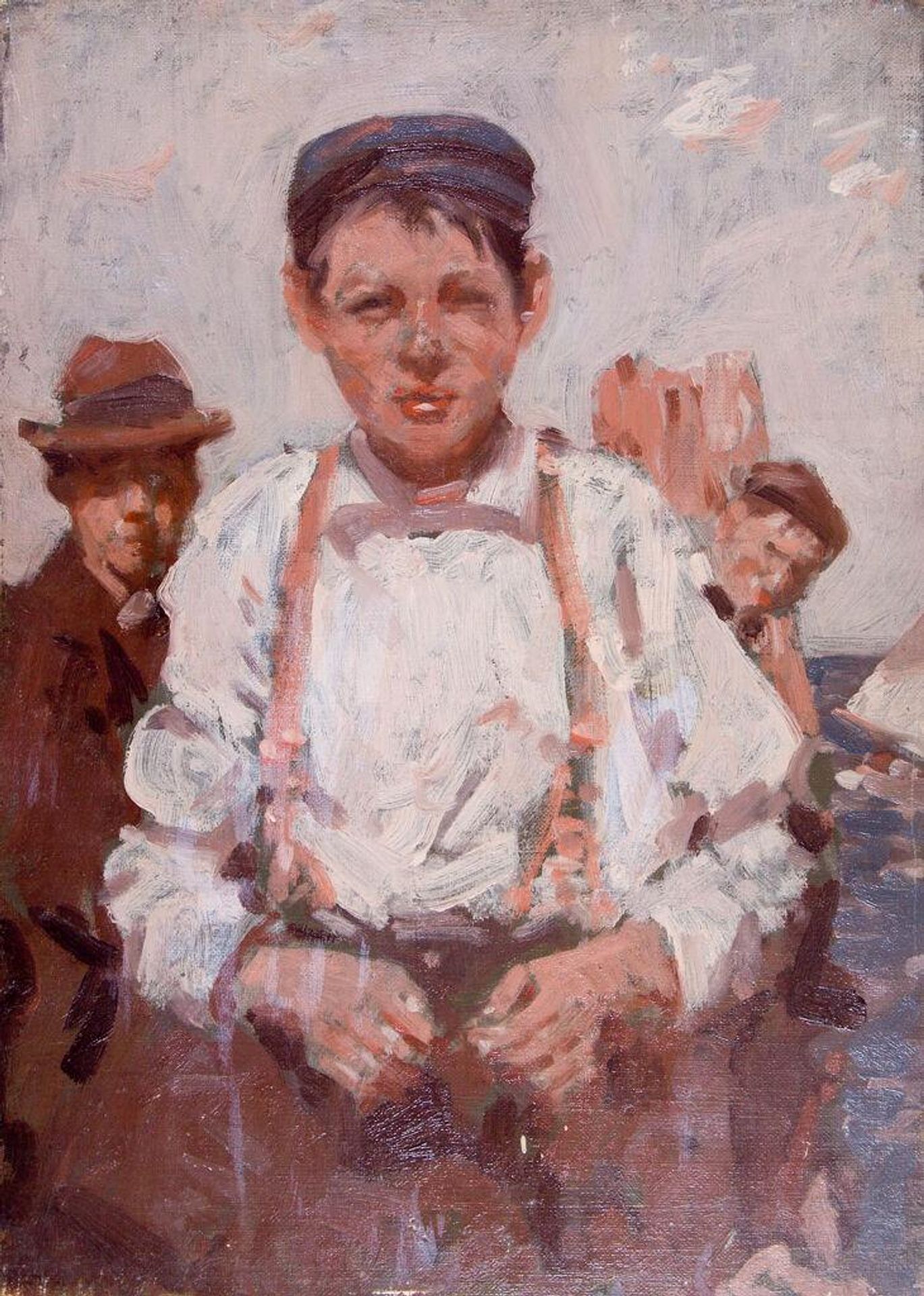
Portrait of a Boy with Two Men

Listen to curator's interpretation
Curatorial notes
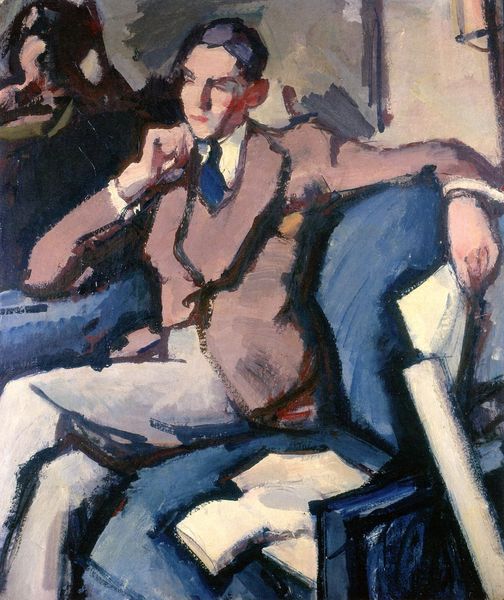
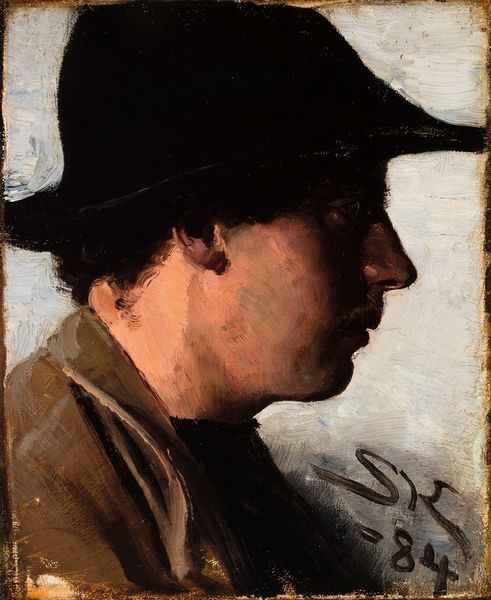
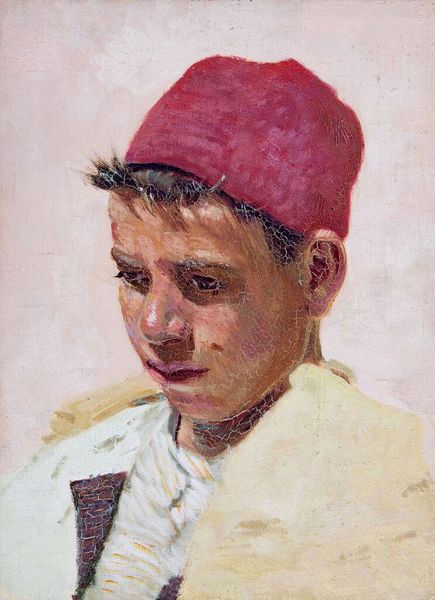
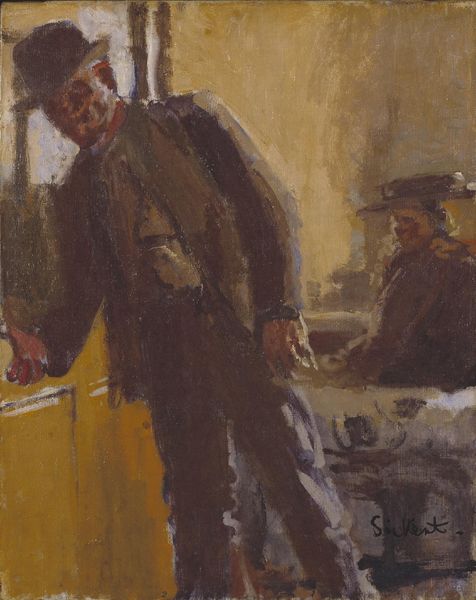
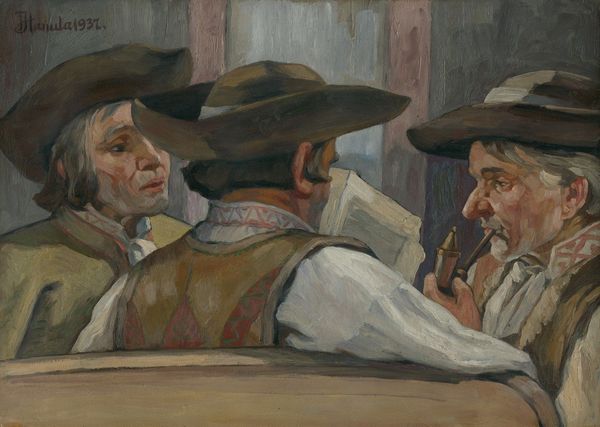
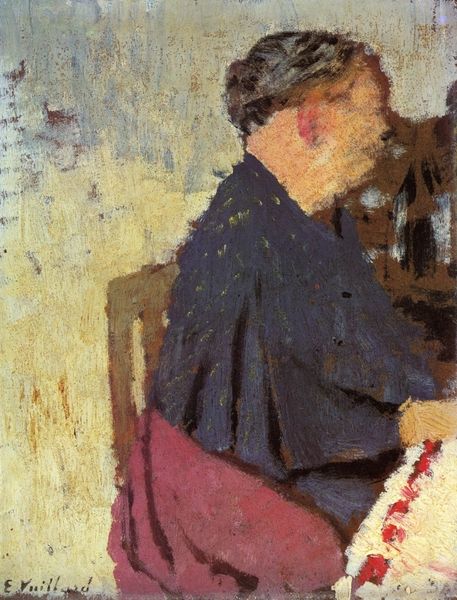
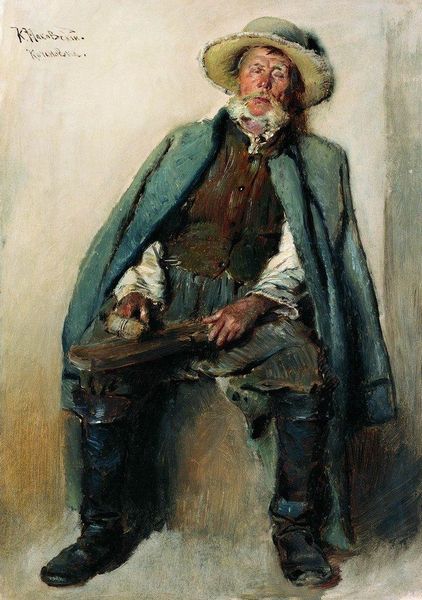
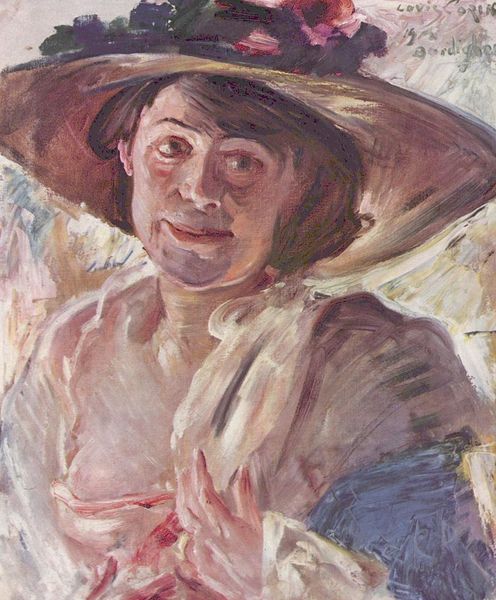
Curator: Denman Waldo Ross's oil on canvas, "Portrait of a Boy with Two Men," has a captivating immediacy. It's roughly 14 by 10 inches and currently resides at the Harvard Art Museums. What's your initial take? Editor: The brushwork certainly conveys a sense of fleeting time. I'm drawn to how the thick application of paint seems almost sculptural, especially in the boy's clothing. Curator: Right. The visible brushstrokes are fundamental to understanding Ross's approach. He seemed more concerned with the act of painting itself, and less with perfect representation, thereby democratizing artmaking. Editor: Absolutely. Considering this piece was created during a period of significant industrial change, I wonder if Ross was making a statement about class and the changing role of labor in society. What do you think? Curator: It's plausible that he’s nodding to the value of handcraft and the working class. The rough, unrefined style could be a deliberate choice to challenge the polished aesthetic favored by the elite art establishment of his day. Editor: Seeing it in this light shifts my perspective. I'm now more aware of the social context of the artwork, and I agree the seemingly simple brushstrokes carry a weighty message about the importance of process and the value of manual work. Curator: Indeed, Ross’s "Portrait" isn't just an image; it's a material document of a specific moment, one which prompts reflection on labor, class, and artistic creation. Editor: Yes, it invites us to look beyond the surface and appreciate the deeper social and material realities embedded within the artwork itself.