About this artwork
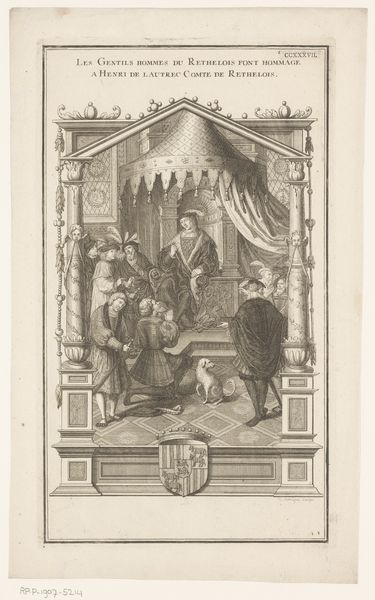
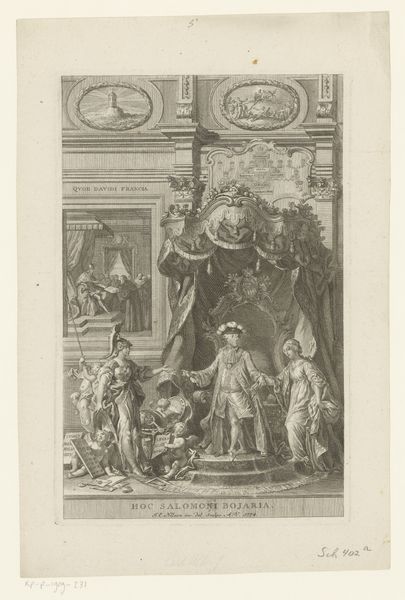
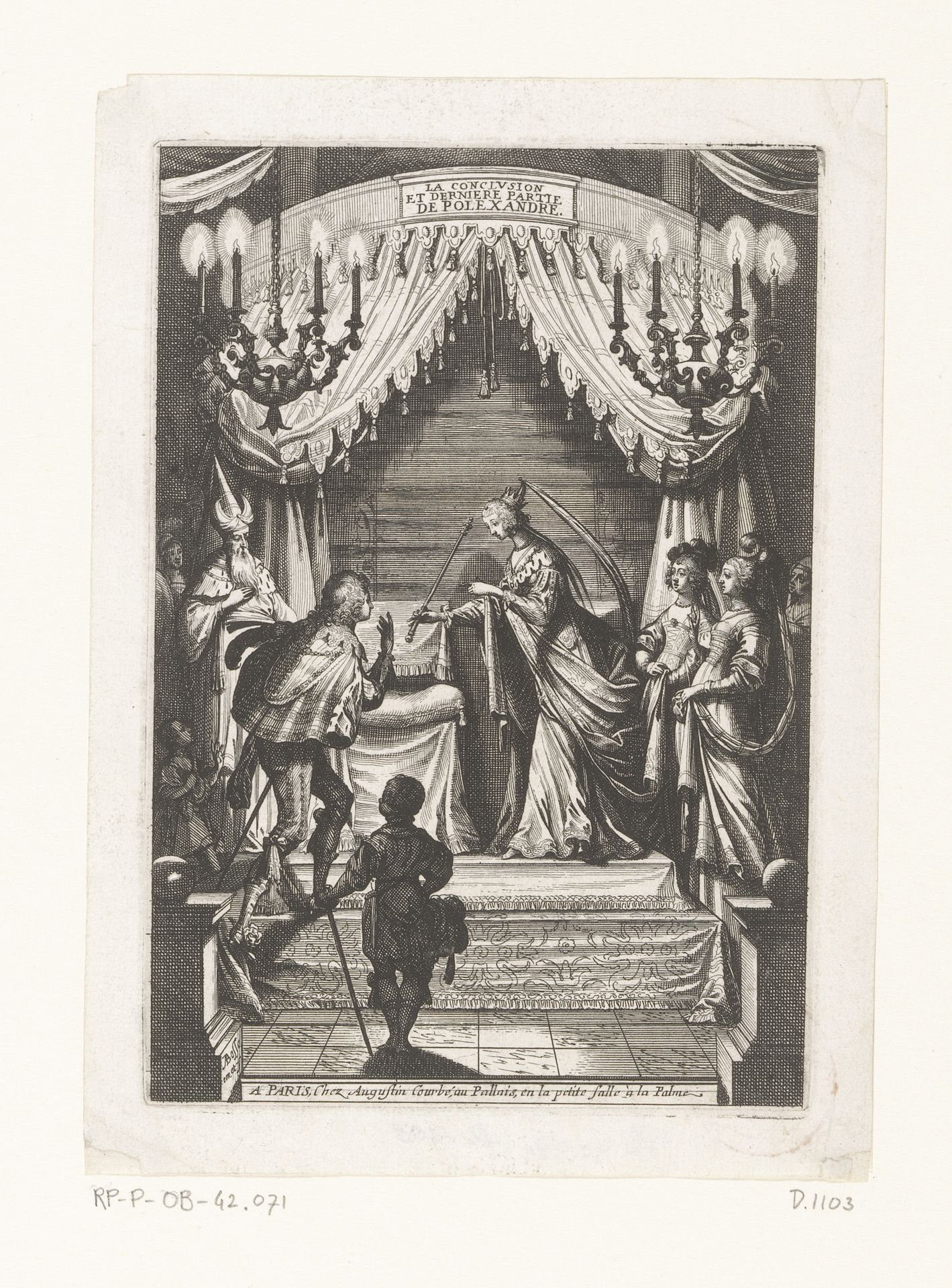
Abraham Bosse created this engraving, “Koningin overhandigt een scepter aan Polexandre onder een baldakijn,” sometime in the 17th century. Bosse lived in a time of immense shifts in power dynamics and social structures, particularly impacting perceptions of gender roles and authority. This print presents a queen bestowing a scepter upon Polexandre under a canopy. In the context of 17th-century European society, such a depiction of female authority challenges conventional patriarchal norms. The act of a queen passing a scepter signifies not just a transfer of power but perhaps also a validation of Polexandre. It’s a scene that invites us to reflect on the nature of leadership and the expectations placed upon individuals based on their gender and social standing. What does it mean for a woman to hold power, and what messages are conveyed when she chooses to share it? This work makes us consider who gets to be in charge and how society dictates those roles.
Koningin overhandigt een scepter aan Polexandre onder een baldakijn
1637

Abraham Bosse
1602 - 1676Location
RijksmuseumArtwork details
- Medium
- print, etching, engraving
- Dimensions
- height 161 mm, width 112 mm
- Location
- Rijksmuseum
- Copyright
- Rijks Museum: Open Domain
Tags
Comments
Share your thoughts
About this artwork
Abraham Bosse created this engraving, “Koningin overhandigt een scepter aan Polexandre onder een baldakijn,” sometime in the 17th century. Bosse lived in a time of immense shifts in power dynamics and social structures, particularly impacting perceptions of gender roles and authority. This print presents a queen bestowing a scepter upon Polexandre under a canopy. In the context of 17th-century European society, such a depiction of female authority challenges conventional patriarchal norms. The act of a queen passing a scepter signifies not just a transfer of power but perhaps also a validation of Polexandre. It’s a scene that invites us to reflect on the nature of leadership and the expectations placed upon individuals based on their gender and social standing. What does it mean for a woman to hold power, and what messages are conveyed when she chooses to share it? This work makes us consider who gets to be in charge and how society dictates those roles.
Comments
Share your thoughts