


Curatorial notes
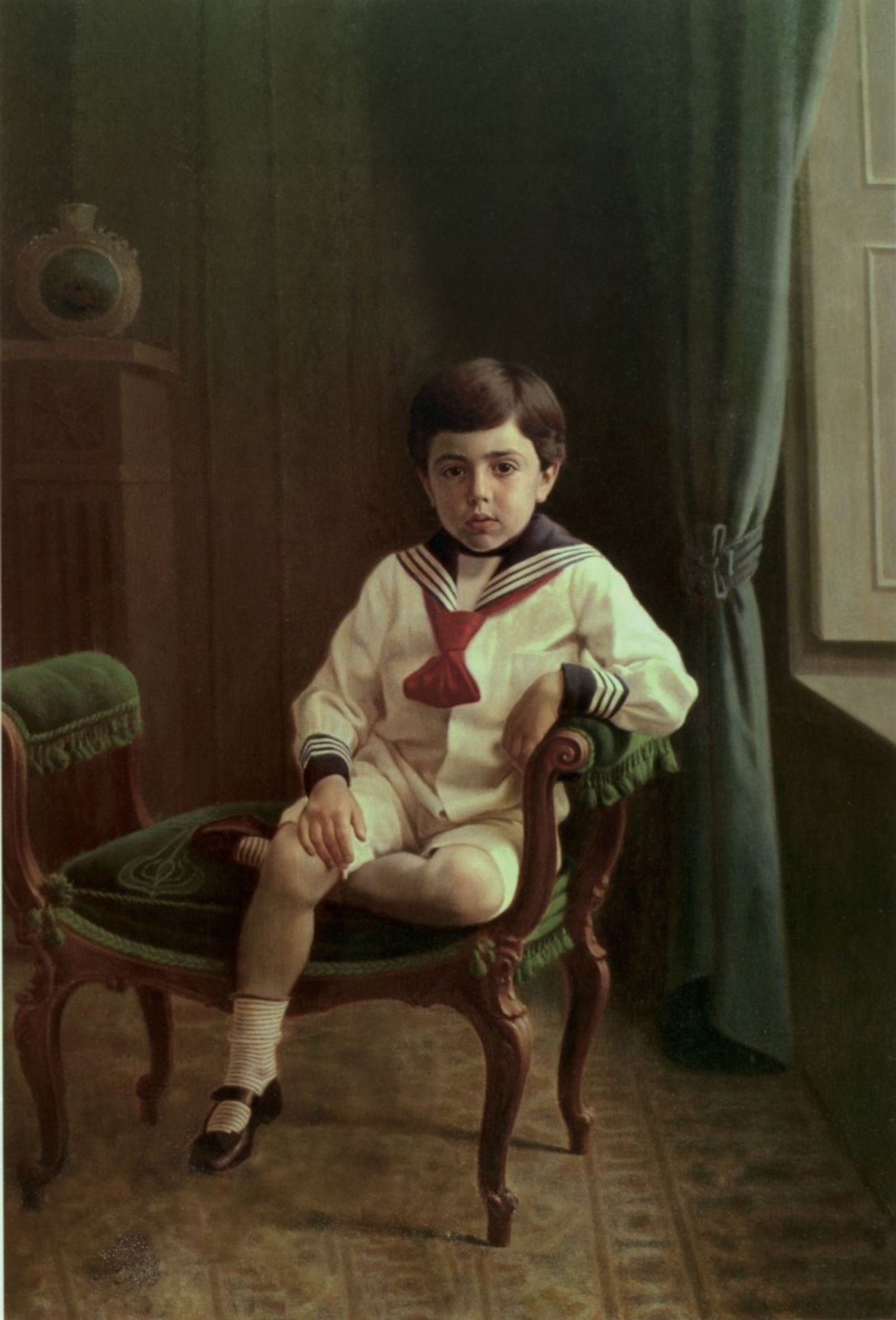
Curator: Standing before us is Kamal-ol-Molk's 1913 painting, "Boy in a Sailor Uniform." Editor: There's a quiet formality to it, almost melancholic. The boy's gaze is so direct. Curator: Kamal-ol-Molk, renowned for his adherence to realism within Persian art, creates a fascinating interplay between subject and societal expectation. Consider the oil paint he employed—a European medium that helped to modernize painting in Iran. The Western sailor suit in combination with an Iranian interior adds complexity to the work. Editor: The boy's clothes certainly tell a story. The suit and the imported materials required for this painting point toward an elite upbringing, suggesting access to a globalized economy and culture. But the solemn expression introduces another dimension, one perhaps of social expectation. Curator: Indeed, his gaze pierces through the layers of presentation. It seems almost to question the performance required of him. One wonders about the societal role expected of this boy, presumably from a high social class, in the shifting landscape of early 20th century Iran. Editor: It's the materiality itself that also holds such intrigue. The deliberate realism, achieved through layering oil paint to emulate reality, was certainly meant to impress. This work reflects not only technical skill, but also artistic choices about how to portray power and prestige. What’s especially revealing are those details in the texture of the boy's socks and the chair; they appear almost painstakingly rendered. Curator: And the placement within a domestic setting, staged as it may be, firmly locates him within the societal constructs of family and heritage. The academic style firmly locates the piece within a broader European art tradition and showcases Kamal-ol-Molk's masterful interpretation within an Iranian context. Editor: This portrait does far more than present the individual; it offers an insightful lens through which to examine societal roles and the materials that constitute them. Curator: Precisely. It is a testament to the artist's skillful blend of technique and thoughtful observation. Editor: Ultimately, the painting encapsulates a fascinating moment in the history of Iranian society as well as of global artistic exchange.