About this artwork
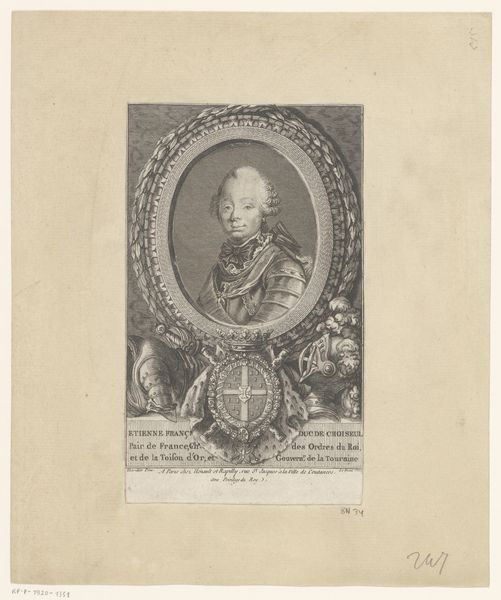
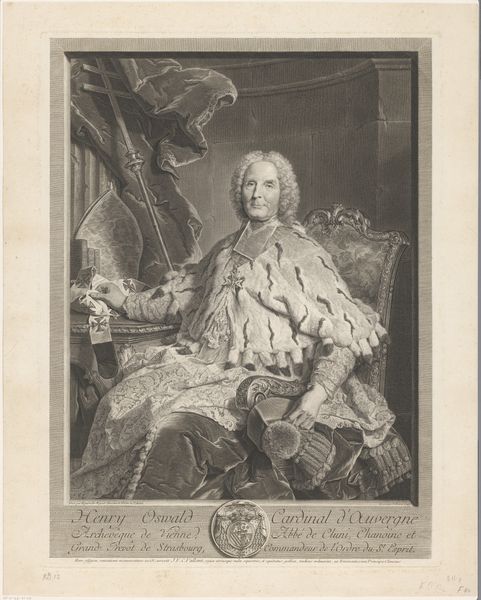
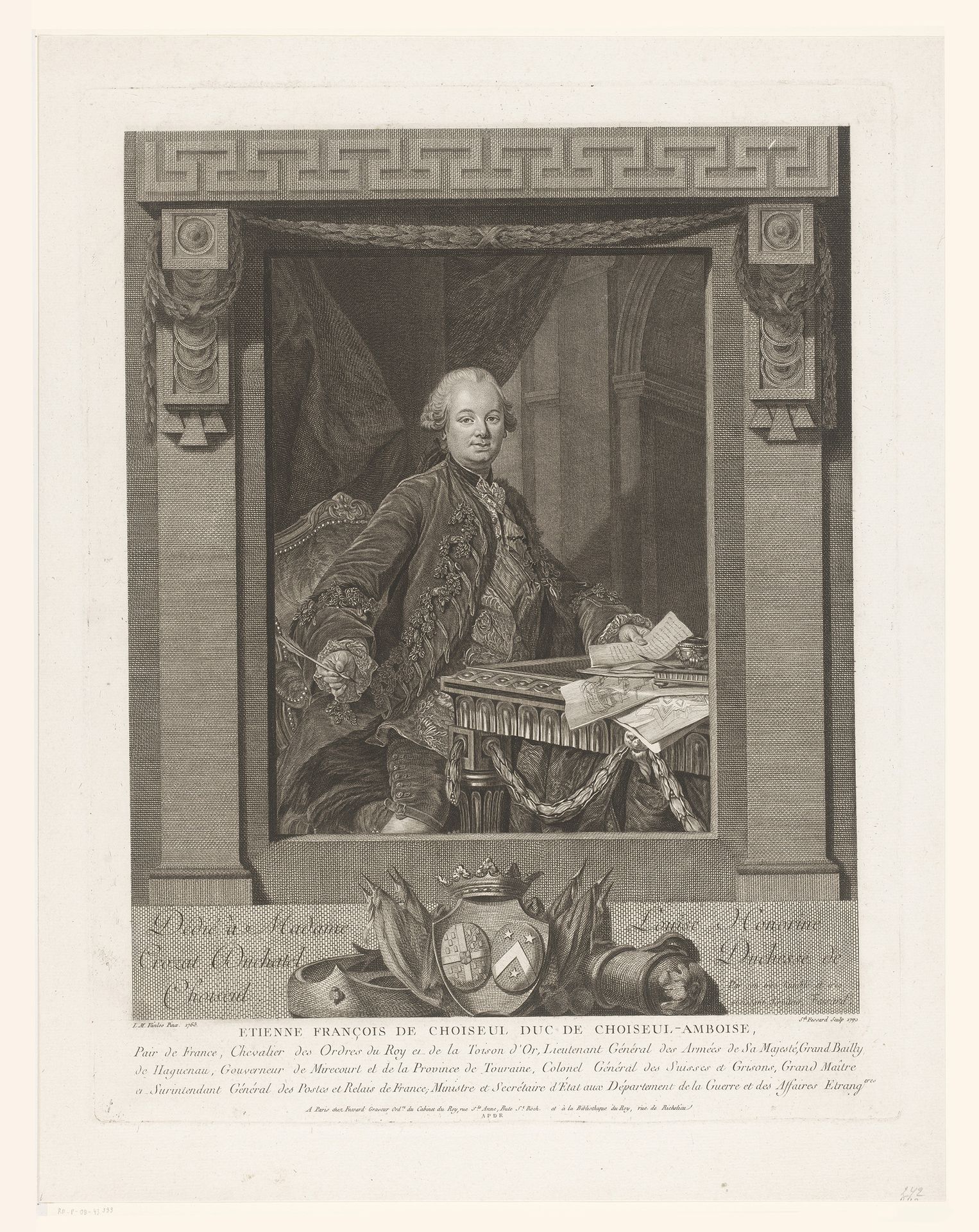
Etienne Fessard created this engraving, *Portret van Etienne François de Choiseul in architecturale lijst*, in the 18th century. This portrait captures Etienne François de Choiseul, a prominent French diplomat and statesman, within a meticulously detailed architectural frame. As Minister of Foreign Affairs under Louis XV, Choiseul navigated the complex political landscape of Europe, significantly influencing France's international relations. The visual emphasis on his status, underscored by the elaborate setting and his poised demeanor, raises questions about the nature of power and representation during the Enlightenment. Aristocratic portraits often served to legitimize the sitter's position within the rigid social hierarchies of pre-revolutionary France. How do these images reflect and reinforce existing power structures? And what role did they play in shaping public perception of the elite?
Portret van Etienne François de Choiseul in architecturale lijst 1770

Etienne Fessard
1714 - 1777Location
RijksmuseumArtwork details
- Medium
- engraving
- Dimensions
- height 495 mm, width 387 mm
- Location
- Rijksmuseum
- Copyright
- Rijks Museum: Open Domain
Tags
portrait
neoclacissism
form
line
history-painting
academic-art
engraving
Comments
No comments
About this artwork
Etienne Fessard created this engraving, *Portret van Etienne François de Choiseul in architecturale lijst*, in the 18th century. This portrait captures Etienne François de Choiseul, a prominent French diplomat and statesman, within a meticulously detailed architectural frame. As Minister of Foreign Affairs under Louis XV, Choiseul navigated the complex political landscape of Europe, significantly influencing France's international relations. The visual emphasis on his status, underscored by the elaborate setting and his poised demeanor, raises questions about the nature of power and representation during the Enlightenment. Aristocratic portraits often served to legitimize the sitter's position within the rigid social hierarchies of pre-revolutionary France. How do these images reflect and reinforce existing power structures? And what role did they play in shaping public perception of the elite?
Comments
No comments