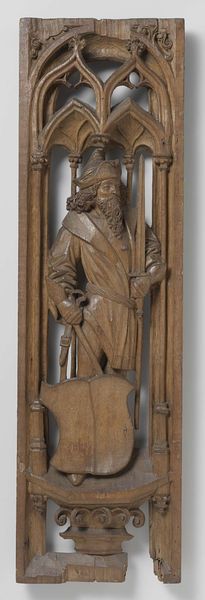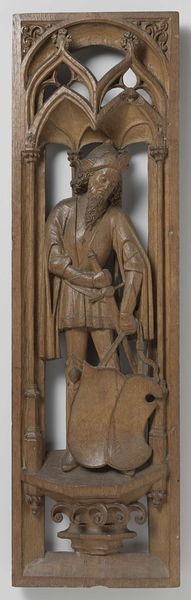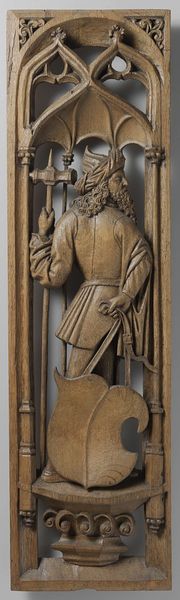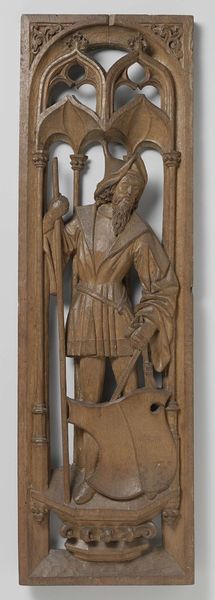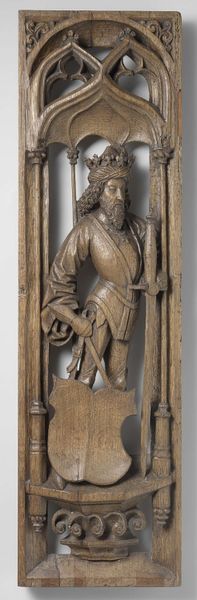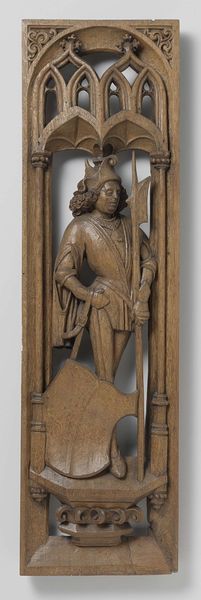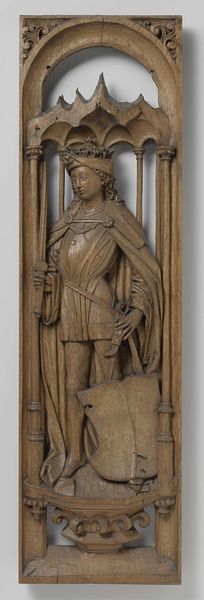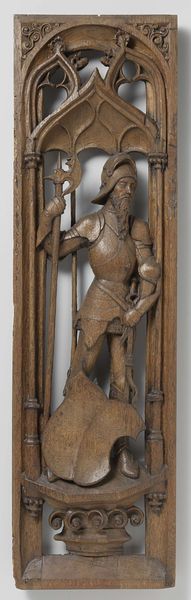
c. 1510 - 1520
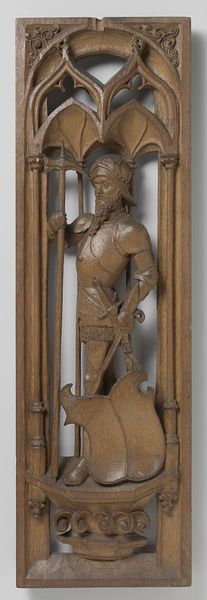
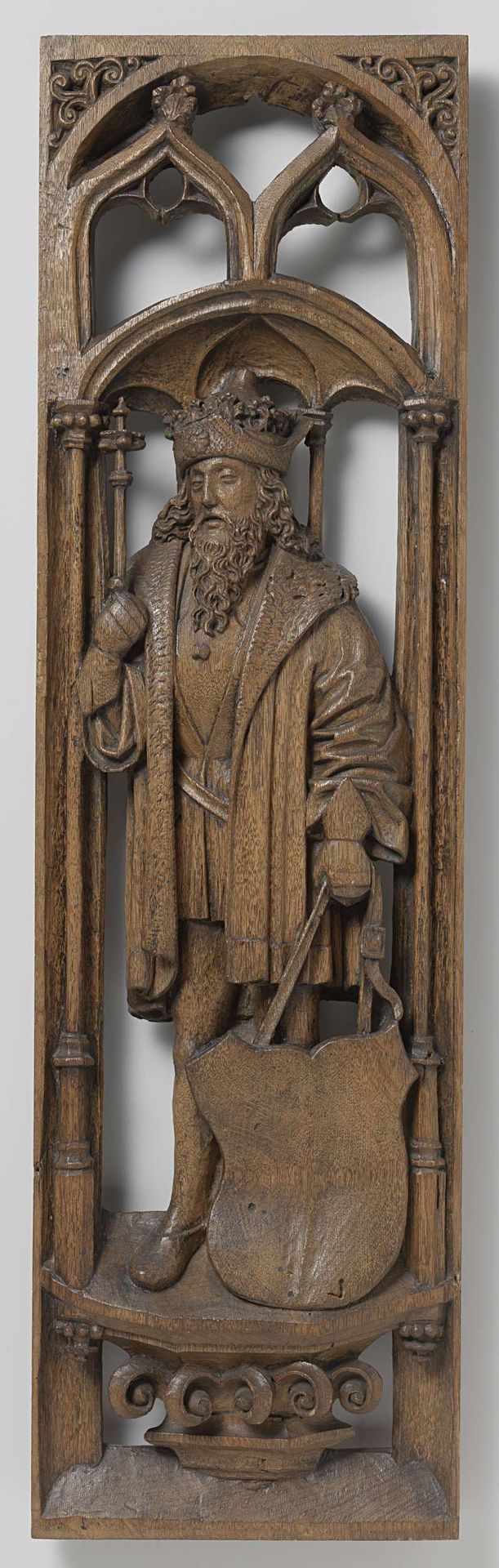
Panels from an organ case in the church of Saint Vitus in Naarden

Listen to curator's interpretation
Curatorial notes
Curator: I'm immediately struck by the solemn presence of this figure. The carving evokes such a strong sense of hierarchical power dynamics, doesn’t it? Editor: Indeed. This is one of the panels from an organ case, dating back to around 1510-1520. The church of Saint Vitus in Naarden once housed it, and it's attributed to Jan van Schayck. It exemplifies the Northern Renaissance style through this detailed wood relief. Curator: Knowing it was part of an organ case gives context. The visual authority echoes the auditory dominance of a church organ; however, I wonder about the absence of the other panels. What stories were silenced when pieces disappeared, leaving us only with the male figure? How does this affect its interpretation now? Editor: It's true that context is always shifting, never entirely accessible to us. It’s plausible that there was a carefully arranged iconographic program across all the panels, now mostly lost. We can speculate about what their complete message may have conveyed to the original congregation, given this artwork was once central to the community’s life and devotion. Curator: Precisely. The visual impact centers around this central male figure’s crown and garments suggesting political power reinforced by this sacred architectural placement. It prompts one to consider the function of these figures in constructing and reinforcing societal hierarchies during the Northern Renaissance. Editor: His very serious gaze adds to the feeling. I’m curious as to the extent this imagery may reflect or support the political and religious upheavals of the time. Images had direct implications during a Reformation that reshaped communities across Europe. It's important to think about how this sculpture worked as propaganda or self-representation of a ruling class within the framework of growing tensions with religious establishments. Curator: Absolutely. This carving gives rise to vital inquiries regarding artistic representation, political messaging, and their repercussions in a changing historical landscape. Editor: It truly gives a fascinating window into that turbulent intersection of faith, power, and society. Thank you for illuminating all of this!